HOME DESTINATIONS ISLANDS MAGAZINE BLOGS PHOTOS TRAVEL SPECIALS CONTESTS REQUEST INFO VILLA RENTALS CLASSIFIEDS
A South Seas Salvation
 Printer friendly page  Email to a friend

Four drums pounded a deep, incessant rhythm through the sultry South Pacific night. A ukulele plunked plangent notes into the air. A smiling-eyed young beauty with copper skin and flowing hair, wearing a palm-frond skirt and a coconut bra, took me by the hand. "Will you dance with me?"

Retire, my island host, flashed a grin and winked. "You want to be Cook Island warrior, right? Go!"

The dancer led me, unsteady, onto the sandy stage. I swallowed my pride, and suddenly my legs were doing things they'd never even tried.

An eternity later, the pounding and plunking stopped, the audience watching the weekly island night performance burst into applause, and my lovely maiden disappeared with a fleeting smile down the beach.

Retire slapped me on the back. "You make good Cook Island warrior some day! How old you live to be?"

By now I knew Retire well enough to understand what he meant to say. Maybe if I lived into deep old age and practiced dancing every day, I'd finally win the maiden -- or at least the warrior's lei.

Mutual friends had arranged for Retire to play reception committee driver and tour guide for my time on the island. Soon after we met at the airport and set off on the 10-minute ride to my hotel on the island's northwest coast, Retire turned to me and asked, "You like diving, right?" Before I could even tell him I wasn't a diver, he continued, "Tomorrow we go deep-sea diving. That good for me. Sharks like white meat!" And he broke into a loopy, high-pitched laugh. Welcome to Aitutaki.

Eighteen hours before, I had been befuddled, beleaguered, bedraggled and altogether benumbed by the 21st-century stress: too many projects, too many demands. I longed for quietude, simplicity and a sense of things as they used to be. I was pining for qualities I associated with islands and with the South Pacific: a lush, slow, wild beauty, a barefoot tranquility, a balmy, palmy, sea-scented sensuality.

But did such qualities even exist? I asked the most well-traveled person I know, Tony Wheeler, lifelong wanderer and co-founder of the guidebook Lonely Planet, if he knew of such a perfect island. He didn't pause. "Aitutaki," he said.

Where? Wheeler explained that Aitutaki belongs to the Cook Islands, a vaguely S-shaped scattering of 15 islands roughly halfway between Tahiti and Fiji. Rarotonga, with a population of about 9,000, is the main island. Aitutaki, 150 miles north of Raro, is the second most populated, with 1,900 residents. It's also the second most visited of the islands, with some 25,000 arrivals each year. Shaped like an upside-down fishhook, Aitutaki is the clasp in a necklace-shaped lagoon about 9 miles long and 7 1/2 miles wide, set with 15 idyllic islets, or motu, all of which are uninhabited. Its effect is clearly expansive; 'This may well be the friendliest, sexiest and most beautiful island in the entire Pacific," Wheeler said.

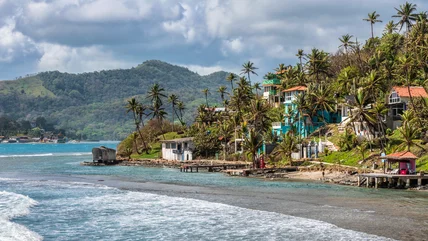
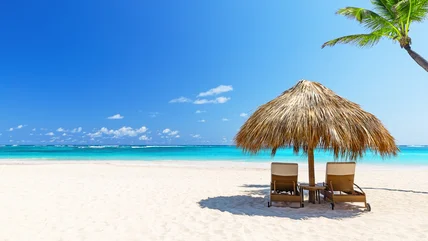
Late on the afternoon of my first day I was admiring that beauty -- a long, powdery white-sand beach lapped by crystal-clear waters, with schools of silver fish darting through infinite gradations of blue and green; tall palm trees slanting over the sand, fat coconuts hanging under rustling fronds; white clouds billowing in a deep blue sky, and the sun sliding toward the horizon -- when Retire returned. "You like to dance, right?" he asked as soon as I climbed into his car. I started to protest, but he cut me off. "Then you are very lucky, my friend. Because tonight is the Aitutaki dance competition! And I signed you up!" Before I could say anything, he plunged on. "But first, we eat!"

As we drove, Retire gave me a crash course in the island's history: Aitutaki was settled around 1,100 years ago by Polynesian Maoris who sailed from present-day French Polynesia. According to legend, the first settler was Ru, who arrived with his four wives, his four brothers and their wives, and 20 royal maidens. Ru divided the island into 20 sections, one for each of the maidens, and completely forgot his brothers, who stormed off to settle New Zealand. As other settlers arrived from throughout the South Pacific, they had to be accepted by one of the 20 maidens or their descendants to be able to live on the island.

After 15 minutes, we arrived at Cafe Tupuna, near the inland village of Tautu. The four-year-old eatery is under the impeccable hand of artist, chef and entrepreneur Tupuna Hewett. Set in a garden, with a sandy floor and, as dusk comes on, tiki-torch lighting, Cafe Tupuna features the chef's own vivid paintings of island scenes on the walls and equally artful concoctions from the kitchen. My meal began with a corn and seafood chowder -- made with corn and other local vegetables such as rukau and poke, and generous helpings of shrimp, crab and mussels. Then I had reef fish stuffed with shrimp and onions, doused with pesto sauce. The combination of flavors and textures was exquisite, like a master course in island tastes, but I was distracted.

"Retire," I began, "about this dance competition ..."

"Oh, can't talk about that over dinner!" he interrupted me, and began joking with the kitchen staff.

Tupuna chatted with the diners and Retire traded quips with everyone. When I remarked that it felt like one big family, Retire replied, "That's because it is!"

Tupuna smiled. "Yep, these are all my nieces helping out," she swept an arm toward the waitresses and the young women cleaning and preparing in the kitchen, "and the food you just ate -- I learned those recipes from my mother and grandmother."

After dinner, we scuttled like overfed crabs to the car and hurried to the main town of Arutanga, a classic sleepy South Seas port with a funky market, historic limestone church, scattering of souvenir stalls, post office and bank -- and the only stop sign on the island.

The dance competition was being held in the open-air courtyard at the Orongo Centre, right on the wharf. This was the biggest event of the year, Retire announced, and would determine which hura dancers -- hura being this chain's singularly sensual version of hula -- would represent Aitutaki in the annual Cook Islands Dancer of the Year competition in April on Rarotonga.

"So, you didn't really sign me up, right?" I said.

"No, not tonight," he said. "But I think you dance before we leave."

The competition was due to begin at 7 p.m. Lights had been strung and a stage had been erected open to the stars and surrounded by green plants. Elegant islanders in flowing floral dresses and shirts, wearing green, white and yellow leis, wandered in and out. Children skidded and screamed gleefully. To my eyes, they were personifications of the island -- their eyes as limpid as the lagoon, their skin as smooth-brown as polished coconuts, their smiles as bright as frangipani.

After about a half-hour, six musicians appeared. Then the lights came on, and the competition began. Each person performed two dances -- one long and elaborate, accompanied by a singer, and the second a quick, intense minute of nonstop leg pounding and hip shimmying.

The entire island was there, it seemed, and everyone knew everyone. When the younger dancers performed on stage, the children in the crowd mimicked them, and I began to understand how these competitions kept the ancient culture alive, how these hura dancers became the freshest link in a centuries-old lineage of legend and craft, designed to pass traditions and tales from one generation to the next. When the oldest dancers took the stage, the crowd sang along with the show, applauding their artful moves.

At some point, as the drums pounded, the hips swayed, the stars sparkled overhead, and the hibiscus-scented breeze blew through, a timeless piece of Polynesia settled like a seed in my soul.

The next day Retire and I drove along the coast. A lush green tangle of the vines, bushes and trees climbed into the interior; bright yellow and white blossoms, banana, papaw, coconut and mango hung heavy from boughs; simple one-story cinderblock houses, painted in tropical reds, greens and blues, showed immaculate lawns and vegetable plots.

About 15 minutes into our tour, we passed a group of houses set back from the road. An elderly man sitting on the stoop of the middle home waved toward us. Instinctively I looked toward Retire, but he was watching the road. I glanced behind us to see who he was waving at, but there was no one. Then I realized -- he was waving at me! I waved back. A few houses later, a young mother with a toddler at her knee was standing outside. Would she wave? Yes! We passed a couple of kids kicking a soccer ball on a lawn. Yes! Soon I felt like the mayor, waving at everyone.

We swerved inland, bouncing along with wild boar trails under ponderous branches and past slapping vines to the summit of the central hill, Maungapu, the island's highest point at 400 feet, which legend says was brought from Rarotonga by Aitutaki warriors who decided the island needed a mountain. Retire took me to a number of marae, the traditional pre-Christianity meeting and ceremonial sites marked by elaborate arrangements of massive boulders. He showed me one blood-chilling set of rocks where he told me human sacrifices used to be performed. He looked at me appraisingly. "What size neck you have?"

In the ensuing days, I met woodcarvers and pareu makers, schoolteachers and hotel owners. I met thirtysomething Maoris whose parents had emigrated to New Zealand and Australia and who had moved back for the grounded values and saner pace; teenage Aitutakians who planned to head for the bright lights of Auckland or Sydney as soon as they could; Westerners who had visited on holiday and never left. Clearly, the island was not without its modern-days concerns, yet to this 21st-century refugee, the place seemed as close to peace, plenty and paradise as I'd ever come.

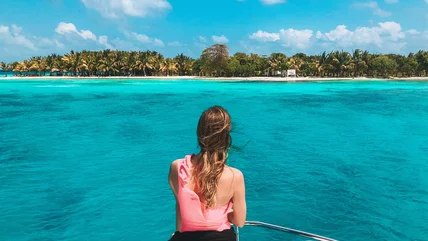
Those feelings crystallized on a visit to One Foot Island. A skipper dropped me alone on this motu, where I could hitch a ride back with a tour group that would arrive later. In my mind I immediately became a Cook Islands castaway, lord of my private domain. I turned a corner to a scene that took my breath away: a brilliant scimitar of white sand washed by a lagoon. Arching palm trees lined the beach, their fronds green, yellow and brown against a blue sky. I waded into the baptismal sea, their air warm and swaddling, the water buoying and serene.

On my last day, I attended a service at the main church in Arutanga, the oldest in the Cook Islands, a limestone structure with stained-glass windows. At 6:30 a.m. precisely, a preacher in a suit and tie began to speak in Cook Islands Maori. As he spoke, a gentle breeze blew through the windows, the mingled scents of the tropical blooms and moist earth wafted in, and a choir of roosters cook-a-doodled-doo'd. After a while the preacher stopped speaking, and the congregation rose. Suddenly a torrent of song surged forth; all parishioners were singing at full voice, pouring all their bodies into the song. The melody soared, subsided and soared, the voices pounding, straining, merging, lilting, rising, falling, filling the space and seeming to lift the entire building, the entire island, with their force.

That evening, I drove Retire to the open-air thatched-roof restaurant called Samade, a stone's throw from the lagoon on Ootu Beach. Our night began with a buffet featuring a dozen platters, like pork cooked the traditional way and ekamata (raw fish marinated in lime and coconut).

After we had feasted, a half-dozen musicians trooped in bearing ukuleles and wooden drums, then young dancers stepped onto the floor in pandanus skirts and coconut bras. Their passion and energy were infectious, and with the warm, caressing air, the delicious food, the music mingling with the stars, and the dancers' supple limbs and exuberant smiles, it was easy to get lulled into the spirit. I found myself on the floor, hips swaying.

Time slowed, and the discoveries of my five-day stay coursed through me: the island's slow, stately pace, the warmth of the people, the soul-soaring beauty of the place, the bountiful humor I had encountered, the sense of the plenty in mango and papaw, the sense of peace in palm tree, lagoon and beach. The leg-thumping and heart-pumping rhythms reached my deepest core like a key, turning and turning, unlocking mysteries that seemed even older than me.

Suddenly I found myself in a place I'd never been but knew instinctively. Drums pounded, hips swayed, gardenia perfumed the scene. In an instant I recognized this South Seas culmination: I had found the island of Salvation.

Plan Your Trip!

The Epitome of Paradise

Live the Dream: Sleep in a bungalow with a thatched roof, the style of many resorts on the island. Try one of eight thatched-roof villas at Etu Moana, which means blue starfish. Rates start at $395, 011-682-31-458, www.etumoana.com Are Tamanu Beach Village has the obligatory roof style, plus Te Vaka restaurant, the perfect place to sip a mai tai as you watch the sun set. Hotel rates start at about $244, 011-682-31-810, www.aretamanu.com.

Hura Your Heart Out: Experience the food and dance of this culture at one of the island-wide island nights, held at different hotels, restaurants and bars nearly every night of the week. These evenings usually include a buffet of traditional foods and then, accompanied by pounding drums, the entertainment begins. You may get a quick lesson in hura. Pacific Resort Aitutaki's island night is on Friday and costs $45, 011-682-31-720, www.aitutaki.pacificresort.com.

Cruise the Lagoon: Get familiar with Aitutaki's lagoon and its motu. Bishop Cruises stops for snorkeling, then for a barbecue lunch at One Foot Island. Bishop Cruises, $45, 011-682-31-009, www.islandhoppervacations.com

Fly to Rarotonga from L.A. nonstop on Air New Zealand, and then catch a flight to Aitutaki on Air Rarotonga. Walk or drive the island with Aitutaki Walkabout Tours Ltd. Rates start at about $28, 011-682-31-757

Have a cup of homegrown organic coffee at Tauono's Garden Cafe, 011-682-31-562.

Spend New Zealand dollars. 1 NZD=0.69 USD.

For more info contact the Cook Islands Tourism Corporation, 866-280-1739, www.cook-islands.com

  ISLANDS Twitter Updates more +

Reserve Your Free Trial Issue Today!

Simply fill out this form to receive a complimentary issue of ISLANDS! If you like it, pay just $14.97 for 7 more issues (8 in all) and receive a Free Travel Bag with your paid subscription. If ISLANDS is not for you, write "cancel" on the invoice, return it, and owe nothing!

The FREE trial issue is yours to keep - no obligation!

  Name:
  Address:
  City:
  State/Province:
  Zip/Postal Code:
  Email:
  Non-US Residents - Click Here
Digital Delivery Option - Click Here
Customer Service | Contact Us | Advertise | Site Map | Privacy Policy & Your Privacy Rights | Terms & Conditions | e-Newsletter Signup
Visit Our Sister Sites at Bonnier Corporation:


Copyright © 2008 Islands. All rights reserved. Reproduction in whole or in part without permission is prohibited.