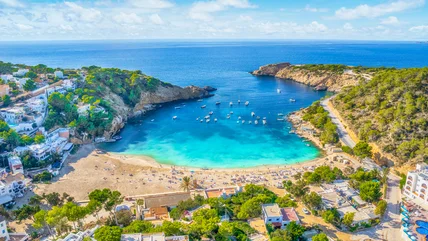
I started on a long day-trip that would bring me at last to the Bah¿a de las Aguilas. The first part of my journey was easy. A good road took me along the coast down to Oviedo, whose lagoon is home to the Dominican Republic's largest concentration of flamingos, then across the peninsula another 20 miles to the turnoff for the Parque Nacional Jaragua, named for another Taino chief. From there, the road began to deteriorate, and by the time I reached the fishing village of La Cueva, I was happy to hire a little wood boat with an outboard motor and peeling blue paint for the final leg, which put me right up on the beach at Bah¿a de las Aguilas in under an hour.
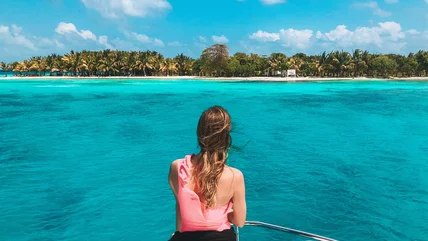
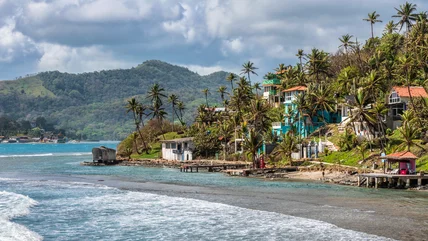
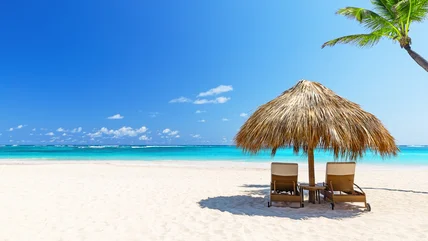
And what a beach it was. Entirely different from the other side of the peninsula, where the waves always seemed to crash onto a pebbly shore, this was all serenity. From the powdery sand, I could wade out into water so calm and clear that my toes were always in sight. And beyond were all the shades of Caribbean green and blue. On weekends, a fisherman told me, people come from Barahona and Santo Domingo to camp. But just then we had it to ourselves. "And the eagles?" I asked. "Donde est¿n las aguilas?"
The fisherman laughed. Christopher Columbus, who named the bay, had actually seen pelicans; the name should be Bah¿a de los Pel¿canos.
I told him it didn't matter what the bay was called, as long as it stayed as beautiful as it was and remained a home to sea turtles and manatees - a refuge for some of nature's most fragile and harmless creatures. And a refuge, too, for those of us willing to come so far to find a little bit of the world as we imagined it was meant to be.