Newsletter Sign-up

Find vacation packages, news, contests & more in our free newsletter!
Close

Member Login

Logging In
Invalid username or password.
Incorrect Login. Please try again.

Not a member? Register Now!

Signing up helps us keep offensive content off of our site. Take a moment to register or click here to learn more about our privacy policy.

Destinations / Culebra

Culebra

Overview

Collapse

Toast the Sunset From a Perfect Beach
With 23 offshore islands, Culebra could be considered a miniature archipelago. Coral reefs in this area are said to be some of the most spectacular of the entire Caribbean region. Culebra's rugged countryside, outrageous beaches and small-scale tourist industry make this 25-square-mile Puerto Rican island a treasure for travelers.


View Larger Map

Culebra, also known as "Isla Chiquita" (small island) and "Ultima Virgen" (last virgin), is located 20 miles east of Puerto Rico and 15 miles west of St. Thomas. It is a small island, just seven miles long and four miles wide. The capital, Dewey, is home to the majority of the 2,000 year-round residents.

A bird refuge was established on the island in 1909. Since then much of the island and its surrounding 23 islets have been designated by the U.S. Fish and Wildlife Service as a nature preserve; this protection is vital since Culebra is one of only two nesting sites for giant sea turtles in the United States. It is an extraordinary site, rough and rustic, where endangered species of birds, lizards and turtles are hidden away from the ravages of mankind. The refuge is accessible by ferry from the east coast or by plane from San Juan.

Culebra is on our list of the Best Islands to Live On

Plan your trip

Collapse

BEACHES

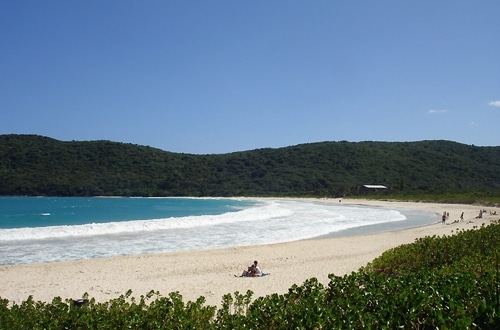
Flamenco Beach is by far Culebra's most popular beach. It was recently named one of the Best Beaches in America and Best Escape Beach by the Travel Channel. A magnificent mile or so of pure white-coral sand framed by Culebra's arid hills, it is protected as a marine wildlife reserve. Here you can escape from the crowds, jet skis and motorized vessels found off many of the major beaches on the main island of Puerto Rico. The beach is easily accessible, thus making it a must-stop for most visitors; it is also the only spot on the island that allows camping. There are very few campsites right on Flamenco Beach, so securing a reservation early is the only way to go. If you stop by Flamenco just for a day, you will find plenty of amenities, including kiosks that rent chairs, umbrellas, tents and other gear; others sell food and drinks.

BEARINGS

Why here? The leatherbacks come to Culebra for a reason: quiet, empty beaches, untouched Puerto Rico, no night lights. And Brava Beach is only a little more than half a mile long, which means it has more nests per square foot than larger beaches. When? Prime turtle-nesting season is from April to June. The public can participate in turtle watches Fridays, Saturdays and other occasional weekdays, depending on scheduling. Contact Carlos Diez at the Endangered Species Office of Puerto Rico's Department of Natural and Environmental Resources at cediez@yahoo.com or 787-724-8774 ext. 2237 or ext. 4039.

DIVING

Snorkeling: Access to good snorkeling reefs can be had from many of Culebra's beaches, including both Melones and Carlos Rosario beaches. There is also a beautiful reef off Mosquito Beach.

image-

Digital Edition Subscriptions

  • iPad
  • Kindle
  • Nook
  • Google Play
  • Zinio