Newsletter Sign-up

Find vacation packages, news, contests & more in our free newsletter!
Close

Member Login

Logging In
Invalid username or password.
Incorrect Login. Please try again.

Not a member? Register Now!

Signing up helps us keep offensive content off of our site. Take a moment to register or click here to learn more about our privacy policy.

Destinations / Yap

image-

Overview

Collapse
Yap? The island with the giant stone money discs, right?

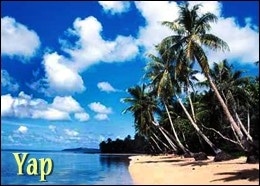
Well, yes, indeed. But this most traditional of Micronesian islands has guarded its cultural heritage as well as its currency. Located between Guam and Palau, the remote archipelago with four main islands was largely untouched by both colonial empires and wars. As a result, traditions (including the famous stone money) remain an intrinsic part of daily life. Grass skirts and brightly colored loincloths are still the fashion of the day in thatched villages outside the capital of Colonia. Dance is a living art, the way history is recorded and passed down - albeit in a colorful, sometimes raucous fashion. And this is an island that still values such tasks as weaving a basket, launching a canoe, and fishing.

Yap doesn't attract a large number of visitors, and most of those who do come are divers - for this may be the best place in the world to glide through the blue depths with schools of massive, effortlessly graceful manta rays. A few other modern activities - mountain biking and kayaking among them - are available, and the beaches are pleasant. But Yap is really a place to see a rare part of Oceania that the modern world has mostly passed by.

Yap Dancing


Rest Easy Traders’ Ridge Resort is an intimate hilltop hotel in Colonia complete with butler service and fine dining. Its partnership with the Ethnic Art Institute, which preserves the artistry of Yapese culture, results in weekly traditional dance performances and the chance to watch Yapese craftsmen at work. The resort can arrange for you to sail on its outrigger canoe, fish with locals or tour men’s houses and village meeting houses, where you’ll be able to see stone money. Rates from $215. www.tradersridge.com

Manta Nirvana More than 100 giant mantas reside in the 81-degree waters off Yap. Divers make the pilgrimage from all corners of the world for encounters with these plankton-sucking winged beauties seen in Mi’il Channel (late November to early May) or in Gofnuw Channel, also known as “Valley of the Rays” (June to October). Other surprises await: seldom-seen mandarinfish, pipefish and nudibranchs. Traders’ Ridge and Manta Ray Bay Hotel have full-service dive centers. Two-tank dive trips from $99. www.mantaray.com


Grin Red Chew the mildly narcotic betel nut. Nuts, leaves and lime are available in the shops, or try the cherry-red betel-nut martini at Traders’ Ridge.

Bring Back - Visit the Ethnic Art Institute of Micronesia on Yap where native artisans, learning from elders, live and work to keep Yapese woodcarving a vital art form. Only local materials, most commonly breadfruit wood — and traditional tools such as the adze are used to create these Oceanic crafts. This Tapuana (meaning “sacred spirit”) mask was worn by a secret society of weather magicians, the Soutapuana on Chuuk, who performed a ritual at the time of the ripening of the breadfruit. The Soutapuana danced on the beach, facing the storm, and sang sacred chants to protect the island from harm. Masks range from $50 to $325, and this mask is $95.

Plan your trip

Collapse

DIVING

Manta rays are graceful, huge (more than 2,000 pounds and a wingspan of 16 feet), harmless (no stingers, and they eat plankton), and about a hundred of them are year-round residents of the waters off Yap. From November through May, large schools of mantas spend part of each day feeding in Miil Channel, the island's most famous dive spot. You can drift with them (and watch gliding courtship acrobatics) and at slack tides, watch as the mantas arrive at shallow "cleaning stations," where they allow small cleaner wrasses to preen them of parasites.

FISHING

Round up the usual deep-water suspects - marlin, sailfish, tuna, wahoo, and mahimahi. But add Giant Trevally to the list. The trevally fishing, a specialty of local guides, takes place from boats drifting along just outside the barrier reef; using light tackle; you cast into the breaking surf to hook up with the fish, weighing up to 40 pounds - and then try to keep them out of the sharp coral.

CULTURE

There is no better time to see Yapese dance performed than Yap Day, celebrated annually on March 1, when dancers (the women in grass skirts, the men in loincloths) from nearly a dozen villages present dances - including lively stick dances - they have worked on for most of a year. Yap Day is also a time to watch traditional Yapese games and contests (including spear throwing), and see a tattooing exhibition.

Where to stay