
2 Wildly Popular Caribbean Islands Face A New White House Travel Ban (Here's What It Means)
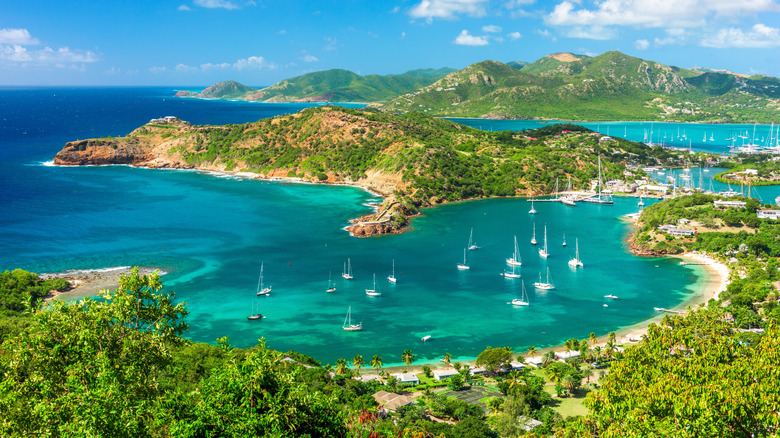
The White House made headlines in June when it unveiled a travel ban on multiple regions, barring citizens of some countries from entering the United States. Among the 12 countries initially placed under a complete travel ban were Afghanistan, Burma, Haiti, Iran, and Somalia; a partial travel ban was imposed on several more, including Cuba, Venezuela, Togo, and Burundi. On December 16, 2025, President Donald J. Trump announced an expansion of these bans to restrict travel for citizens of an additional 20 countries. This includes a partial ban on two Caribbean hotspots that are popular vacation getaways for Americans: Dominica and Antigua and Barbuda.
What exactly do the new restrictions mean for residents of the two islands? According to the statement from the White House, the updated travel ban is intended "to protect the security of the United States." Along with the two Caribbean nations, there are also restrictions for Nigeria, Tanzania, Zimbabwe, and others. In the statement, President Trump suggests that the countries included are not aligned with the United States' "foreign policy, national security, and counterterrorism objectives."
A further detail cited in the report relates to Citizenship by Investment (CBI). Dominica and the nation of Antigua and Barbuda are two of the five Caribbean countries that offer this citizenship (along with St. Kitts and Nevis, Grenada, and St. Lucia). As the White House statement says, CBI "poses challenges for screening and vetting purposes," making it possible for individuals to conceal their identities or evade travel restrictions by entering the U.S. with a passport from one of these countries.
New restrictions for citizens of Dominica or Antigua and Barbuda
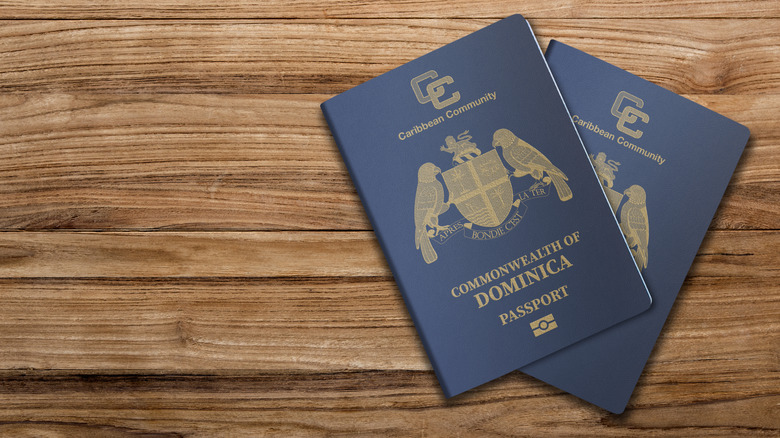
For now, Dominica and Antigua and Barbuda have been placed under partial restrictions. According to the White House, this means that nationals of both countries are prohibited from emigrating to the United States or from entering as nonimmigrants on B-1, B-2, B-1/B-2, F, M, and J visas. Many exceptions apply, and case-by-case waivers may be available. Certain people likely won't be affected by the new rules, per the BBC, including legal permanent residents, diplomats, traveling athletes, and some current visa holders.
The updated travel ban goes into effect on January 1, 2026. It's important to note that the travel ban imposed on the two Caribbean countries does not currently impact American travelers planning to visit the region. On the United States' list of travel advisories for nations around the world, both countries are listed at Level 1: Exercise Normal Precautions. In fact, Antigua and Barbuda is considered the most developed country in the Caribbean and was recently named one of the five safest Caribbean islands. Dominica, nicknamed the "Nature Island," is one of the Caribbean's most family-friendly islands, according to travelers.