
Under An Hour From Middlesbrough Is 'The World's First Railroad Town' With A Historic Charm And A Gorgeous Park
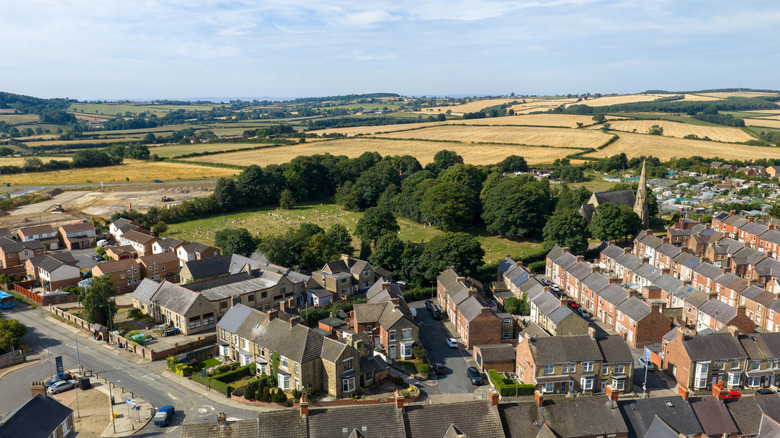
These days, taking the train is a routine part of daily life. Subway cars shuttle commuters from home to the office, while high-speed rail networks whisk passengers between cities and even countries. But have you ever stopped to wonder how passenger rail travel began? Let's travel back in time to 1825, in a rural English town called Shildon. Before a crowd of onlookers, an English engineer named George Stephenson hopped aboard Locomotion No. 1, a steam-powered engine on wheels that pulled a coach full of passengers along the newly opened Stockton and Darlington Railway. Stephenson was dubbed the "father of railways," and Shildon became known as "the world's first railway town."
Today, visitors to this idyllic locale in County Durham can still experience much of its locomotive heyday. A stroll around the quiet lanes reveals rustic brick warehouses and stone manors dotted here and there, some built back in the early 19th century as the railroad attracted new businesses and workers. Just a short walk from Shildon's modern-day rail station is Locomotion, a vast museum where train aficionados can wander among an extensive indoor collection of railway vehicles.
Meanwhile, more casual travelers can head into the town center, where rows of trees towering above the quaint architecture create a pleasant backdrop for leisurely strolls. Also near the town center is Hackworth Park, where visitors craving a breath of fresh air can explore wildflower meadows and woodland scenery. At the end of the day, a bevy of local eateries and rustic pubs along Main Street offer plenty of ways to refuel. Travelers coming from Middlesbrough can take a train or drive to Shildon in less than an hour, while Londoners are about three hours away by train.
Visit the railroad museum in Shildon, England
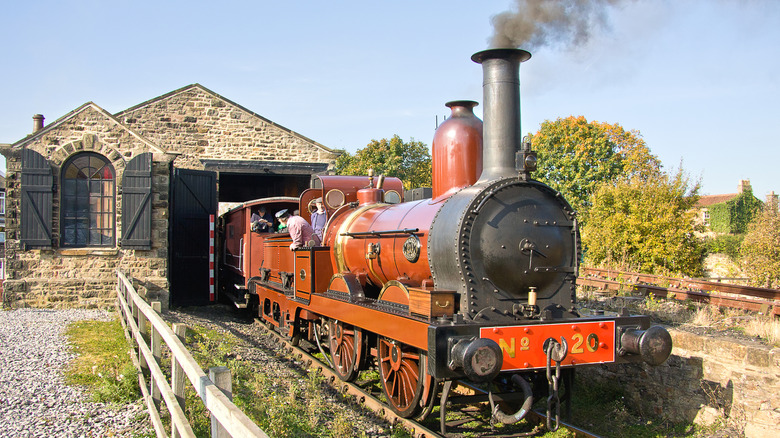
Once the railroad took off, Shildon grew rapidly into a boomtown. What was once a hamlet of only 100 locals in the 1820s swelled into a bustling hub of almost 8,000 residents at the turn of the century. To see the engine that started it all, spend the day at Locomotion, which is completely free to enter. "The museum is bigger [than] it first appears and is split over [three] areas," says one visitor. The collections occupy the historic site of the Stockton and Darlington Railway.
Standing among other historic rail vehicles is Locomotion No. 1, the very first steam engine to puff along a railway with passengers in tow. With its wooden-barrel appearance and stovepipe-like chimney, the engine looks surprisingly simple. It's incredible to think such a crude contraption could ever have chugged forward on its own, let alone while pulling passenger carriages behind it. Other notable specimens on display are the Sans Pareil, another early steam engine built by local engineer Timothy Hackworth, and the Aerolite, a bright green locomotive from the North Eastern Railway line.
The collection also includes snow ploughs and even an armored vehicle. Visitors can peek inside Queen Alexandra's saloon carriage for a glimpse at the early 19th-century interiors, which feature upholstered furnishings and wall sconces. Outside, historic structures from Shildon's railroad days still stand on the museum grounds, beckoning visitors to explore. One is Kilburns' Warehouse, with its towering chimney, considered one of the world's oldest railway sheds. Also still standing is Timothy Hackworth's old house, a sandy-stone manor built in the early 19th century. For more historic sightseeing, drive 30 minutes to Richmond, a castle town with river views, vibrant markets, and medieval charm.
Explore the local park in Shildon, England
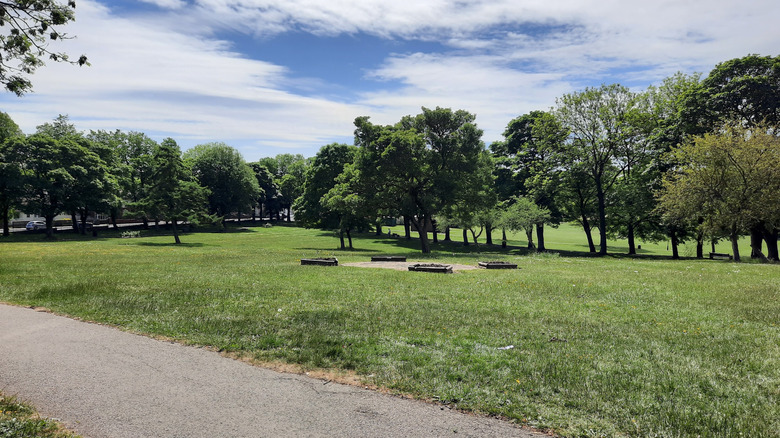
While history nerds explore Shildon's locomotive heritage, outdoor enthusiasts can get a breath of fresh air at Hackworth Park. Named after the local engineer, this sylvan oasis opened to the public back in the Edwardian era, with the original bandstand from 1913 still standing proudly among shady trees. Head out for a walk across the park's wide grassy fields and beneath its leafy canopies. Pet owners can also bring their four-legged friends along. Despite being in the town center, the woodland scenery feels like a slice of the countryside. In the springtime, flowers burst into bloom, while crunchy leaves litter the ground in the autumn.
Families can bring kids of all ages to the park's playground, where swings and slides are sure to be a thrill. There is even a statue of Timothy Hackworth, along with an old wooden railway wagon mounted atop a small plinth. Particularly picturesque is the section of the Shildon Rail Trail that cuts through the park. Following along a branch line of the Stockton and Darlington Railway, the paved footpath is framed on both sides by rows of towering trees, with benches offering a spot to soak up the tranquil atmosphere. Visitors can also explore the park's apple orchard and wildflower meadow.
Just opposite Hackworth Park is St. John's Church, an impressive Victorian-era edifice built in the Gothic style. Wander along the footpaths cutting through the tree-shaded grounds, or head inside to see the grave of Timothy Hackworth. After spending time in Shildon, drive just 45 minutes to Northallerton, a charming town with shops, local eats, and nearby national parks. Another great destination about an hour away is Guisborough, a North Yorkshire gem with quaint shops, ancient ruins, and moorland adventures.