
Here's What Happens When A Plane Passenger Becomes A 'Biohazard' In Flight
If you feel like air travel is getting more unpleasant with every passing year, you're not alone. From increasingly frequent delays or cancellations and shrinking airline seats to rowdy or even violent passengers, it seems like flights can't get any worse. But it turns out that they can, as frequent flyer Meghan Reinertsen, who referred to herself as a "biohazard" after a horrific ordeal on a trans-Atlantic leg, confirmed.
On a long-haul flight, you'd expect to use the bathroom once or twice. But sometimes, nature doesn't just call — it rocks up kicking and screaming, and demands to be immediately heard. And although flight attendants hate when passengers use the airplane bathroom at the wrong time, there are instances when you have no other choice, as Reinertsen shared. The actor, teary-eyed, recounted her experience on a United Airlines flight in a TikTok video posted in July 2025 that has garnered over 2.4 million reactions. As a result of an undercooked hamburger she consumed, she spent part of her flight simultaneously vomiting and defecating in the teensy commode. And after the plane landed, she was informed that the next flight had been canceled, as the plane had to be thoroughly disinfected.
@meghanreinertsen Part 1 of how I personally got a United flight cancelled #storytime #airplane #diarrhea @United Airlines
While explosive diarrhea on an aircraft thankfully isn't a daily occurrence, it does happen. You'll likely recall an infamous diarrhea incident of 2023, where Delta Airlines had to divert its Spain-bound flight back to Atlanta due to "a biohazard issue" after a sick passenger left a trail of poop down the plane's aisles. But rest assured, there are procedures in place for those (hopefully rare) incidents when a plane passenger does have a fecal-related emergency mid-flight.
How the flight crew addresses on-board biohazard issues
Safety is obviously the highest priority on any airline and is the primary job function of the crew (it's not to conduct in-flight service, which is one of the biggest misconceptions about flight attendants). This includes ensuring that all passengers have fastened their seatbelts when the sign is illuminated — and yes, they always pay attention to who follows this simple airplane rule. However, exceptions to the rule can be made in emergencies.
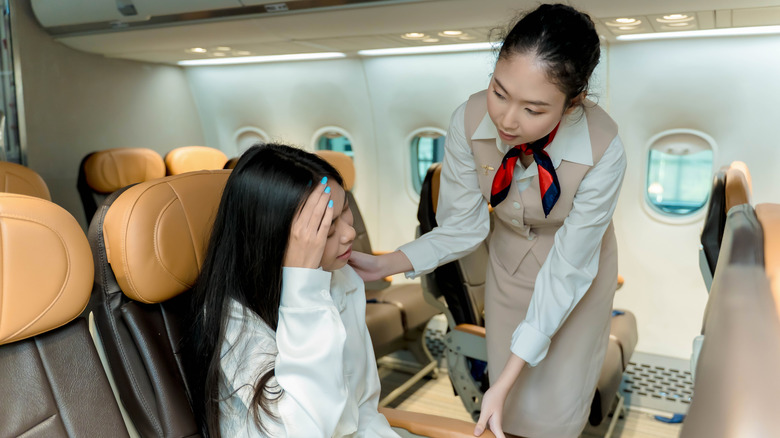
If a passenger cannot make it back to their seat due to a medical issue, flight attendants may get clearance from the pilot for him or her to remain in the bathroom and get in the brace position during turbulence and when landing. They can assist in small ways by bringing cups of water, hot tea or other drinks, and barf bags or by providing basic medical care. Depending on the emergency, a request for an on-board doctor might even be put out. They're also able to control the bathroom queues, allowing sick passengers to cut through the line, and they might reassign the individual to a closer seat.
Diarrhea and other bodily fluids, like vomit or blood, can transmit infectious diseases such as Norovirus or worse, so a hazmat team will be required to do a deep clean of the plane. But mid-flight, cabin crew will isolate the area and use on-board disinfectants, absorbents, and other items at their disposal to clear what they can. Flight staff are typically trained in how to remove small spills of bodily fluids appropriately, so that contaminants are not simply spread around. Upon landing, a professional crew, wearing full protective personal equipment will take over the cleaning and disinfection process. And if the situation is extreme, then the following flights may be delayed or even canceled.