
The Rare Landscapes Of This Vacation Destination Has Fodor Begging Tourists To Stop Visiting
Toward the end of 2025, the publisher Fodor's posted its annual "No List" online. In this case, "no" means "don't travel to these places," and not because of tyrannical governments or rampant street crime. The "No List" seeks to combat overtourism, guiding travelers away from traffic-weary destinations. This is a quirky practice for a publisher of travel guides, which are designed to empower and motivate readers to see the world. But as places like Montmartre and the Canary Islands see an ever-growing tidal wave of visitors, the grim effects of crowds, litter, overbooked hotels, and rising costs of living take a serious toll on a community. Overtourism has become a big problem for many popular destinations, and locals are fed up.
Yet one location on the 2026 "No List" seems very different from the others: Antarctica. Readers may have raised eyebrows at the inclusion of this southernmost land mass. Antarctica? But nobody lives there! It's not even a sovereign nation! How can overtourism harm an entire continent, let alone a continent twice as big as Australia?
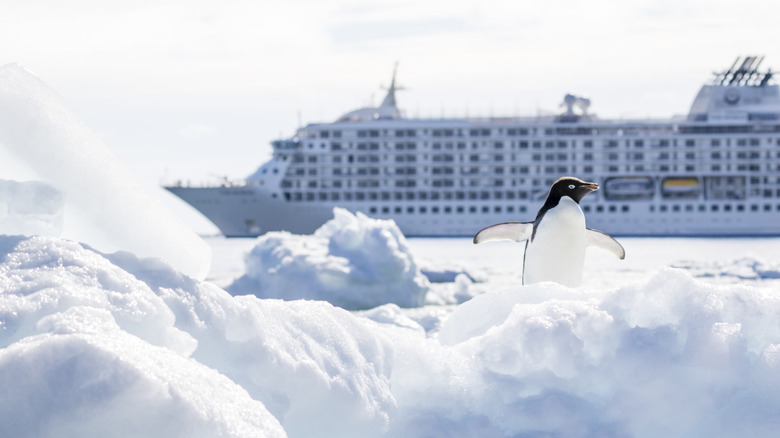
Fodor's argued otherwise, and Antarctica topped the list of less-than-ideal travel options. "[T]he most recent data showed the continent received 120,000 visitors from 2023 to 2024," the post reported. "That's projected to double by 2033, making the call for restraint crucial." So far, damage to the environment appears to be minimal, and cruise ships can't drop gangplanks in Antarctica, since there are no moorings are large vessels. Yet Fodor's reports that there's no official limit for the number of tourists, and this could pose problems in the future. Most tour companies are members of the International Association of Antarctica Tour Operators (IAATO), which promotes responsible travel, but ballooning popularity may attract more brazen operators, as well as a fleet of private vessels.
A gathering tourist storm over Antarctica

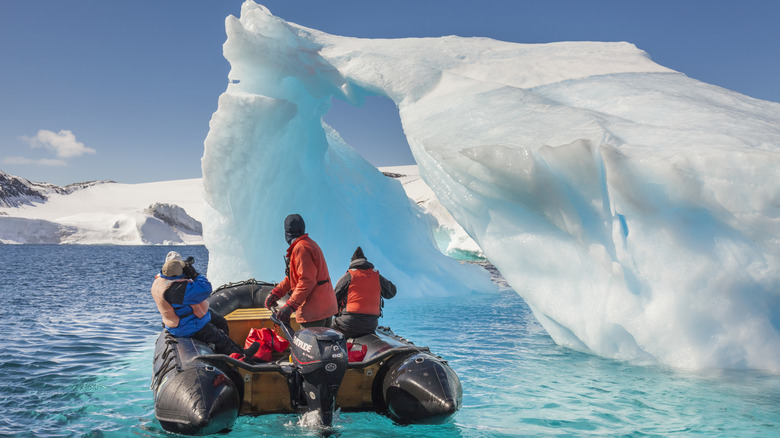
With its remote location and lack of indigenous people, Antarctica can feel like the "clean slate" of human exploration. Many are drawn to its vast openness, the colossal scale of its mountains and icebergs, and, of course, all the tottering penguins. This interest has grown exponentially in recent decades; in the early 1990s, an average of 5,000 tourists visited Antarctica each year, a number that may have seemed high at the time. Most people living in Antarctica were only there during the warmer months, and nearly all of them were scientists. This remains true today, as about 5,000 summer residents are posted across more than 60 research stations.
Since that time, technology has improved, travelers are generally more mobile, and curiosity about the South Pole has gone mainstream. Antarctica is a hotspot for climate change concerns, and many want to see the continent's walls of coastal ice "before they're gone." More cruise ships are chugging through Antarctic waters; the spectacular scenery can feel like a final frontier for adventurous passengers with a high tolerance for cold. Popular media, like the 2005 documentary "March of the Penguins," have triggered enthusiasm with spectacular cinematography.
With popularity comes criticism. The journey isn't cheap — tourists may be surprised by how much it really costs to visit Antarctica, which could be as much as $40,000. It's also this high price tag that has led some to see the continent as a playground for moneyed status-seekers. In 2016, the New Yorker magazine ran a grumpy long-form essay by Jonathan Franzen, the acclaimed novelist and avid birder, who traveled to Antarctica on a National Geographic Expedition. Throughout, he characterizes his fellow travelers as wealthy amateur photographers with little interest in ecology or conservation. After seeing how tourism has trashed hard-to-reach places like Mount Everest, could Antarctica be next?
How Antarctica could get back on the 'yes' list
Back to the "No List," Fodor's concludes its Antarctica argument with this line: "[T]he scholars most sympathetic to ecotourism agree: Antarctica isn't meant to be on anyone's bucket list." A noble assertion, but it may be wishful thinking. Humans didn't document a sighting of these shores until 1820, and The Last Continent still feels new. At the same time, Antarctica is more accessible than ever, and for many, receding icecaps and the threat of human damage to the ecosystem only make a visit feel more urgent.
The logical solution would be to cap visitors at a certain number. Who would do this, and how would it be enforced? Those are difficult questions to answer, given the many nations that signed the Antarctic Treaty in 1959 and passively supervise the continent. No one really "owns" this land, nor does any single nation have a right to police it (although you do need a passport in order to visit there, no matter your point of origin).
There's also the possibility that the fad will ebb on its own. There are only so many billionaires, and multi-week expeditions are pricey, even for super yachts. For tour operators, membership in IAATO provides oversight, community, and purpose, and the organization is serious about minimizing waste, avoiding whale strikes, and banning drone use. And although tourist numbers are ballooning, many cruise ship passengers are content to see Antarctica's coast, without ever setting foot on the continent. Finally, there's the forbidding climate, which shouldn't be underestimated; in 2025, Antarctica just got a new U.S. travel advisory alert because of its changing weather conditions.