
The Caribbean Islands With The Mildest Weather You Can Visit Any Time Of Year
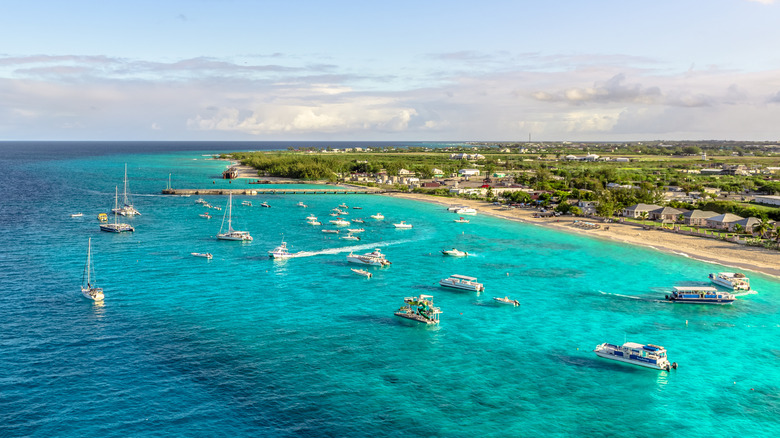
The handful of destinations that offer a reliably comfortable temperature range year-round are a godsend for trip planning. In these places, there's no need to time your visit just right, since almost any month works for a honeymoon, winter escape, or last-minute vacation. The islands of Turks and Caicos fall into that category. With consistently mild conditions, it's practically beach-ready just about any time of year. Boat touring agency Big Blue Collective has even called the archipelago "the best Caribbean Island to visit year-round," largely due to its tame weather.
Island destinations generally experience milder weather than, say, inland places like the contiguous United States, since the surrounding waters act as a thermal buffer, absorbing heat in summer and releasing it in cooler months. The Turks and Caicos benefit especially from this temperature-stabilizing effect. Its largest island, Middle Caicos, spans about 16 miles at its widest point, meaning no area is too far from the sea. As such, the temperatures across the islands typically fluctuate by no more than about 10 degrees Fahrenheit over the course of the year, according to Visit Turks and Caicos Islands. With relatively low rainfall and fewer weather extremes, you can enjoy the 10 best Turks and Caicos beaches in any season without worrying about an unpredictable climate.
What is the weather like in Turks and Caicos?

Make no mistake — Turks and Caicos islands do experience seasonal temperature shifts, but the differences are normally modest. Take, for example, Providenciales, one of the world's most spectacular beach destinations and the most populated of the archipelago. According to Climate-Data.org, the two months with the greatest average temperature differences on the island are February and August: February averages about 75.6 degrees Fahrenheit, while August averages around 82.3 degrees. The temperature of the surrounding waters fluctuates even less, so it's almost always comfortable enough for a swim.
Rainfall is another area where Turks and Caicos stands apart from much of the Caribbean. Most Caribbean islands have tropical climates with a pronounced wet season marked by frequent heavy showers. On the other hand, the Society for Sedimentary Geology classifies Turks and Caicos as a subarid climate destination, meaning it receives significantly less rainfall. On average, the archipelago only sees about 43 rainy days per year, compared with the Caribbean-wide average of roughly 149. In some destinations in the eastern part of the region, the number is even higher — Trinidad, for instance, averages 225 rainy days annually. Even when rain does fall in Turks and Caicos, showers are usually brief.
The one time of year to avoid Turks and Caicos
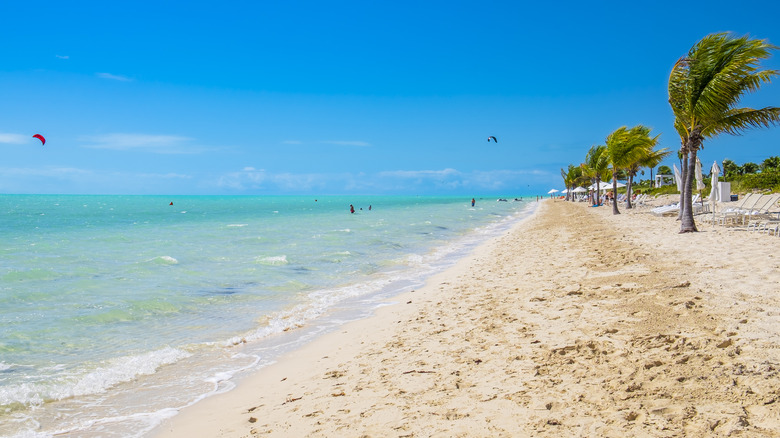
Like much of the Caribbean, Turks and Caicos is affected by hurricane season, albeit to a lesser extent than its neighboring islands. Hurricane season runs from June to November for the Caribbean as a whole, but the period of greatest risk for the archipelago typically falls between mid-August and September, per Visit Turks and Caicos Islands. This time of year is considered the worst to visit the Caribbean islands due to the increased risk of severe weather and rough surf. That said, while major hurricanes don't always make landfall in Turks and Caicos, regional storm activity can still disrupt flights and travel plans.
Peak travel season in Turks and Caicos typically coincides with winter in North America. From December through March, temperatures are warm without becoming too stifling, providing a balmy escape from the colder climates farther north. During these months, rainfall is nearly absent, humidity is lower, and you get around eight hours of sunshine each day. It goes without saying that the tradeoff is that the islands will be much busier during this time. If you're looking to balance ideal weather with thinner crowds, consider visiting late April to early June. Travel blog Forever Nomad notes that this post-spring break period typically brings fewer visitors, lowers hotel rates, and offers warm weather with relatively low rainfall.