
5 Easy Hacks That Keep Your Tent Secure When Camping In The Wind
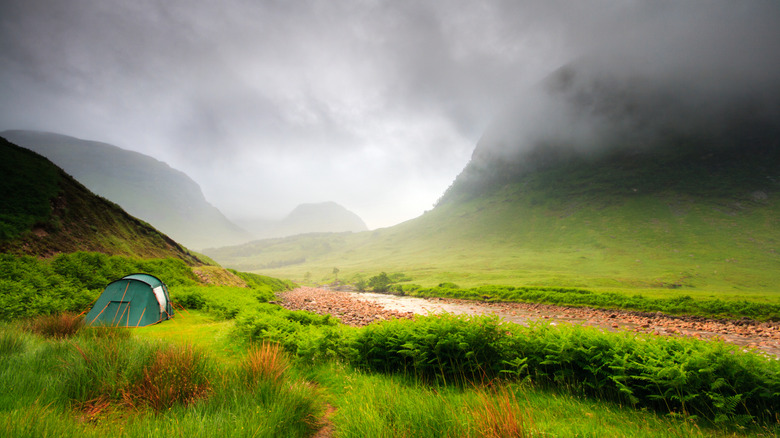
Even the most outdoorsy people can sometimes be caught out by bad weather. These intrepid souls can plan, plan, and plan some more only to find that, when they're out on an adventure in the middle of nowhere, the forecast they'd seen earlier that week turned out to be completely wrong. Clouds can roll in like they've got a personal vendetta, torrential rain can start to fall without mercy, and the wind can start battering into such people in a way that feels surprisingly violent. To help combat such a scenario, and ensure that you're still able to pop up your shelter when that solitary gust suddenly turns into a gale, look no further than these handy hacks for keeping your tent safe and secure when camping in the wind.
Whether you're keeping it relatively close to civilization or making your way to an incredibly remote spot, where the phone reception and signs of other people are virtually non-existent, this collection of tips should serve you well. Once you've schooled up on the stuff below, be sure to keep the educational process going by reading all about other DIY camping hacks that, according to Reddit, will instantly improve your outdoor adventures and, maybe more importantly, make you look like an expert survivalist in front of your friends and family.
Picking the right place to pitch is everything
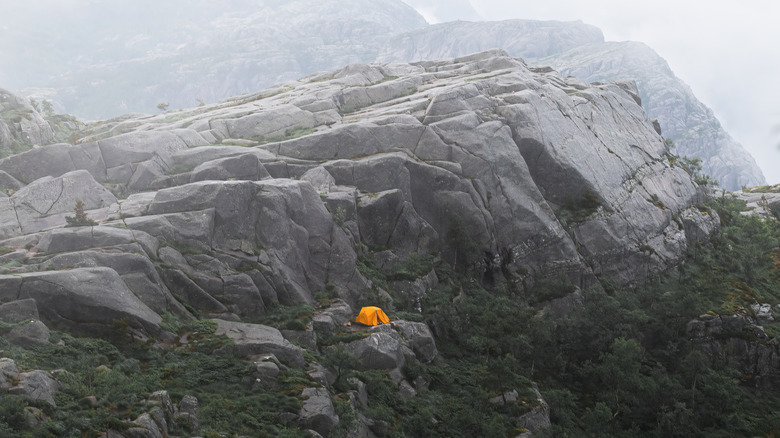
It might sound obvious, but picking the right place to pitch your tent is crucial. In paradisiacal weather, failing to properly consider the location of your overnight shelter might result in an unsatisfying sunset view or an uncomfortable night's sleep. When winds are strong, however, a poorly placed tent can have far more dire consequences.
Firstly, do not — under any circumstances — set yourself up beneath branches or in a spot where unsteady trees could potentially topple over in strong wind and land on top of you. This scenario playing out could end up being a rude awakening at best, and something considerably more dangerous at worst. When putting up your tent, it's also important to stop and take a minute to think about anything else in the surrounding area that a storm could send flying your way. Assess those flooding risks as well, as strong winds can often come at you in tandem with heavy rain.
Of course, by choosing to be outdoors in something approaching a gale, you're not going to be able to totally avoid the feeling that you're camping in some sort of wind tunnel. You can, however, utilize the terrain to your advantage. Don't camp in exposed locations like beaches or hilltops. Do look for natural windbreaks such as low bushes, large rocks, or small hills. If you have your vehicle with you, consider how to bring it into the equation. Pitching behind it, roughly a metre or two away, can work well.
Think about how you're positioning your tent
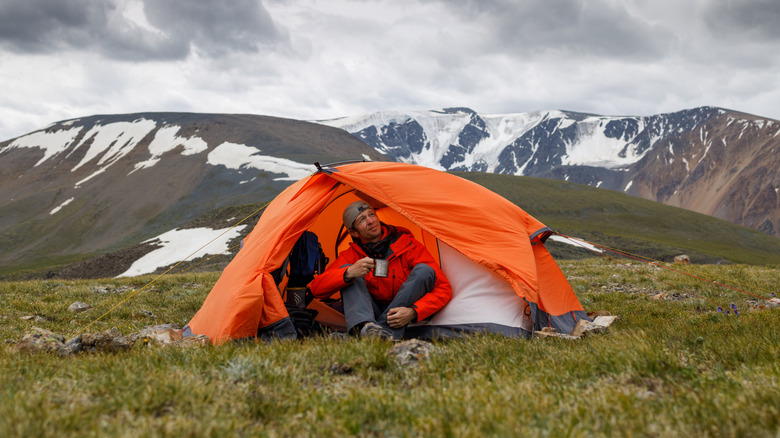
When it comes to camping in high winds, it's not just about where you set your tent up but about the way you position it as well. Before settling in for the evening, get a good sense of which direction the wind is coming from. Once you've made this assessment, ensure that the narrowest side of your tent is facing towards the onslaught of the wind. By using this tactic, you're effectively reducing the size of the surface area being hit. This means that rather than turning your tent into a sailboat, you're giving it a chance to cut through the wind flow like a knife.
Another aspect of this camping hack to consider is the direction your tent door faces. The tent door should be looking away from the wind, not towards it. Not only will this prevent strong gusts from entering your shelter and potentially destabilizing it, but it will also make things less chaotic when you're getting in and out.
Check that your tent is secured properly

This is one of those tips that might seem too obvious to mention, but it's a stage of pitching that — especially when the wind is coming in at you hard — can easily be rushed through or overlooked entirely. When the weather is nice, of course, taking the time to check whether your tent is well connected to the ground doesn't feel like a chore. When the wind is hitting you like a force of nature, though, and all you want to do is jump in your tent and cower the night away in a sleeping bag, those extra few minutes of circling your tent and checking everything will seem like an ordeal. But, honestly, it's worth doing and doing right.
Things to consider on this front include adding extra guylines and tent pegs where possible. By adding this additional level of security and anchoring your tent more firmly to the ground, you're reducing the likelihood that your tent — with you inside it — will fly off into the sky like Dorothy during that tornado at the start of "The Wizard of Oz."
Regarding your tent pegs, you'll want to hammer them into the ground at a 45-degree angle (pointing away from the tent). This will significantly increase their hold strength in foul weather. It also means that the guidelines they're keeping secure are far less likely to come loose or, even worse, detach completely. Want to rest a little easier? Angle those tent pegs. Once you're inside the tent, it's worth getting your bulkiest camping gear into the corners. Spreading out the weightier items you have, such as heavy backpacks, will keep your shelter fixed in place and reduce the impact of the wind.
Put the groundsheet down after your shelter's gone up

From overnighters in the backyard to festival campsites and remote patches of wilderness, almost everyone — at least once in their life — has witnessed someone trying and failing to put a groundsheet down while exposed to the elements. It almost never goes well. The wind gets under it, hoists it into the air, and turns the whole sorry spectacle into a comedic scene from a slapstick silent movie.
To avoid becoming yet another victim of the overly flappy groundsheet, what you can do is pop the shelter part of your tent up first. It might seem like a strange way of doing things, but it means you'll be able to quickly and calmly slide the groundsheet — which is so important for protecting the bottom of the tent and providing additional warmth and waterproofing –- underneath without having to pull a WWE move on it. This tip's especially useful if you're on a solo camping trip and don't have anyone with you to hold down the other end of the groundsheet during strong gusts.
Connect up your tent poles before doing anything else
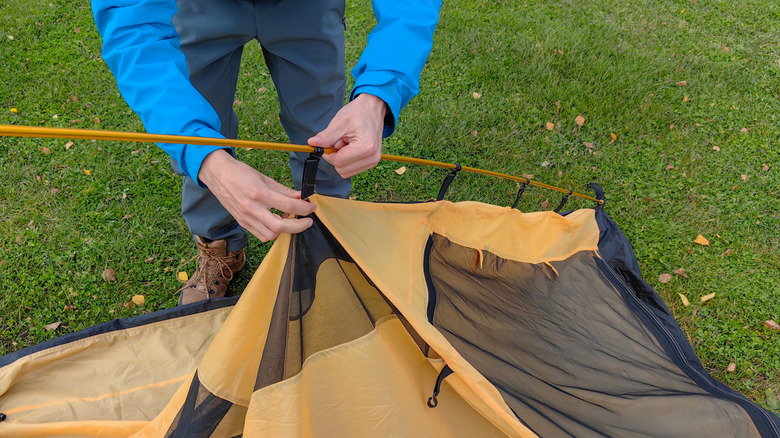
One trap that's easy to fall into when putting up a tent in windy conditions is to take out the tent fabric before you've connected up the poles. Do things this way, and you'll unleash the chaos of an uncontrollably flapping shelter, with no way to quickly and calmly get the situation back under control.
Those poles are what give your outdoorsy palace its structure. They are, to look at it one way, the very bones of the thing. In high winds, when the elements dramatically reduce that sense of control, you'll be thankful for the sense of order they provide. But only, that is, if you join them all together before doing almost anything else. Honestly, it will just make your life so much easier. Speaking of making life easy, before you head out into the wilderness this winter, consider getting these Costco outdoor gadgets for cold-weather camping.