
5 Clothing Colors You Should Always Wear On A Summer Hike
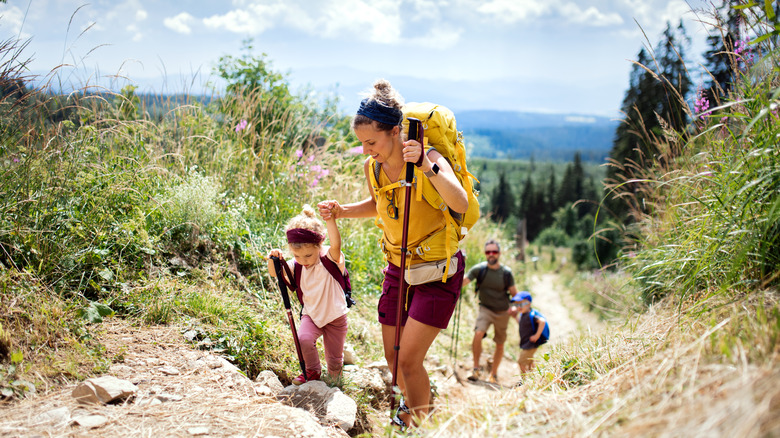
Hiking and fashion meet at a strange intersection. On the one hand, hikers are usually practical. They want clothing that's lightweight and breathable, moisture-wicking and low-maintenance. Few hikers perseverate over cut and color, or at least they don't think they do. Floppy hats and cargo pants won't win us any style points, but they're pretty handy in the woods. Does this shirt match these shorts? Who cares? They'll soon be covered in mud, rain, and dead midges.
On the other hand, a lot of thought goes into the creation of hiking gear, right down to the shade of the fabric. In fact, the color you wear on a hike can have tangible effects on your outdoor experience, especially in summer. Hikers concerned about sun exposure, dehydration, and insect bites may not even realize the impact their outfits' colors can have. These can even be life-saving; first responders recommend certain hues to make you easy to spot in a wilderness emergency. If you're looking for the best gear for taking a hike on vacation, thoughtful tones can go a long way. Here are five clothing colors you should always wear on a summer hike, according to experts and avid outdoor enthusiasts.
White
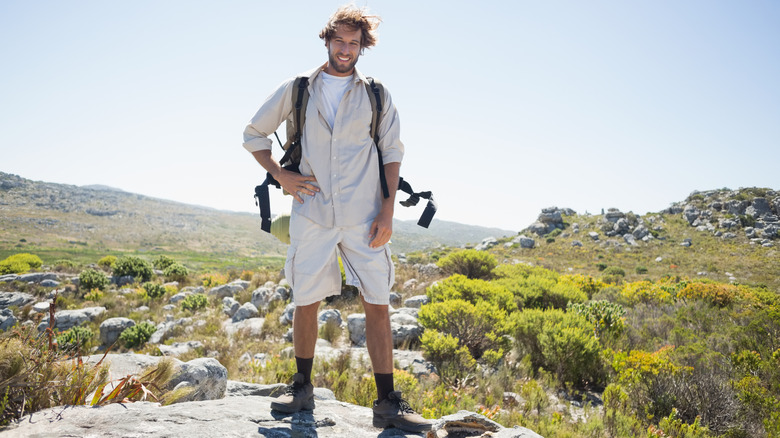
In summer, bright is better. At this point, most people know that dark colors absorb solar heat, which is the main reason blacktops and car seats get so hot. This may not affect you on a regular sunny day; throwing on a black T-shirt and stepping outside will not result in immediate heat-stroke. But if you're hiking in a sunny place, your body will likely heat up much faster, especially if the clothes are tight-fitting. More heat means more perspiration, which means drinking more water.
The opposite of black is white, a color that can actually deflect light (and heat). Again, you can still roast wearing white clothes, but you're less likely to dangerously overheat over time. This is one reason Arab men tend to wear paper-colored thawbs; Middle Eastern deserts don't offer much protection from the sun, and these flowing garments protect the body from head to toe. For typical Western hikers in the summer, these could come in the form of white T-shirts, white shorts, and a white brimmed cap. Many may think of a white cotton shirt as default hiking wear, but this is actually the one clothing material you should never wear on multi-day hikes.
Gray

There's a problem with white, of course — one little mark or blot will really stand out. Few people like to wear pure white in the woods, which is why the grayscale comes in so handy. Just a slightly darker shade will help cover the grime and sweat stains that tend to come with hiking. For the fashion-conscious, gray also matches just about any other color. Not sure what to pair with these blue jeans? What about that maroon hoodie? Not to worry — a gray T-shirt should always work.
Naturally, the lighter the shade of your gray clothing, the less sun it will absorb, and it will also be less appealing to mosquitoes. The opposite is also true: Some grays are extremely dark, so you might as well be wearing black. As with all the clothing on this list, material and style are factors to consider, as is the location of your hike. Summer treks in the relentless desert sun might call for a grey long-sleeve to protect your arms from burning, while hikers in the shade of the forest can probably use a basic T-shirt.
Orange
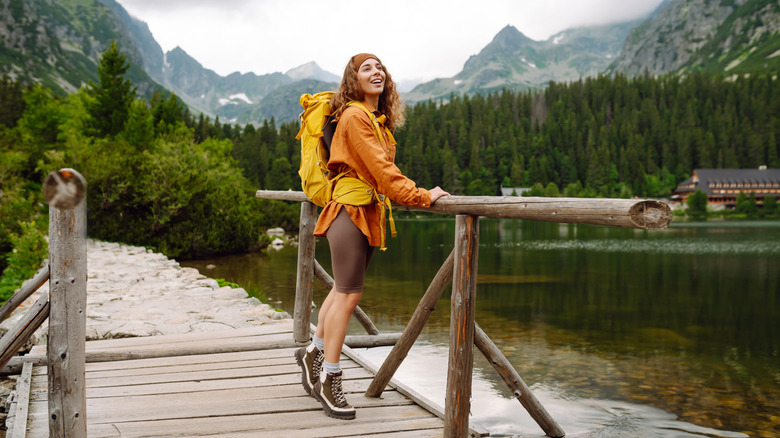
Bold and bright, "hunter orange" is a color long associated with autumn. Many parks require us to don a certain amount of orange during hunting season to ensure that marksmen don't mistake us for grazing deer. Caps, coats, and vests are all handy accouterments during rifle season, making your presence known long before any details come into focus.
Yet orange also stands out in the summertime, which could save your life in the event of an emergency. One of the biggest challenges for rescue teams is finding a hiker who is lost or injured in a vast natural space; this is one color the National Park Service recommends wearing during your visit. People are much easier to spot when they wear bright orange, even through layers of foliage. Orange has the added benefit of deflecting light, just like other bright colors. Orange is a distinctly artificial hue, and it can feel tacky or clinical in the woods, but it's actually one of the most beneficial colors you can pick for a forest ramble. Stores stock up on hi-viz gear when the leaves start to change, but you should be able to find items at most retailers all year long.
Buyer beware: Researchers have found that orange and red will attract certain insects, especially mosquitoes. Summer hikers might avoid these colors if they plan to spend time around swamps or still water. But if you're in the drier parts of the world or at high elevation, it might not be too big a deal.
Blue
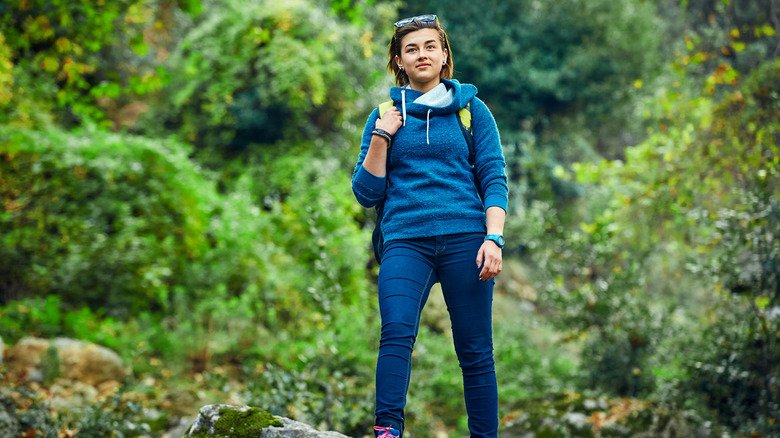
Contrary to popular belief, the color blue doesn't occur much in nature. Legions of people identify this as the shade of the sky, but blue is rare among minerals, animals, and plants, and some cultures don't recognize blue as a legitimate color. Yet blue is a very popular choice for clothing, from denim to ball caps to windbreakers, and this color will likely serve you well in the hottest months.
Like gray, blue comes in many values and shades, and lighter versions — like cyan, turquoise, and sky blue — will deflect light better than their darker cousins. Akin to orange, bright blue is usually easy to spot in natural spaces, and you should stand out against grass, rocks, or trees if rescuers are trying to track you down. Most hikers find blue to be less garish than orange, which may make you feel more comfortable in the presence of other hikers. The downside is that blue may attract bugs, depending on how light or dark it is.
Yellow
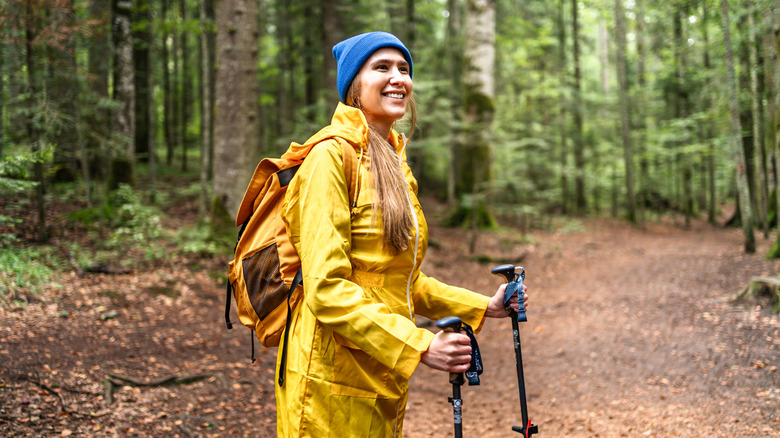
Yellow is a bright color, so it has all the reflective quality of white and orange. It also stands out against an earth-toned background, so yellow is recommended for potential emergencies. Yellow comes in different qualities, from the muted banana-like yellows of old-school rain jackets to neon active wear for runners and cyclists. In fact, yellow rain gear is an old tradition, dating back to the 19th century. This color feels a little more natural than orange, and it's not quite as easy to blemish as white.
Yellow does have several downsides. First, it's a color that naturally occurs in nature, especially in autumn. Wearing it at the tail end of summer, when some leaves are beginning to change, could reduce its usefulness during emergencies. Second, yellow attracts many kinds of insects, and not just any species: flies, mosquitoes, bees, and mayflies are all drawn to it, which can make you feel like a walking lunch ticket.
Methodology
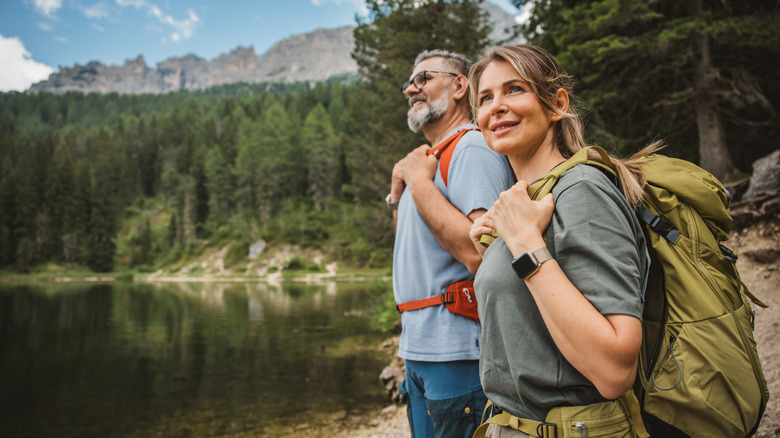
For warm-weather hikers, the two main concerns are heat, insects, and visibility. We consulted a wide range of online sources and found that these colors are the most effective for all three. Even if you wear some black and earth-toned fabrics, summer hikers will benefit from wearing some combination of the colors above. These colors are generally unisex as well; despite our enlightened times, pink garments remain fairly gendered, although they have similar benefits to orange. Many bloggers described these brighter tones as "pastel"; the exact color doesn't matter, as long as they're bright.
Such pastel hues could include light green, which will deflect solar heat and attract fewer mosquitoes. That said, green is about as camouflaged as summer outfits get, and wearers tend to blend into almost any natural environment, even deserts and rocks. For safety's sake, you should probably avoid green or combine it with brighter hues, especially in remote backcountry.