
No Foil, No Problem: These 5 Campfire Techniques Have You Covered In A Pinch
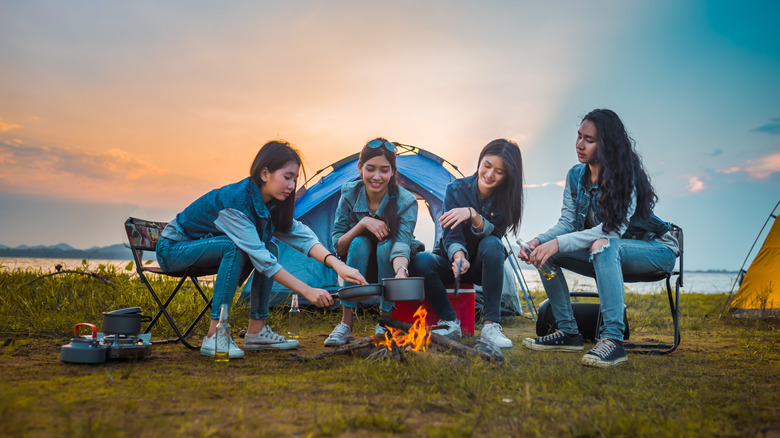
When you think about it, aluminum foil is kind of magical. It's made of metal but weighs about the same as paper. It tears easily, yet you can shape it into a nearly airtight pouch. While foil doesn't burn up in a normal fire, it'll thoroughly cook whatever it's wrapped around, and once you remove it from the flames, you can soon touch the foil with your bare fingers. For more than a hundred years, cooks and campers have used these aluminum sheets to line their pans, roast meats, and store leftovers for later. Foil is practically designed for campfires; you can encase almost any kind of meat or vegetable and place it near the open blaze.
But what if you don't have any foil? There are a few reasons this might be the case: Large rolls can be long and awkward to pack, and multi-day hikers might run out over time. Other campers observe a "leave no trace" policy, which would mean carrying scorched and crumpled balls of foil in your backpack until you leave the wilderness area. Some worry about foil's environmental impact, both in the way it's produced and the space it takes up in landfills. Like soap, a supposedly eco-friendly camping item that you should avoid using, aluminum foil leaves its mark on the environment.
Here are some techniques for foil-less cooking — styles of campfire cuisine that can be simple, sustainable, and delicious. Whether you're heating up a well-used grill at a KOA or building your own fire pit in the backwoods, these five methods all make for filling meals. Campers have cooked in most of these styles for thousands of years, and you can customize in infinite ways.
Kabobs
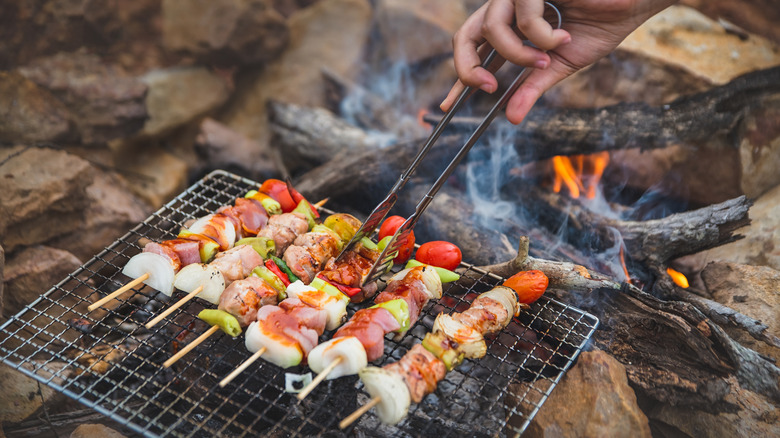
The word "kebab" is most likely Arabic in origin, and skewered meats and vegetables are a Middle Eastern specialty. Variations of kebabs are found all over the world, partly because the process is so simple: Take a clean stick, drive it through edible morsels, then lay it over a fire. Marinades and seasonings go a long way, but they're not strictly necessary; a heated cherry tomato or hunk of beef is flavorful all on its own.
Skewers take all different forms, from reusable metal rods to disposable bamboo shafts. No matter what the length or material, pretty much all skewers are lightweight and easy to pack. If you're eager for kebabs but didn't bring any skewers, you could potentially fashion your own out of green branches. Many campers will chop up ingredients and string them together, but feel free to get creative; some anglers drive skewers through whole fish and rotate them like a spit. When you're finished, you can toss your skewers into the embers and watch them go up in smoke.
Kebabs do come with a few challenges: Fresh ingredients don't keep well, especially on multi-day hikes in warm weather. Meats and veggies are hard to store in a backpack, so they're better suited to car-campers or RVers with refrigerators. A standard skewer is about a foot long — give or take a few inches — and they're usually laid on a grill. If you don't have a grill, this can pose a problem, as store-bought skewers may not be long enough to lay over a fire without additional support. If you're stocking up on new equipment, here are the best grilling accessories for your camping cookout.
Peasant skillet
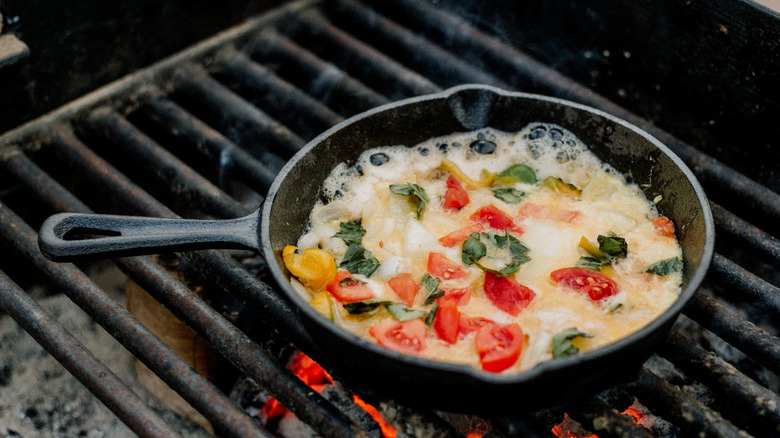
One of the all-time handiest inventions is the metal skillet, an implement that has fed hungry hikers for at least 2,500 years. Skillets come in many depths and diameters, but nearly all of them have a depressed circular body and a single handle. You can fry up almost any edible item, from meats to eggs to veggies. You can toast bread, simmer stews, wilt greens, or soften potatoes.
The phrase "peasant skillet" is a catchall for simple recipes that involve a mishmash of ingredients. You can make eggs, hash, or pancakes for breakfast, then stir fry, paella, or fillets for dinner. Dishes can be simple; they're called "peasant" skillets because medieval serfs often blended whatever meager rations they had, but you can also enhance your recipes with any spice or sauce you're willing to carry.
Skillets do have their drawbacks, though. They're bulkier than skewers, and some are downright heavy. As with the kebabs, perishable items won't stay fresh for long. Greasing the pan is important, as many ingredients will stick to the metal and burn its surface, but for backpackers, this means toting heavy oils, meltable butter, or space-taking spray bottles. You also have to wash the pan out, which means finding a supply of clean water and using eco-friendly soaps. All of these issues are easier for RVs and established campgrounds.
Soup, stew, and chili
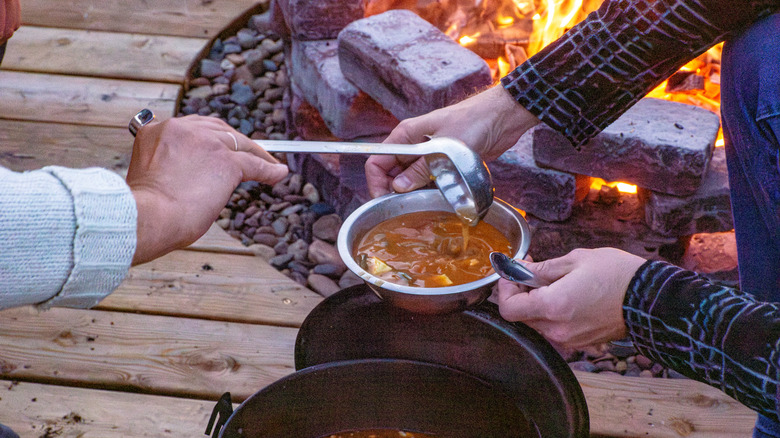
Soups and stews are a great option for outdoor meals, especially in the cooler months. There are so many ways to make soup: You can buy dry kits, which are light to carry and easy to mix with hot water. You can carry sealed cans and heat them up in a pot; some campers even place the opened metal can near the fire, though there are widespread health concerns about this practice. You could even make soup from scratch if you carry the right ingredients. You can prepare soups in just about any quantity; solo hikers can feed themselves with some Campbell's and a Jetboil stove, while large groups can make a big batch and ladle portions into bowls. Chili is another favorite, and this bean-heavy dish is a great source of fiber and protein.
Each version of soup has its specific challenges. Full cans are heavy, and you'll have to dispose of them somewhere. Dry kits require fresh water, which can get challenging in some environments. If you're cooking fresh meat in your stew, you'll have to figure out how to transport and cook it thoroughly. The biggest complaint about these liquid-based meals is that they're not always filling; you might consider bringing along loaves of bread to scoop up the soup and help satisfy a big appetite.
Burritos and wraps
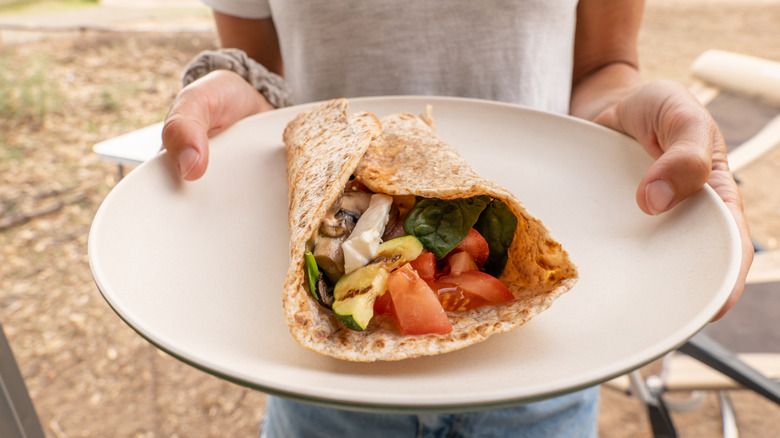
Tortillas are light, simple, and compact, and you can stuff just about anything into them. You can fold them over like a taco or seal them like a burrito. The same goes for pita, naan, or lavash — all floppy flatbreads designed to enwrap food. Unlike a loaf of leavened bread, which takes up lots of space and can get mashed in your backpack, tortillas and their brethren are practically designed for easy transport. You can cook something elaborate over a fire, use raw ingredients, or even buy a few pre-packed bundles packaged in cling wrap. Whether you prefer chorizo and rice or tuna and cranberries, there's a flavor for just about any taste. Once it's ready, a wrap or burrito requires no silverware, making it one of the most versatile camping foods.
There really isn't a downside to tortillas, either, provided you're being efficient with them. You can use them for breakfast, lunch, or dinner, and you don't even need to bring heavy cooking equipment if you don't feel like it. (Obviously, if you're making a burrito from scratch that requires you to bring a skillet for the meat and a pot to cook up a big can of beans, you're not saving much space in your bag.) If you're looking for tasty new arrangements, here are two killer recipes to take your tacos to another level.
Fruits and veggies on a stick
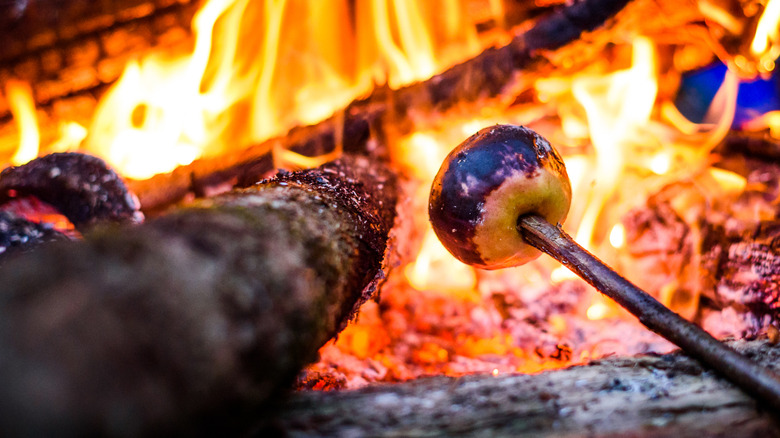
Roasting marshmallows over a fire is one of the all-time great camping traditions, ditto hot dogs and S'mores. But don't toss that sharpened stick into the flames just yet; there are plenty of other foods you can soften or char over flickering heat, no aluminum foil required. Many of these foods are fruits and vegetables: apples, potatoes, zucchini, pineapple slices, tomatoes, and bananas are all ripe for roasting. Once they're hot, you can flavor them with additional items: honey on apples, bananas with yoghurt, cheese over potatoes, adobo on zucchini, chocolate on strawberries, and countless other combinations.
This technique is very similar to kebabs, except that the stick is generally longer and held in your hand, so you're more likely to cook one item at a time. The trick is finding an ingredient sturdy enough to stay on your stick, and you may have to experiment before finding the right distance from the fire. Such primal cooking does come with a few challenges: You'll want a green branch, so that it doesn't easily catch fire, and you should avoid certain plants — like sumac — that can cause allergic reactions. You're likely to get bits of bark or other forest debris in your food, a side-effect that some can't stomach. But if you're willing to bring fresh produce into the woods, roasting on a stick is a cheap, low-tech way to power up.