
Wisconsin's Hands-Down 5 Best Suburbs Outside Milwaukee
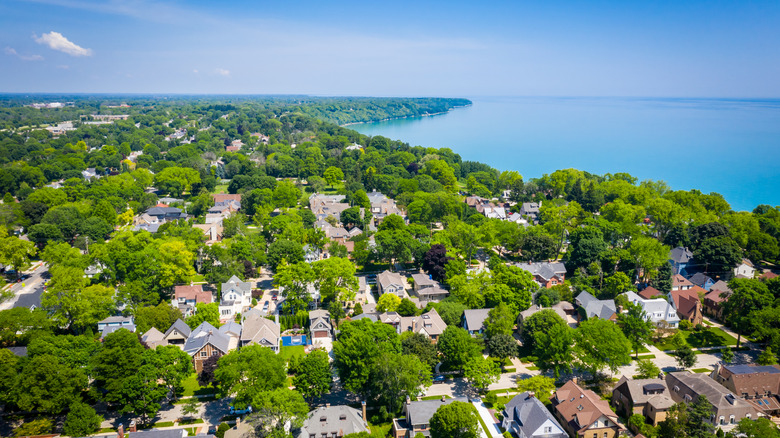
When it comes to Midwestern cities, it's hard to beat Milwaukee, the largest city in Wisconsin. Milwaukee, which is located in southeastern Wisconsin, lies on the sandy shores of Lake Michigan and offers no shortage of delicious restaurants, outdoor activities, architecture, museums, and walkable arts studios and galleries. In addition to being a city with a plethora of career and living opportunities, Milwaukee is also one of the more affordable Midwestern cities, with the average cost of living here being around 14% lower than Chicago, which lies around 90 miles south.
The city itself has a population of around 563,000 people, but there are about a million people living right outside the metropolitan area in one of the many suburbs of Milwaukee County. While there are several nearby suburbs in both Milwaukee County and neighboring counties, there are a few that stand out as the best. We considered a number of factors while calculating these best suburbs outside of Milwaukee — including location, the quality of local schools, crime rates, employment statistics, and more.
Though it's challenging to put together a definitive guide of the top Milwaukee suburbs, our picks here are a great place to start for both locals and travelers interested in exploring the best of the state. As a bonus, these final five cities are close to downtown Milwaukee and a short drive from the city's main airport, Milwaukee Mitchell International Airport. Of course, any Wisconsinites reading can always argue for their own!
Brookfield
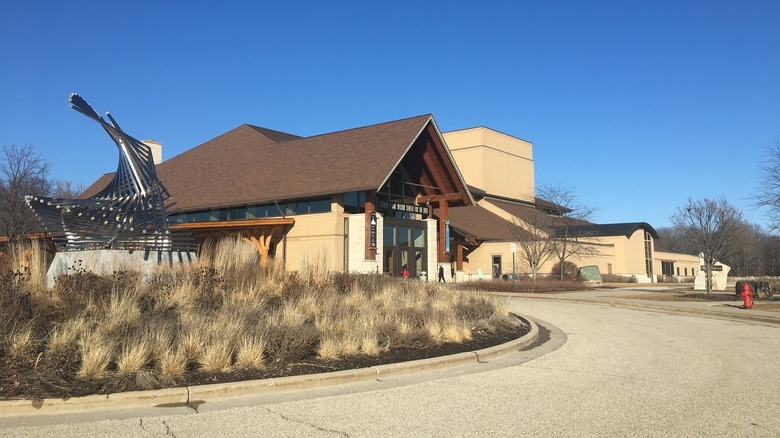
The town of Brookfield took home the first-place spot for best suburb of Milwaukee by both Niche and Fulton Grace Realty. Although the city technically lies within Waukesha County, it is located around 14 miles west of Milwaukee and considered part of the metropolitan hub. Brookfield has a population of around 41,000 people and has been a major hub for people to live just outside the city for nearly a century.
Brookfield is ranked the highest among Milwaukee's suburbs, thanks to its high ratings for its public schools, housing, quality of life for families, outdoor activities, and nightlife. Even though Brookfield is located a short drive from downtown Milwaukee, residents don't have to travel there for either their everyday needs or fun activities. For instance, Brookfield is bursting with boutiques and tasty dining since it has its own major shopping center — the Corners of Brookfield. The city also has its own performing arts center, the Sharon Lynne Wilson Center for the Arts. In addition to many of the major chain restaurants, grocery stores, and convenience stores, Brookfield also prides itself on local establishments with a slew of small-town coffee shops, restaurants, and bars. Beyond the quality of life, Milwaukee Magazine also noted that Brookfield is one of the more diverse suburbs.
However, the cost of living in Brookfield is a factor that residents have noted is more expensive than in other areas. The median household income in Brookfield is $124,000, while the national average is around $78,000. Meanwhile, data solutions platform PayScale also calculated that living in Brookfield is nearly 16% more expensive than Milwaukee. Although it's more expensive, many residents note that the combination of an area with a good school system and the convenience of a big city in a suburb is worth the price.
Whitefish Bay
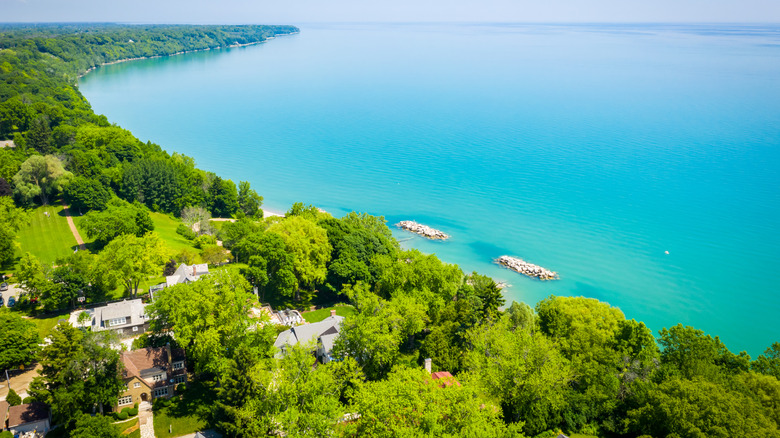
Whitefish Bay is also a short drive from downtown Milwaukee, just 7 miles north. While Brookfield is more inland, Whitefish Bay runs across Lake Michigan, so it offers similar picturesque views of the lake for miles. This suburb is part of Milwaukee County and has a population of around 15,000 people.
The village has more of a small-town, historical feel, with fewer chain restaurants and more family-owned businesses located around the walkable Silver Spring Drive. Since Whitefish Bay sits along Lake Michigan, there are several biking, hiking, golfing, and walking activities all year-long — including Klode Park, Cahill Square Park, Buckley Park, and Silver Spring Park. Niche specifically highlighted Whitefish Bay's recreational activities and parks, as well as its charming downtown local businesses, while Milwaukee Magazine applauded the suburb's tight-knit community. Meanwhile, Business Insider ranked it one of the best suburbs in the country, noting its recreational areas and birding opportunities.
In addition to the quaint feel and natural beauty of the village, Whitefish Bay also ranked highly in public education, commute, housing, and quality of life for families. However, similar to Brookfield, Whitefish Bay has a higher median income of around $154,000, with the median home value being nearly $500,000. Whitefish Bay also has a 17% higher average cost of living than the rest of the state. However, residents here also noted that the community is a major pro despite living expenses.
Elm Grove
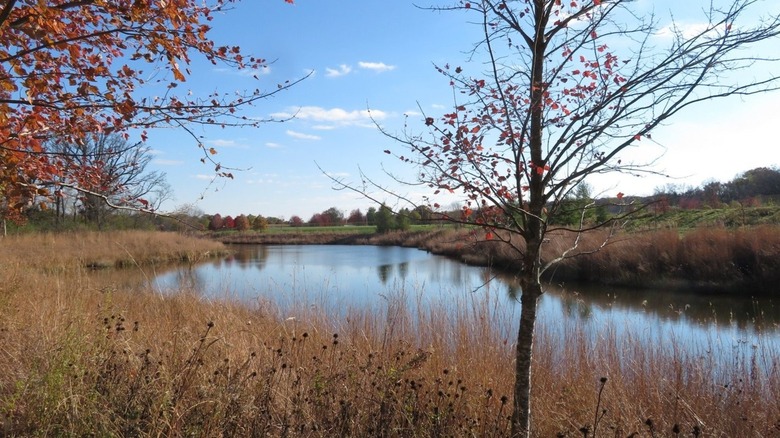
For many Wisconsin locals, Elm Grove and Brookfield can feel closely connected, though each suburb stands apart in its own way. Elm Grove is just a few miles closer to Milwaukee than Brookfield, at about 10 miles inland and westward. Although the village is slightly closer, it is far smaller than Brookfield and has a population of approximately 6,500 people.
It may not come as a shock to locals that Elm Grove is ranked among the best Milwaukee suburbs, as it was previously named America's best suburb by Business Insider in 2014. Elm Grove, which is part of Waukesha County, is unique because of its dense suburban feel with the same charm of a small town. The village is centered around the Village Court and is lined with local pubs, flower shops, cafés, and theaters. Just outside of the main street, there are several neighborhoods filled with homes that are near outdoor recreation centers, including the Elm Grove Village Park, the Elm Grove Recreational Trail, and South Park.
Elm Grove received positive rankings for its public schools, housing, jobs, quality of life for families, outdoor activities, and crime and safety. The median household income is around $133,000, and the cost of living is approximately 23% higher than in Milwaukee. However, compared to the rest of the state, Elm Grove is slightly less expensive in terms of cost of living. Similar to the other suburbs, residents have enjoyed Elm Grove's community and proximity to Milwaukee.
Fox Point
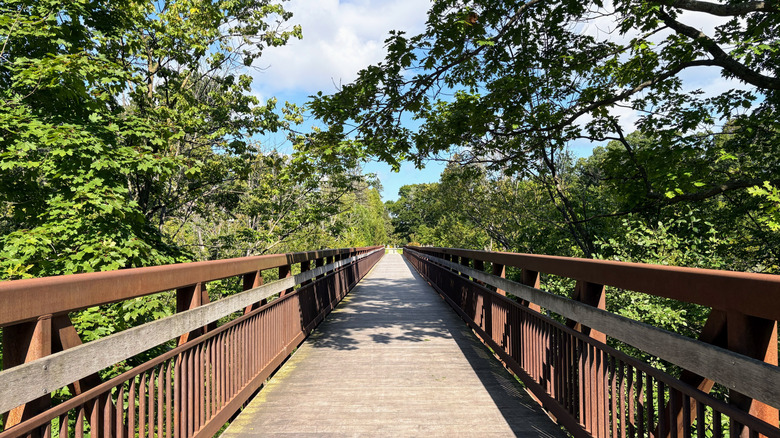
Fox Point is a Milwaukee suburb that is also located north of the city and along the western side of Lake Michigan on the North Shore — similar to Whitefish Bay. However, Fox Point is slightly further from Milwaukee, at about 10 miles away. Fox Point — which is part of Milwaukee County — has a population of around 6,700 people, but unlike other suburbs, the village mostly consists of residential areas and neighborhoods, rather than a downtown hub. Since the village has a smaller population with more neighborhoods, residents have commented that they feel a stronger sense of community than in nearby bigger suburbs.
While there isn't one concentrated area, Fox Point excels at its outdoor recreational activities. Doctors Park offers pristine views along 49 acres of Lake Michigan, while the Schlitz Audubon Nature Center features both natural hiking trails and information on wildlife for adults and kids. Although the suburb is smaller in size and population, Suzanne Powers Realty wrote that Fox Point offers first-time home buyers significantly better deals compared to some of its pricier neighbors in the North Shore. The broker specifically recommended the neighborhood for young families looking for a tight-knit community and good value. In addition, it's also one of the most dog-friendly suburbs.
The cost of living in Fox Point is around 14% higher than in Milwaukee, and it has a median household income of $140,000. Meanwhile, Niche calculated that the median home value of Fox Point residents is around $414,900. Altogether, Fox Point stands out as a quiet North Shore option that balances lakefront nature, neighborhood charm, and relative affordability for those who want a slower pace close to the city.
Mequon
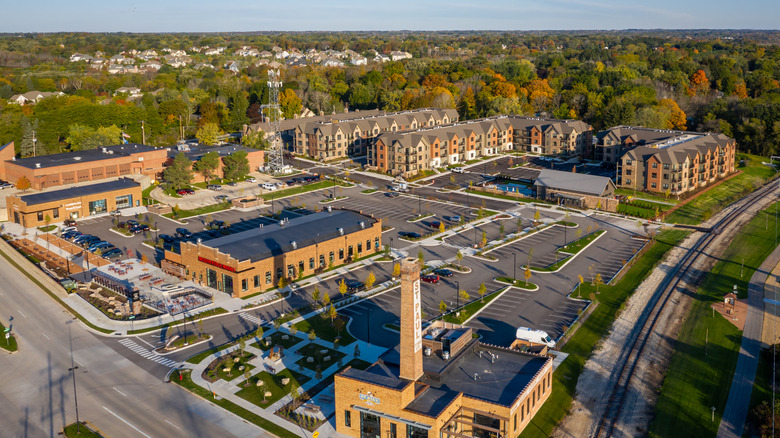
Another standout along Milwaukee's North Shore is Mequon, a Lake Michigan charmer with parks and local bites and brews. Of the top five best suburbs, Mequon — which is part of Ozaukee County — is the furthest from Milwaukee at 19 miles northwest. Mequon has one of the largest suburban populations with around 25,000 citizens. Although it is technically a suburb of Milwaukee, it is a major in its own right as Wisconsin's third-largest city by land area. However, its population is significantly lower than Milwaukee's because much of the land is undeveloped.
Mequon initially started booming when it became incorporated as a city in the 1950s and started offering its residents their own urban atmosphere without getting too crowded. The city has its own thriving local businesses and borders the charming Midwest village of Thiensville. In Mequon, locals and visitors can expect downtown farmers markets, boutique shopping, and local dining. Since the suburb has a lot of undeveloped land, there are also several parks, museums, and performing arts theaters — including the Mequon Nature Preserve, the Jonathan Clark House Museum, and the Concordia University Music Department.
Niche highlighted all of those factors by giving Mequon high scores in quality of life for families, outdoor activities, health and fitness, housing, and public schools. However, the cost of living received a lower score, since the median household income is around $147,000 and the median home value is $485,300. The ERI further calculated that living in Mequon is about 15% more expensive compared to the rest of the state. In addition, PayScale estimated that Mequon is 21% higher for cost of living than Milwaukee and 71% higher for housing.
Methodology

When we created the list of the five best suburbs in Milwaukee, there were a myriad of factors we considered. We combed through several ranking sites — including Niche, local realtor sites, and Business Insider — while also taking into account both quantitative and qualitative measurements. We scoured the internet for comments made by locals who have lived in the suburbs for years, as well as those who have explained why they recently chose that community in various forums. We also took into consideration numerical data, such as the cost of living, average household income, and median home prices, among others. After combing through the data and the personal stories, we made a shortlist of the suburbs that were mentioned the most and that continuously had high rankings.