
DIY Campers Are Building Ultralight RVs Out Of This Unlikely Material From Home Depot
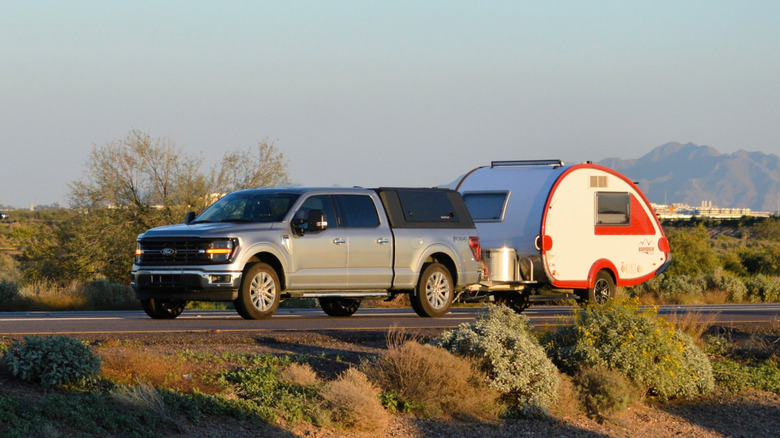
Gone are the days of paying tens of thousands of dollars for a vintage camper. DIY savvy RVers have found a cheaper solution and are customizing trailers to fit their needs and budgets. A step up from tent camping, and still towable, some folks are building ultralight RVs out of this unlikely material from Home Depot. And they fit right in with other groovy retro-styled RVs fit for nostalgic vibes or campers that were big in the 1970s. "Foamies" are a great way to graduate from camping in a tent without spending a fortune.
Generally shaped like a traditional teardrop trailer, these foam alternatives are lightweight and cost-effective in comparison. While a classic option could cost you around $24,000 from a company like Vistabule, these DIY alternatives can cost $2,000 or less, and utilize foam board to make it happen. One camper wrote in a YouTube comment, "This is what the tear drop trailer market needed. We don't all have $29,000 to make our camping dreams come true." While prices will vary based on how you build your camper, the materials for a foamie camper are far cheaper across the board.
While made of foam, these campers are built to last if done right. In the YouTube comments section of one trailer tour, a camper wrote, "I have been beating on my 4'x8' foamie in the back country for 6 years now. Being one of the first to build a foamie years ago, we were told then that they would blow apart on the highway. I figured I needed to prove them wrong so I not only took it down highways/freeways I beat on it in the back country on my overlanding trips. 6 years still going strong."
How do you build a foam camper?
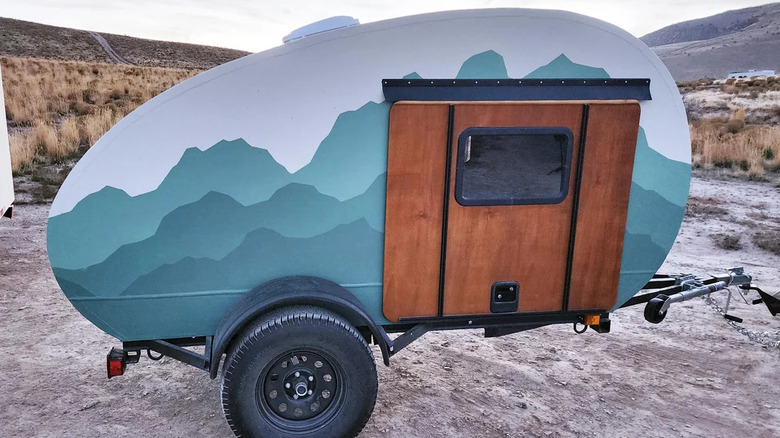
Now we should start by saying, this is probably not a project that someone with no DIY experience will easily and quickly complete, but it absolutely can be done. One traveler attested it could be done in as little as 12 days (and filmed the process to prove it). Not to mention, these campers are entirely customizable if you have the skill set to go all out on your design.
On the simpler end of the spectrum, some folks are building them in as few as 13 steps, which they lay out for other DIY-heads online. The good news is, building a foam camper is faster than building other kinds of camping trailers, and generally, you don't need special tools that the average person wouldn't already own. Starting with a towable base is essential. From there, according to an Autodesk Instructables lesson on the Foamie Teardrop Camper, you'll need to build a frame that fits your trailer, then gradually add your walls and interior structure by cutting foam wall pieces and support beams.
Building a foam camper is more complex and will require some prior experience, but the steps are laid out in online tutorials, including blogs like the one mentioned above and YouTube videos. There are several advantages to using foam as your primary material, as it's better at insulating your space and keeping water out of your camper, compared to wood. Looking for more ways to get off the ground? We also found these affordable campers with a cult following that blend the best of RV and tent camping.