
These 5 Under-The-Radar Pacific Northwest Camping Spots Are Off-Grid Gems, According To Campers
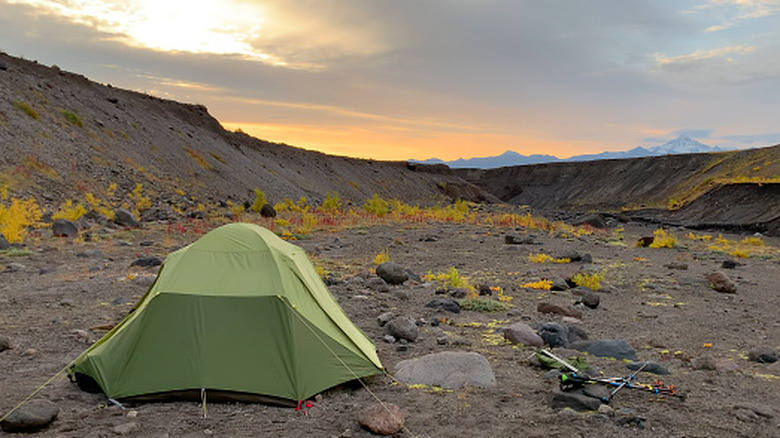
For the most adventurous lovers of the outdoors, backcountry or dispersed camping offers an experience that you can't get in a traditional campground. In the wild countryside, there aren't other families crowding your space or loud music, and you can achieve a deeper connection with the natural world. Often found near trails, this kind of camping can be done anywhere on federally owned lands. Terry Henderson, an experienced camper for over 50 years, advised on Quora, "As a general rule, both the U.S. Forest Service and the Bureau of Land Management allow dispersed camping on public lands." The same is true in many National Parks, although you may need a permit.
If you plan to get off the grid, you want to make sure you're choosing a safe, reliable campsite. We've rounded up five hidden gem campsites in the PNW, according to campers. To put together this list, we considered recommendations from seasoned backcountry campers on sites like Quora, Reddit, and Facebook. We also consulted blogs that are run by expert campers and those familiar with the regions discussed. As one camper stated, "If you are going to do dispersed camping in the Pacific Northwest, please be responsible. Be sure to pack out all your garbage, make sure your fire is dead cold, and no-trace your site when you leave." Grab your backpacks and hit the trail to discover these five under-the-radar camping spots in the Pacific Northwest.
Mount Hood National Forest, Oregon
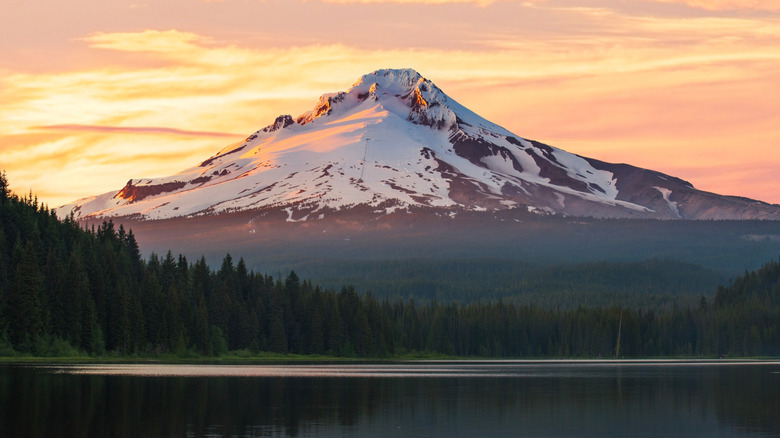
The first area we've picked out for campers looking to get off-grid is near Mt. Hood, Oregon, where many sites are easy for both hikers and cars to access. These US Forest Service areas are completely free to camp in, so long as you follow fire safety rules and acquire a permit should you need one. On Reddit, one experienced camper shared, "My favorite is to hit Mt. Hood National Forest and find somewhere off the beaten path...Pick up a map for the park and look for less-used roads. I've camped for a week up there in the past and never saw another person by my camp." Not just a beautiful area, Mt. Hood is described as being peaceful and isolated if you know where to camp. While you can drive into a dispersed camping spot, you can also backpack here, as many people do.
Also referred to as the Cascade Lakes Scenic Byway, there are plenty of dispersed camping spots in this region to choose from. Part of its appeal is how vast it is. Whether you're headed out on the Timberline Trail, one of America's hardest hikes, or looking for something a bit easier to access, you'll find it here. One camper on Quora wrote, "For a good dispersed camping experience, I recommend the Wilderness areas in the Cascades — just as long as you are away from the trail heads. Recently, I camped up at the headwaters of the North Fork of the Clackamas River, off a logging road on Mt. Hood. It was a wonderful experience!"
Mount Rainier National Park, Washington
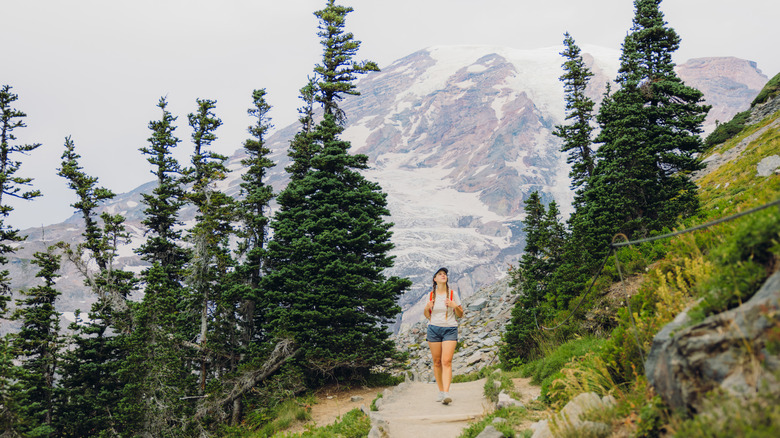
While it may seem like a large portion of the park is explorable by car, 97% of Mt. Rainier National Park is actually designated wilderness. That means that most of the park is truly off-grid and makes for the perfect backcountry camping spot — so long as you have the right permits. Wilderness permits are required year-round for anyone who wants to stay camp overnight in the park outside of an official campground. The process varies depending on whether you plan to visit in the summer or winter; however, it's best to try and secure one in advance. Permits help keep track of how many campers are out in the backcountry at a time.
On Reddit, one camper raved that "Mt. Rainier and its lakes are a backpacker's paradise! Each lake offers its own stunning views and serene atmosphere." While you can park a car and/or car camp at many of the destinations on our list, here you'll have to hike to and from your campsite if going off the beaten path. In some cases, all day. If, for some reason, you're unable to get a permit during peak travel season, one camper wrote on Reddit, "Just outside the park, there are hundreds of great trails and sites. I spend a lot of time in Gifford Pinchot National Forest and Mt. Baker Snoqualmie National Forest, and if you camp outside the park, you won't be disappointed." One of the most scenic backcountry spots is tucked along Mowich Lake, the largest, deepest lake in Mt. Rainier National Park.
Owyhee Canyonlands, Oregon
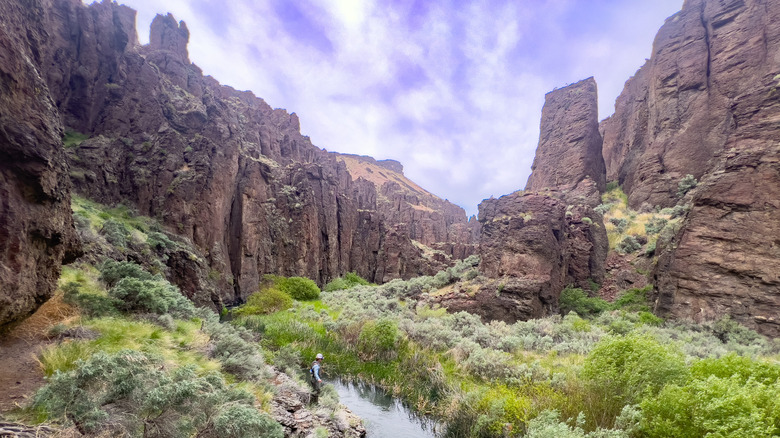
For something a little different, the Owyhee Canyonlands are a desert-like location that straddles Oregon and Idaho, offering physically stunning and extremely remote terrain. For true off-the-grid campers, this is the destination for you. It also provides something different than much of the other landscapes we've covered so far on this list. Instead of being primarily green and lush, the Owyhee Canyonlands are reminiscent of the American Southwest. In a blog post, one Oregon-based adventurer described the area as being made up of "towers of welded tuff striking upwards from the desert wilderness, magnificent and alluring." Located just over three hours west of Boise, Idaho, there's not much out here, making it perfect for hikers, climbers, and campers.
While you do need to make sure you carry enough gas and water to make your way around, campers rave about the area's physical beauty and solitude. One camper shared a photo of themselves alone in a canyon and wrote on Reddit that "Creek-bottom fields of wildflowers, evidence of indigenous cave habitation, wary and skittish redband trout, plenty of antelope, falcons, swifts, hawks, and a few nice rattlers as well. HEAVEN!" Another camper wrote about the location, "As a fellow adventurer, I highly recommend checking out Owyhee Canyonlands. The beauty of the night sky alone is worth the trip, not to mention the stunning views during the day."
Lake Cle Elum, Washington
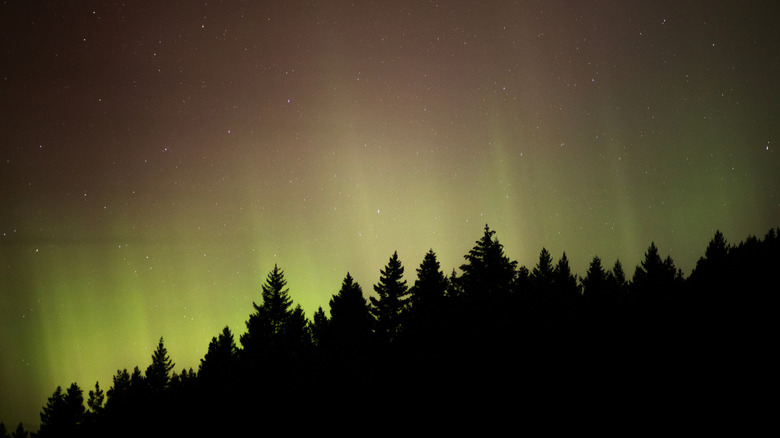
The Lake Cle Elum area in Washington is a popular spot for campers of all kinds, and just 1.5 hours outside of Seattle. While there are many organized campgrounds, the area is also popular for dispersed camping. Salmon la Sac Road Dispersed Camping is a favorite spot where you can drive up and camp along the river. With little to no infrastructure, camping here feels rugged and wild. While not too far from civilization, you'll get the feeling of being out in the wilderness here. Some campers warn that while many spots feel secluded, it can get busy. If you're looking for a more private feel, try the L.T. Murray Wildlife Area, where campers say you can find a "quiet, spacious spot surrounded by nature."
On a Facebook thread about dispersed camping in Washington and Oregon, one camper wrote, "Lake Cle Elum had lots of dispersed camping along the shore. Mountain Loop Highway has lots of dispersed camping once you get off the pavement and onto the gravel road." He went on to add, "A lot of the good dispersed sites get filled quickly, so best to set up on a Wednesday/Thursday if possible or as early in the morning as possible." Another experienced camper echoed that sentiment on Reddit, writing, "Definitely a lot of great dispersed spots in the Salmon La Sac area. It can get crowded, so it might be a bit competitive finding a spot, but I've always managed to find one."
Salmon-Challis National Forest, Idaho
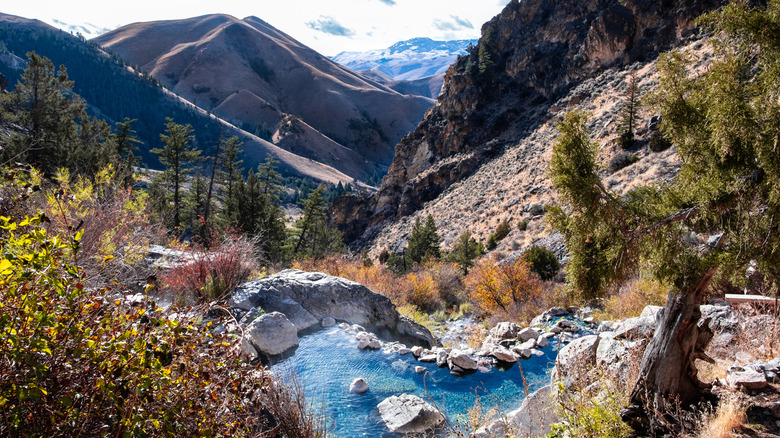
Speaking of spots named after salmon, this next area is also a crowd favorite. On Reddit, one former wildfire worker described the Salmon-Challis National Forest, writing, "Pretty remote, loads of public land, river access, hot springs, subalpine lakes. Long, cold winters. Great mom and pop skiing at Lost Trail. Pretty quick access to Missoula for your big city fix when the roads are good. I think that area is a hidden gem and an outdoorsman's paradise." One local, in the same thread, added, "It's a great area if you don't mind being 2.5 hours from any major chain stores." It's about as off-grid as one can hope to get while still being accessible with a car.
While there are 87 campgrounds in the forest, you can also opt for dispersed camping here. According to the US Forest Service, you can camp essentially anywhere here for free outside of designated campgrounds, as long as you're within 300 feet of a road and the road has not been closed off by the Forest Service. This means that as long as you're in the Salmon-Challis National Forest, you can choose where you'd like to be for the night, and that can be pretty far from any other fellow campers. Who could resist this spot when Idaho's natural wonders are calling with waterfalls, canyons, and breathtaking trails?
Methodology
To put together our picks, we looked specifically for areas around the Pacific Northwest where camping outside a traditional campsite is not just allowed, but done frequently by fellow campers. To pick the finalists above, we considered how often each area was mentioned online by campers and how many of those campers specifically noted the level of isolation that some of these camping spots had. Sites like Reddit, Quora, and Facebook, as well as blogs, were our primary source of information. We made sure to include a range of locations around the region, as well, with varying landscapes across Washington, Oregon, and Idaho.