
The 5 US States With The Fewest Tornadoes, According To Data
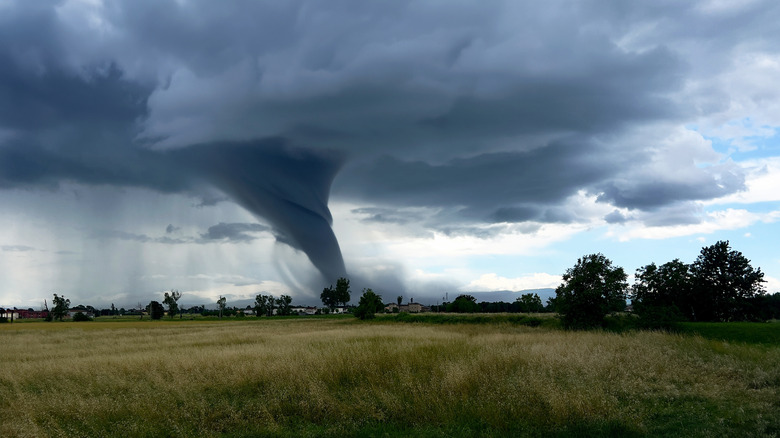
Tornadoes are a special kind of terrifying. You never know when one will form, and they can swirl into existence in a matter of seconds. Some will last for hours, leveling houses and ripping up asphalt. Wind-speeds can theoretically reach 300 miles per hour; like a horror movie monster, they typically hobble across the land at 10 to 20 miles per hour, casually destroying everything in their path. All natural disasters are devastating, but unlike earthquakes or hurricanes, tornadoes have tangible shapes. A face-off between human and whirlwind feels almost personal.
One reaction is to avoid these weather patterns altogether. If you experience lilapsophobia — a diagnosable fear of tornadoes — you can spend your time in places that rarely ever witness these phenomena. According to data from the National Oceanic and Atmospheric Administration (NOAA), some states see so few tornadoes that these events barely exist. Far from the vulnerable swathe of the Midwest informally known as "Tornado Alley," these pockets of the country are basically cyclone-free.
Below are the five American states that see the fewest tornadoes. Note that tornadoes have been recorded in every state in the U.S., so their appearance is always possible, no matter what part of the country you visit. But just like the safest Caribbean islands to visit during hurricane season, odds are good you'll never encounter one, much less lose your house to its rampage.
Alaska
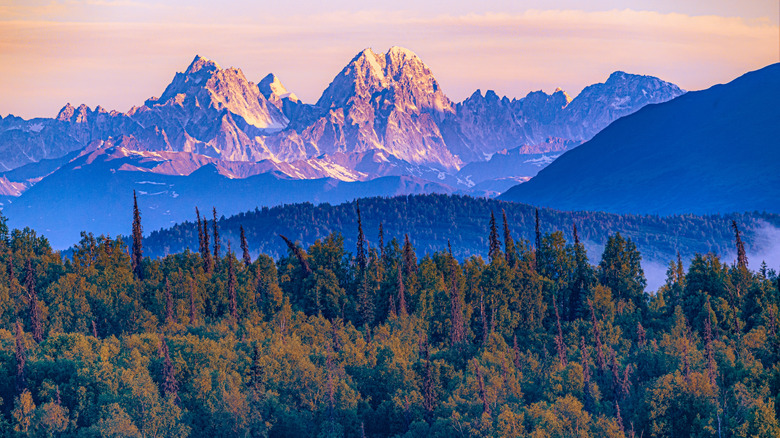
Alaska is full of high-risk adventure, from the tallest mountain in the U.S. (Denali) to the largest population of grizzly bears (30,000). You can easily encounter deadly winter storms and man-eating gray wolves if you need a good thrill. But good luck finding a tornado in the Last Frontier.
Alaska is the largest state in the United States, and you would think that a land mass covering more than half a million square miles would produce a decent tornado somewhere. Yet Alaska has only documented four tornadoes since 1950. Compare this to Texas, a state that has seen more than 25 tornadoes in a single day.
While the precise causes of tornadoes are subject to debate, the fundamental recipe includes moisture, cold air, and warm air. Alaska has plenty of humidity and thunderstorms (albeit only within a tight window), but there aren't a lot of warm air currents this far north, which may explain the tornadoes' rarity. Whatever the reason, you can bar-hop in Anchorage or ride dog-sleds down the Iditarod Trail and never worry about funnel clouds in the distance.
Hawaii

There are lots of ways to get your heart rate up in Hawaii: The state is full of adventure sports, like cliff climbing and reef diving. Meanwhile, lava flows can cause widespread destruction of homes and infrastructure, and the archipelago has weathered hurricanes and tropical storms. There's even a good amount of dangerous wildlife to avoid on your Hawaiian vacation. But there's one thing that probably won't put you in survival mode, and that's a tornado.
The frequency isn't quite as low as in Alaska: Since 1950, the National Weather Service has recorded 42 tornadoes across all of Hawaii's islands. A few of these tornadoes have been devastating — one storm in 1971 caused $250 million worth of damage in Hawaii — but not a single one has resulted in death, and even known injuries are in the single digits. No matter which of these 137 islands you visit, you can bank on avoiding tornadoes the whole time you're there.
Hawaii's climate is essentially the opposite of Alaska's: There's lots of humidity and warm air, but very little cool air. The topography is also helpful; while tornadoes can form in mountainous areas, this setting is much less common than flatlands. Rest assured that whole years have passed — including all of the 1990s — without the hint of a tornado.
Maine
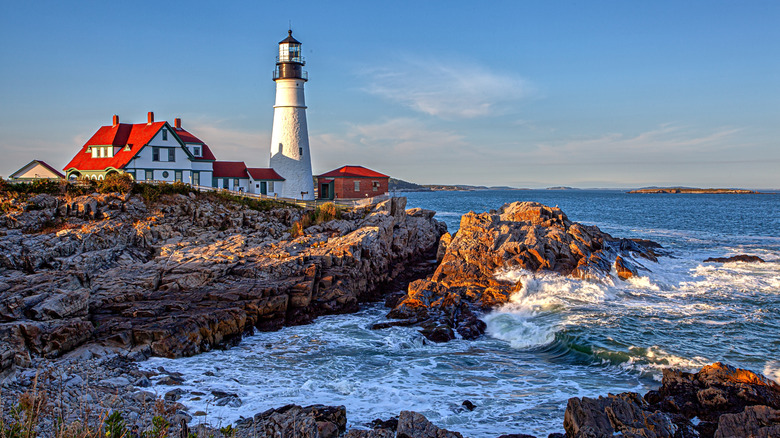
There's a lot of open land in Maine, where the average population density is 40 people per square mile. That translates to lots of woods and wildlife, which can be a double-edged sword. The massive moose population requires you to keep a close watch on the roads while driving. There's a long history of hikers getting lost in the vast forests. And major coastal storms have caused more damage in recent years. Yet Maine is considered a very safe state for tourists, especially when it comes to natural disasters, and tornadoes are nearly unheard of.
According to the Maine Emergency Management Agency, the Pine Tree State sees an average of two tornadoes per year. The website adds: "Because Maine has a sparse population, there has not been [a] significant amount of property damage or personal injury." You're not likely to get swept up in a twister during your visit here.
Maine isn't alone in this distinction: All New England states have recorded low incidences of tornadoes, and states like Vermont and New Hampshire tend to top annual lists. The atmosphere just doesn't seem conducive to whirling winds, and much of the land is composed of foothills and mountain ranges, which tend to stymie their progress. New England has plenty of other weather patterns to dread, like bitter winters, rain-induced flooding, and the occasional hurricane. But tornadoes? Unlikely.
District of Columbia
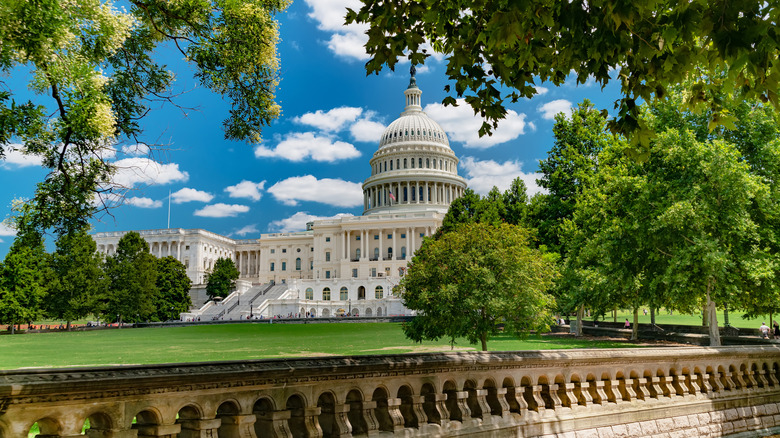
We know, the District of Columbia isn't technically a state, and this little diamond of land isn't very large — only 68 square miles — so it may seem unfair to compare its history of tornadoes with Alaska's. But the nation's capital might also seem like a prime target for this kind of catastrophic weather pattern: There's warm air, cold air, and relatively flat land to plow through.
Yet Washington, D.C. has only recorded three serious tornadoes since 1970, and two of them took place on the same day, in 2001. Residents don't really worry about tornadoes, which is a relief, given how many important institutions there are here: The White House, the Capitol, and so on. History buffs can visit the "Capital of Free Museums" without worrying about the Smithsonian's roofs getting ripped off.
That said, D.C.'s neighboring states do get a decent share of scary weather. Little Maryland has recorded 433 tornadoes since 1950, and Virginia has seen a whopping 913, some of which caused millions of dollars in damage. Some might say that D.C. has just lucked out, and more tornadoes are bound to hit eventually. But statistically, the District has mostly dodged that bullet.
Nevada
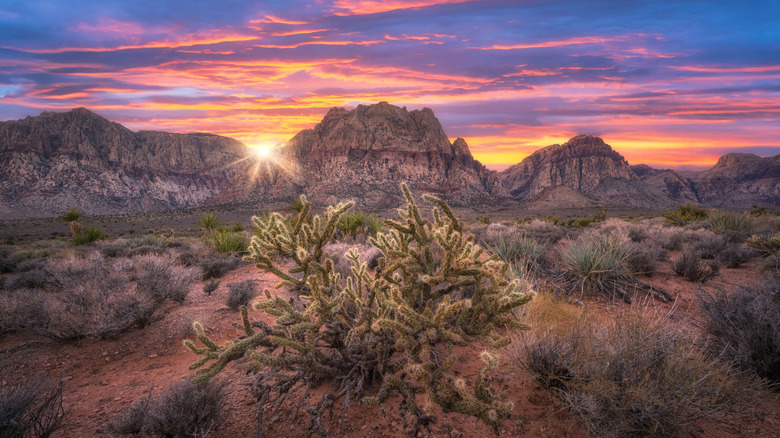
Nevada sees plenty of action over the course of a year, from devastating floods to deadly heat waves and venomous snakes. Travelers should take plenty of precautions when visiting Death Valley or other remote locations of the Silver State. But if there's one thing you can rely on, it's the likely absence of tornadoes.
Since 1950, Nevadans have witnessed 97 tornadoes. This might seem like a lot, except that Nevada is huge — the seventh-largest state by area — and if you add up all the weather events of the past 70 years, they've caused less than $2 million of damage. Compare this to Kansas, where nearly 5,000 tornadoes have touched down in the same time period, collectively causing $3.3 billion in property damage. According to the NOAA chart, the average monthly odds of a tornado hitting Nevada are just about zero.
Nevada's temperatures do vacillate between hot and cold, but rarely at the same time, and there's not much moisture in the local atmosphere. You'll find the same conditions across the Southwest: Utah, Arizona, and New Mexico experience very few tornadoes, although they're slightly more likely between May and October. Luckily, thunderstorms are pretty easy to predict — and avoid — in such arid places.
Methodology
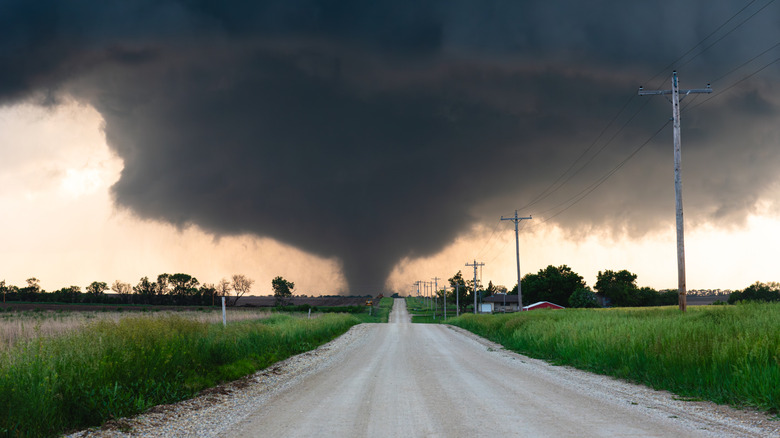
It's often tricky to rank the absence of something, and it's even trickier when every state in the U.S. has logged some kind of tornado in its history. Meanwhile, the annual number of tornadoes across the country varies widely, as do the number of casualties: Tornadoes killed 10 people in 2019, while 555 died in 2012. The NOAA records provided a great foundation for our list, but we also wanted to compare them with recent trends. World Population Review has reported how many tornadoes occurred in each state in 2024, as well as the states with no tornadoes (so far) in 2026. These data points helped us firm up our final list.
The rankings skew heavily toward New England, but we wanted to cover a broader geography than six small states, especially when Alaska and Hawaii have scored as well. We opted to count Washington, D.C., as a state, given its conspicuously low numbers. Although several Southwestern states show very little hurricane activity, Nevada has the fewest and seems to best represent the region.