
5 Of America's Largest Botanical Gardens Are Breathtaking Destinations To Visit
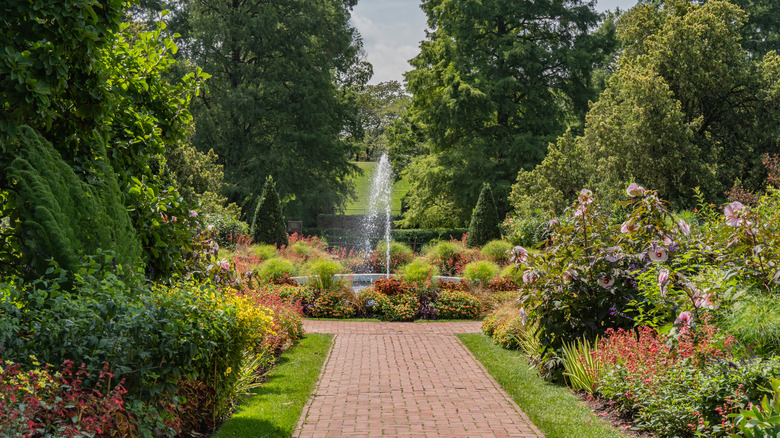
You've surely visited a public park or garden, but have you ever visited a botanical garden? There are nearly 300 across the United States, each with its own unique way of educating the public about native and exotic plant species. Whether part of a university, run privately, or cared for by the city, botanical gardens are much more than places to go and look at flowers.
Creating impressive displays to dazzle viewers is certainly on brand for a botanical garden, but the work of these institutions goes well beyond aesthetics. Botanic Gardens Conservation International (BGCI) defines these spaces as institutions with a vast catalog of plant life not only for the purpose of educating the public, but also for scientific research and conservation. Visiting a botanical garden often means seeing plant life native to the area, while also taking a journey to other countries and cultures through the rare, exotic plants found in these spaces.
The five exceptional botanical gardens on our list are some of the country's best — and biggest — whether speaking in terms of how large they are by size or how many people stroll their grounds each year to take in the colorful blooms and incredible trees. Check out our selections below, and then, if you're looking for even more gardens to explore, see what Reddit thinks are the best botanical gardens in America.
Longwood Gardens, Pennsylvania
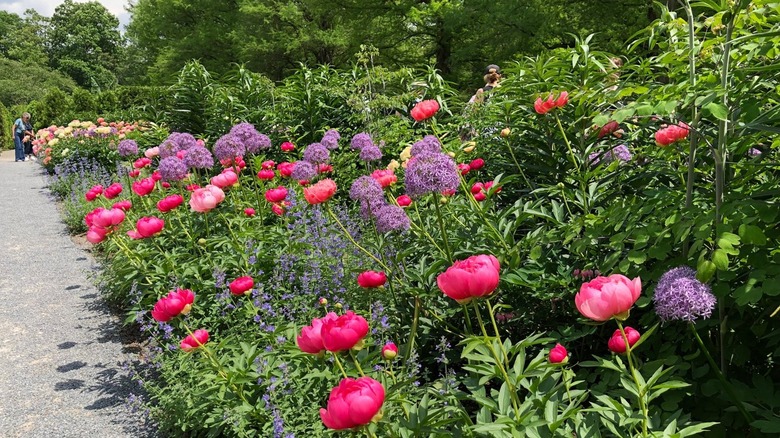
If you want to visit America's largest botanical garden, you'll need to book a ticket to Philadelphia. Longwood Gardens sits just 26 miles west of Philadelphia International Airport in Kennett Square. With 1,100 acres of gardens, what started in 1906 as a place to save historical trees has blossomed into one of the "World's Greatest Places" of 2025, according to Time.
With more than 10,000 species of plants on the grounds, Longwood Gardens is the ideal place to experience everything from fragrant jasmine to stunning chrysanthemum forms that take nearly 2,000 hours to create. The 100-year-old botanical garden has also given visitors new reasons to be excited, thanks to an extensive renovation that was revealed in 2024. The project completely reimagined 17 acres of the grounds, including a new 32,000-square-foot glass conservatory and a courtyard dedicated exclusively to bonsai trees.
Additionally, classical music concerts and the possibility to dine in the main conservatory truly help elevate the experience and make Longwood Gardens a must-visit botanical garden for any nature lover. As with many botanical gardens, Longwood Gardens' opening hours vary according to the season. Throughout most of the year, the gardens open at 10 a.m. and close at 6 p.m., with extended hours on Friday, Saturday, and Sunday. With few exceptions, the gardens are closed on Tuesdays, and winter hours are slightly shorter due to limited daylight. Ticket prices also vary, with entry through late March costing $32 per person, and tickets during the spring and summer season costing $35 during the week and $38 on the weekend (prices accurate as of this writing).
University of Washington Botanic Garden, Washington
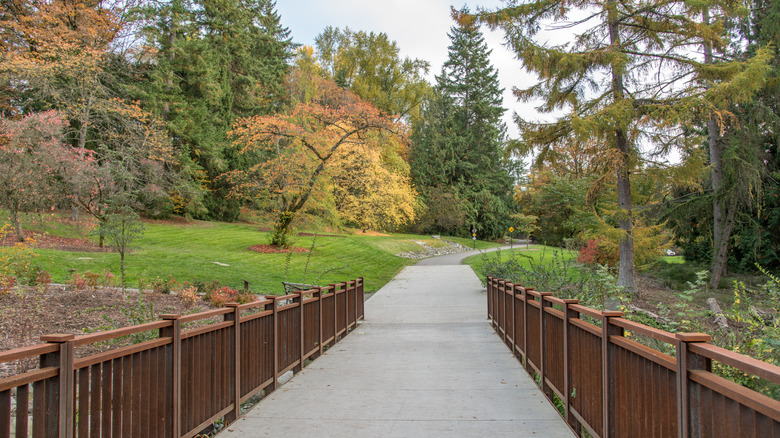
Located on Lake Washington, the University of Washington Botanic Gardens comprises two sites that span a total of 320 acres. The Washington Park Arboretum, which is managed by the university and the city, sits on the shores of the lake and contains a variety of themed gardens, including a large collection of rhododendrons, which were first planted in the 1930s, as well as the Azalea Way path. This long stretch also dates back to the origins of the gardens, when thousands of azaleas were planted. Today, they are interspersed with magnolias, cherry trees, and dogwood trees that come to life each spring.
One of the highlights of the botanical gardens is its 3.5-acre Japanese garden. Managed by the city of Seattle, it is open seasonally from March 1 to November 30 and costs $10 to visit. The rest of the park, as well as the garden's second site, the Center for Urban Horticulture, is open free of charge. Located on the University of Washington campus, on the northern banks of Lake Washington, the Center for Urban Horticulture is an extension of the botanical gardens. It comprises 16 acres of landscaped area and 74 acres of the Union Bay Natural Area, which is home to hundreds of bird species along its designated trails.
Don't miss the center's Fragrance Garden filled with peonies, lilies, camellias, and other fragrant seasonal flowers. There is also a garden area focused on plants native to the Pacific Northwest that shows the beauty of local flora. With so much variety in its offerings, it's no wonder that around 600,000 visitors a year come to enjoy all that the University of Washington Botanic Gardens have to offer. Both sites are open daily, from dawn until dusk.
Chicago Botanic Garden, Illinois
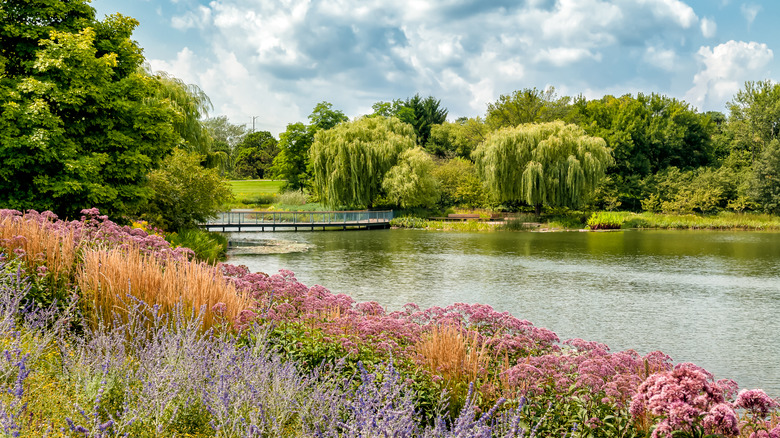
Since opening in 1972, the Chicago Botanic Garden has used plants to serve as an ethereal escape from the bustle of the city. Located in Glencoe, just 30 minutes north of downtown Chicago, this botanical garden spreads across 385 acres and has roughly two dozen gardens as well as three greenhouses to explore. Meticulous in its detail, the botanical gardens brought in experts to create its different environments, such as the Japanese Garden carefully crafted by renowned Japanese landscape designer Dr. Koichi Kawana. Visitors can stroll along the boardwalk of the Aquatic Garden to take in the floating water lilies or spend time in the magnificent, 3-acre Krasberg Rose Garden where over 5,000 roses create a stunning, fragrant display.
Inside the greenhouses, visitors are exposed to plant life from around the world, with separate areas for tropical, semitropical, and desert species. Chocolate trees, banana plants, and orchids are just some of the fascinating finds in the greenhouses. The Chicago Botanic Garden also makes a great day out for the family, with a special Children's Growing Garden. Here, kids can get excited and involved about gardening through an up-close examination of common fruits and vegetables growing in raised beds, and even help water the plants. There's also a beautiful picnic area with open and covered seating that overlooks the Japanese Garden, making it a great place to end a garden visit.
From April to October, the garden also offers a narrated tram tour across the grounds to learn about some of its most beloved spaces. As of this writing, the gardens are open from 10 a.m. to 6 p.m. daily. Opening hours and garden closures vary by season, so it's best to check the official website when planning your trip. Chicago Botanic Garden employs a pricing structure where the best deals are found by purchasing tickets in advance. At the time of writing, pricing ranged from $11 to $19.95 per person, depending on the day, with an additional parking fee.
New York Botanical Garden, New York
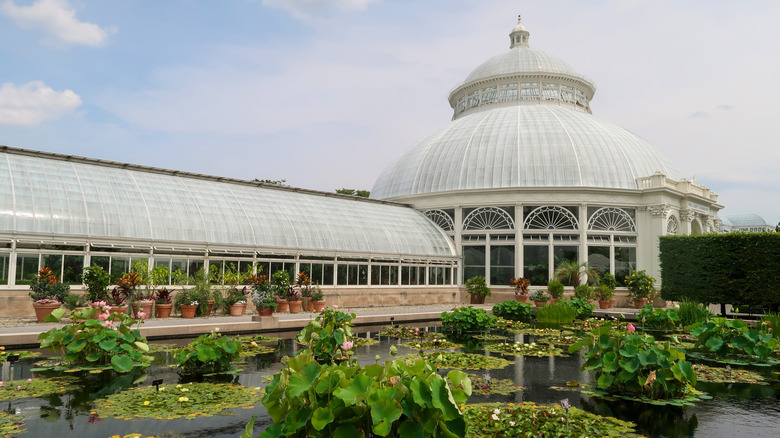
Tucked into the Bronx, the New York Botanical Garden is an urban oasis that receives over 1 million visitors a year. Its 250 acres contain 50 gardens that highlight its rich collection dating back to its founding in 1891. Explore the outdoor gardens or the beautiful glass conservatory, which contains plants from around the world arranged in thematic galleries like tropical rainforest and desert cacti.
The outdoor gardens are incredible all year long, filled with everything from a stunning lilac collection that dates back to 1896 to an extensive collection of maple trees from around the world that explode with color each autumn. With more than 1 million plants in its collection, there is always something exciting to see at the New York Botanical Garden, no matter the time of year. Other highlights include the Peggy Rockefeller Rose Garden, which is a spectacular site from spring to autumn when its 650 types of roses are in bloom.
The space is also excellent for families and includes special areas for children. In the Children's Adventure Garden, kids can partake in hands-on activities like planting seedlings, while at the Edible Academy — open from March to October — visitors of all ages can dive in and take care of the vegetable garden. One of the great things about the New York Botanical Garden is that it's so close to downtown Manhattan and is easily reached by public transit. A train ride from Grand Central Station takes just 20 minutes and will leave you across the street from one of its entrances. For anyone coming by car, there is on-site parking for $22. The New York Botanical Garden is open from Tuesday to Sunday, 10 a.m. to 6 p.m., with non-resident adult admission priced at $35 on weekdays and $39 on weekends.
Matthaei Botanic Gardens, Michigan
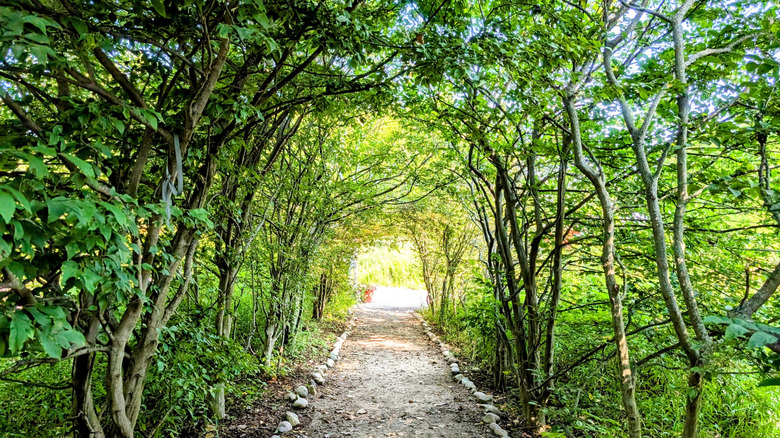
Our last botanical garden brings us back to the Midwest. Located just 6 miles from downtown Ann Arbor, the Matthaei Botanic Gardens are part of the University of Michigan. With 350 acres of curated gardens, natural wetlands, trails, and a conservatory, this botanic garden offers a bit of everything just minutes from the city. Outdoor gardens range from the Tudor-inspired Herb Knot Garden, filled with aromatics and medicinal herbs, to a fascinating labyrinth made with buffalo grass that is inspired by Baltic traditions.
There are also the Great Lakes Gardens, which pay homage to Michigan's native wildlife and natural environments, from open dunes to prairie habitats. Thanks to trails and walkways, including a raised boardwalk through a floodplain forest, visitors can immerse themselves in everything that the state has to offer. Meanwhile, in the conservatory, visitors can amble through three different temperature zones to discover how plants around the world adapt to and thrive in different climates.
Matthaei Botanic Gardens also makes for a wonderful day out for anyone looking for a short nature walk, with trails that move past prairies, creeks, and ponds. Admission to the botanical garden, which is open from Tuesday to Sunday, is always free. Open from 10 a.m. to 4:30 p.m., with extended hours on Wednesday, it is the perfect place to spend time in nature, whether walking the trails or enjoying time in the conservatory.
Methodology
To come up with this list of five of the largest botanical gardens in America to visit, we turned to Botanic Gardens Conservation International (BGCI) and, specifically, the organization's Garden Search tool, which includes botanical gardens from around the world. Our search included institutions with a total garden area of at least 250 acres.
While this initial search for size produced many results, we broadened the definition of "large" to take into consideration the number of visitors per year, including only botanical gardens with at least 300,000 visitors a year according to the BGCI database. We then considered geography, wishing to represent different regions of the United States and what they have to offer, thus creating a well-rounded selection of major botanical gardens throughout the entire country.