
Minnesota's Once-Thriving Military Outpost Is Now A State Park With Camping And Trails
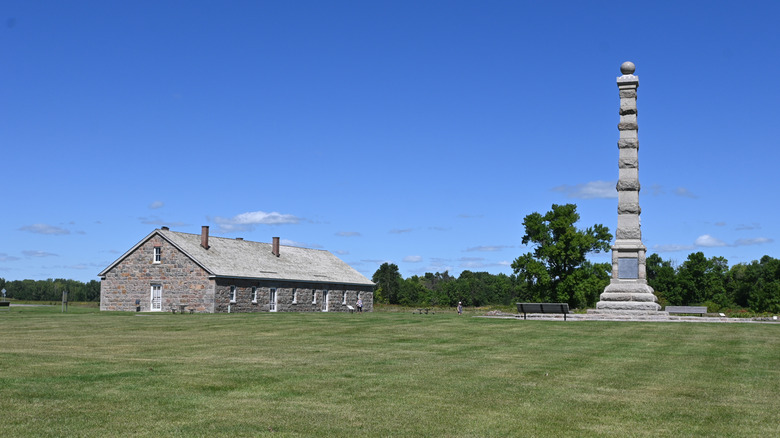
Fort Ridgely State Park is about as peaceful as it gets. This 478-acre swathe of woods and prairie feels far from modern society, and even today, more than 170 years after its construction, the former outpost remains pretty isolated in the Minnesota countryside. History buffs can almost imagine what this place felt like in 1853, when U.S. soldiers were first garrisoned here and the fort marked an edge of westward expansion.
Ridgely is now an outdoor playground, with a nice range of activities for road trippers willing to make the trip. Much of the fort is now in ruins, with former rooms outlined in stone masonry. All that remains of the original settlement is the commissary building, which once contained an interpretive center that has since been closed. One of the best parts of the park is its modest campground, which has 15 sites with electrical hookups and 33 drive-in sites. In some spots, you're even allowed to string up a hammock between trees. The landscape has remained largely unchanged, and an overnight adventure here offers some idea what pioneers experienced in the 1800s — although the modern shower building is a convenient 21st-century touch.
The state park is a prudent place to stop on a Minnesota road trip. Minnesota is the breathtaking and scenic "Land of 10,000 Lakes," with America's safest roads, and Fort Ridley is an economical place to camp out between Minneapolis and Sioux Falls, South Dakota. The former is less than two hours away by car, and the small downtown of Fairfax is just 6 miles down the road.
Battles and memorials at Fort Ridley
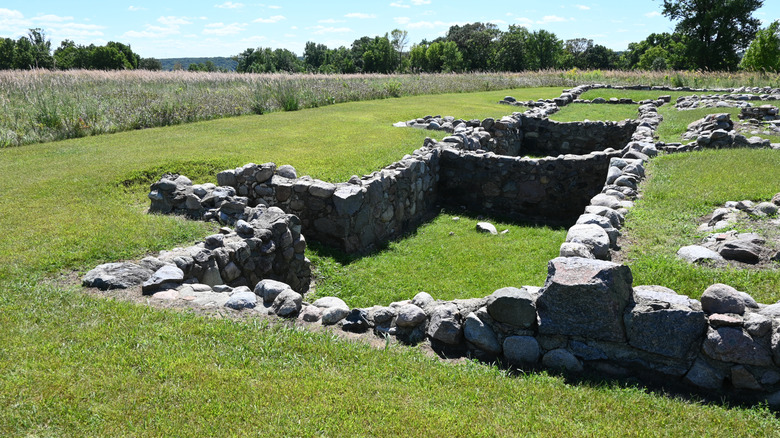
In hindsight, a battle at Fort Ridgely seemed inevitable. In 1851, the Dakota people (reluctantly) sold 35 million acres to the United States. Two years later, the construction of Fort Ridgely represented a hostile new presence in the region, along with a tidal wave of settlers. Colonial antagonism and broken treaties sparked an armed conflict, the U.S.-Dakota War, in 1862, which mostly took place in south-central Minnesota.
Fort Ridgely didn't have a protective wall, and although military defenders were outmanned during two separate attacks, they somehow managed to repel the Dakota both times. A few years later, the fort was abandoned, and homesteaders were allowed to knock down the buildings and pillage the stone. It wasn't until 1896 that a monument was erected to commemorate the battles, and in 1911, the tract became a state park.
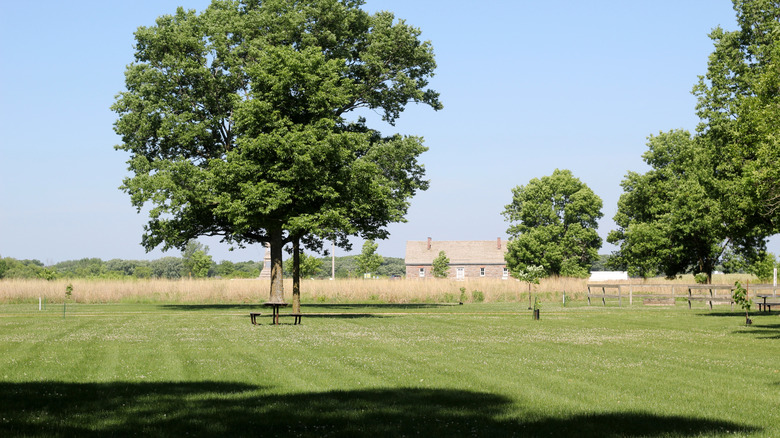
Where sentries once watched for raids, you can now claim a wooden table for picnics. Hiking trails wind their way through the park. The dirt paths are mostly flat and easy to traverse, and on the Fairway Trail to Upper Prairie Trail, you'll eventually find your way to overlooks with impressive views of the valley. And if you really want to follow in the hoof prints of the Dakota and frontiersmen who once trod these grasslands, book a riding lesson at the Fort Ridgely Equestrian Center, just a few miles down the road.
Getting to Fort Ridgely State Park and how to stay
If you enjoy a long drive in the country, Fort Ridgely State Park is a great destination. It stands in the town of Fairfax, right off the Minnesota River Valley Scenic Byway. The middle of Fairfax is a quaint crossroads with a handful of stores and services, but most of the nearby hotel options are in New Ulm, one of America's most "charming European towns," about a 30-minute drive away. For this reason, you'd be wise to top off your gas tank and stock up on supplies before venturing out this way — you might also bring a fishing pole, as Fort Ridgely Creek is well stocked with trout. The park is open between 8 a.m. and 10 p.m. year-round, and if you need help, you can find rangers on site between mid-May and October.
Be aware that visiting Fort Ridgely isn't free, nor is any other state park in Minnesota. For each vehicle, you'll need to purchase either a day pass ($7) or an annual pass ($35). This can come as a shock to many out-of-staters. The campground charges an additional fee, starting at $24 per night, with online reservations available. Another option is to stay in a renovated farmhouse on-site, which sleeps up to six guests and is open from May 1 through October. Just make sure to bring your own bedding and note that you're only allowed to cook on the outdoor grills. If you continue your journey southwest, you can cross the border to visit South Dakota's Sioux Falls, one of the Midwest's artsiest cities, full of parks, trails, and waterfalls.