
Nevada's Once-Thriving Pioneer Town Flooded By Lake Mead Has Reappeared With Ruins Ready To Explore
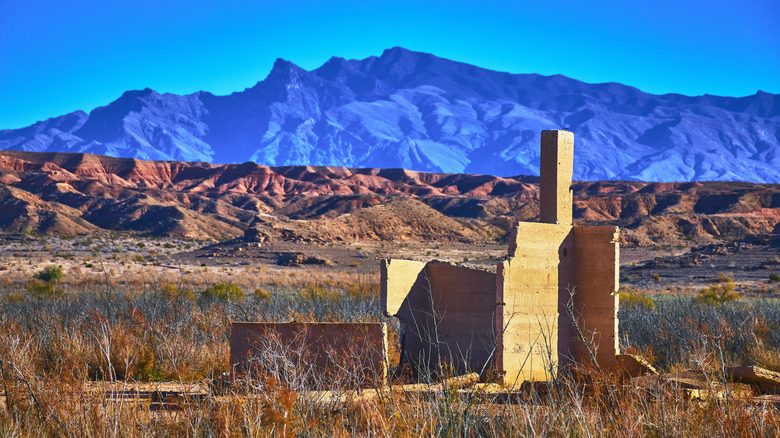
With over 600 abandoned towns, Nevada is home to almost three times as many ghost towns as populated ones. But arguably, there's none as unique as St. Thomas, which has the distinction of being a ghost town in a ghost lake. Located in the Lake Mead National Recreation Area, St. Thomas is a 19th-century Mormon settlement that became a thriving pioneer town in the late 1800s as a stopping point between Los Angeles and Salt Lake City.
That is, until the construction of the Hoover Dam in the 1930s, which created Lake Mead, the country's largest reservoir. By 1938, St. Thomas was abandoned as the lake's water levels started overtaking its buildings. For decades, it was fully flooded by water. At one point, the town's tallest building was 60 feet underwater, keeping St. Thomas totally hidden from those on dry land.
St. Thomas' visibility has come and gone with the changing water levels of Lake Mead. But since 2002, a combination of climate change and water consumption have been rapidly depleting the reservoir's water levels (Las Vegas gets 90% of its water from Lake Mead). So due to Nevada's ongoing drought, this area of Lake Mead is disappearing and becoming a ghost itself. Ironically, this means that the once-submerged ghost town of St. Thomas has reappeared and is now open to visitors. A short loop trail around the site will bring you to its eerie ruins that are at once an image of the country's history of development and growth, as well as of its uncertain future in a changing landscape and climate.
The complicated history of St. Thomas
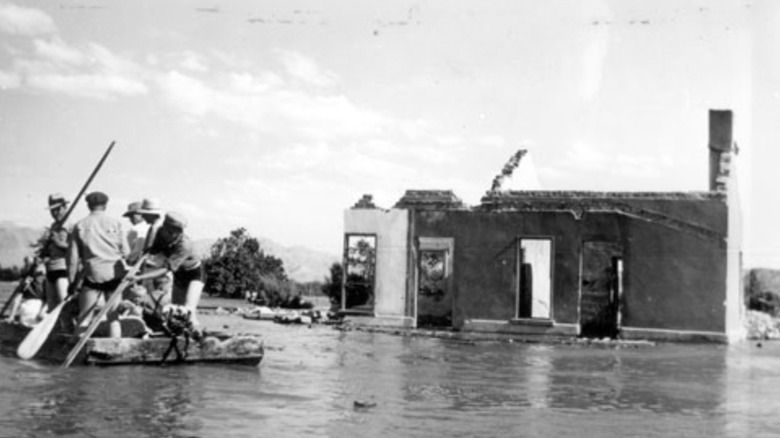
St. Thomas was founded by accident. In 1865, a group of Mormons settled in the area. Luckily, this location was arable since it was at the confluence of the Muddy and Virgin Rivers. But after a few years, Nevada asked the settlers to pay back taxes. Instead of paying, they just left and burned down the buildings. A new crop of people came in the 1880s and rebuilt St. Thomas into a hub with around 500 people, a school, an ice cream parlor, and a hotel.
With the formation of Lake Mead in 1935, the residents were forced to relocate, making St. Thomas a two-time ghost town. The last to leave was Hugh Lord, who waited until the water was literally at his house. He left his home by boat in 1938 (some say he set fire to his home first). As a National Parks Office public affairs officer noted to the Water Environment Federation, St. Thomas' access to a rare water source is what made it livable to begin with and, in the end, water is what killed the town. It may not be one of the essential details about Lake Mead to know before visiting, but it's definitely one of the most interesting.
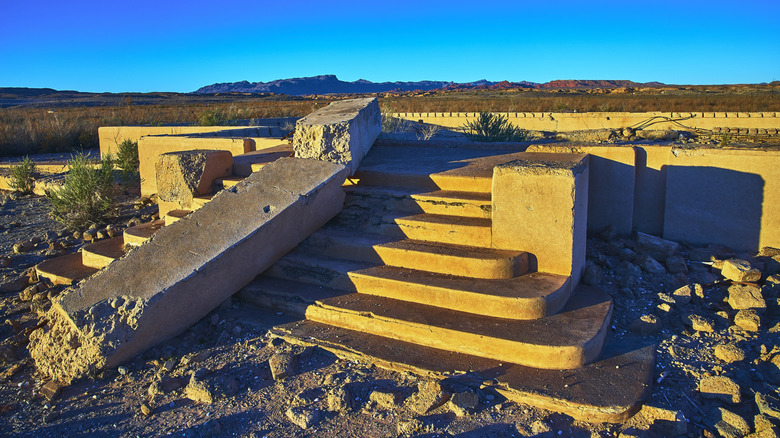
These days, all that's left of this ghost town are bits and pieces like walls and foundations. You'll have to use your imagination to picture the once-thriving town, but interpretive signs throughout offer useful information to do so. Besides that, there are some impressive structures still standing, like the steps of the old schoolhouse and the partially standing ice cream parlor. This is an archaeological site, so be sure not to touch or climb any buildings. Also leave any found objects or fragments as you find them.
How to visit St. Thomas
Situated less than an hour and a half drive from Las Vegas, St. Thomas is a great day trip from the most fun city in America. For those interested in history or offbeat destinations, St. Thomas is a must-see when visiting the Lake Mead National Recreation Area, America's most dangerous national park. While you don't have to worry about drowning at St. Thomas as elsewhere in the park, the area is very exposed and has minimal shade, so be sure to bring enough water and sun protection when exploring this ghost town.
To visit St. Thomas, you have to take a 3-mile dirt road to the Historic St. Thomas Loop trailhead. It's doable for low cars, just drive carefully. From the trailhead, it's a moderate 2.5-mile loop on an unmaintained downhill trail of sand and loose rocks, so bring a hiking pole if you need extra support. Some note that while the hike itself isn't very difficult, the lack of shade can make it strenuous. Accordingly, even though this destination is open to dogs on leash, you may want to leave your pet at home if you're going on a hotter day. There's an outhouse near the trailhead but that's it for services. Check online before you go to make sure the trail isn't closed because of extreme heat.
Since it's within a national park, St. Thomas requires a fee to visit it. Currently, it's $25 per vehicle or $15 per person 16 or older who's entering on foot or bike. The park offers annual passes, and if you have an America the Beautiful pass, you can enter without paying a fee. Note that the park is cashless, so be prepared to pay with a card. You can also purchase passes online beforehand.