
What To Do If You See Wolves While You're Camping
We may receive a commission on purchases made from links.
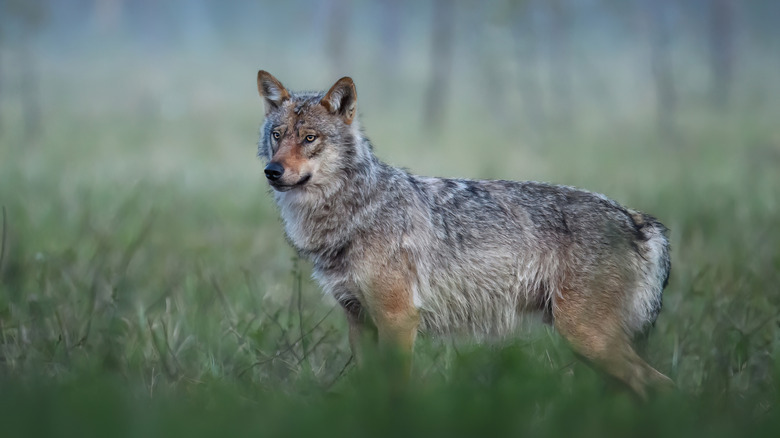
Crossing paths with wildlife while camping and participating in other nature-based activities is a very real possibility. However, bears are far from being the only predator you could encounter; there's also wolves. Not only has this animal become embedded in pop culture, but wolf watching is quickly becoming a favorite recreational vacation activity. Wolves — more specifically, Gray wolves — are commonly found across North America, including Canada and states like California, Alaska, and Colorado.
And while they might resemble certain domesticated dog breeds, you do not want to underestimate their ferocity. According to the International Wolf Center, wolves, which often travel in packs, can run at speeds of up to 40 miles per hour and have jaws that can snap their prey's bones. That said, they have learned to steer clear of people. New-Western research indicates that some wolves are purposefully nocturnal to evade humans. However, campers should nonetheless be prepared in case they come across these canines on their outdoor adventure.
In 2013, a 16-year-old camper in Minnesota was attacked by a wolf. He suffered a head wound but lived. Then in 2019, an American family of four camping in Canada's Banff National Park was sleeping when a wolf charged at their tent. The wolf was spooked by a fellow camper, and they all survived, but the father did sustain injuries to his hands. It's important to note that incidents like these are highly uncommon and typically occur when a wolf is ill. This could be due to reasons like rabies or brain damage — as was the case with the wolf that attacked the Minnesota teen. Nevertheless, campers should plan accordingly to reduce wolf sightings and encounters.
Deter wolves with these camping tips
It's important to pack a noise-making device like this air horn from Amazon. This can give you peace of mind and be effective if wolves move toward your campsite. Bring it along with you as you explore the surrounding wilderness. You want to make sure you don't inadvertently invade their territory. Look for tracks and feces – this can indicate that there are wolves nearby and serve as a cue to stay on guard and, ideally, depart that area. It's natural to be curious about these creatures, so if you desire to observe them, destinations like Grand Teton – one of the best US parks to see wild wolves roam – advise safely staying a minimum of 100 yards away.
While camping, always stay alert and secure your food — you can learn more about this by reading how to properly bear-proof your campsite. Wolves and other animals may be hungry and drawn to your provisions. A safety brochure from the Alaska Department of Fish and Game advises cooking and keeping trash away from your tent/campsite.
If you happen to spot wolves, and if they come near your campsite, remain composed. Remember that they most likely fear you more than you fear them. With this in mind, it's advised to maintain eye contact, raise your arms, and make noise to scare them off. According to Conservation Northwest, in cases like this, wolves may growl and exhibit aggressive or defensive behavior, but this does not necessarily mean that they will attack. Rather, this is your sign to retreat. As you do, be sure you continue to face the animal as you back away.