
Santo Domingo's National Park Is A Serene Caribbean Escape With Turquoise Lagoons And Stunning Views
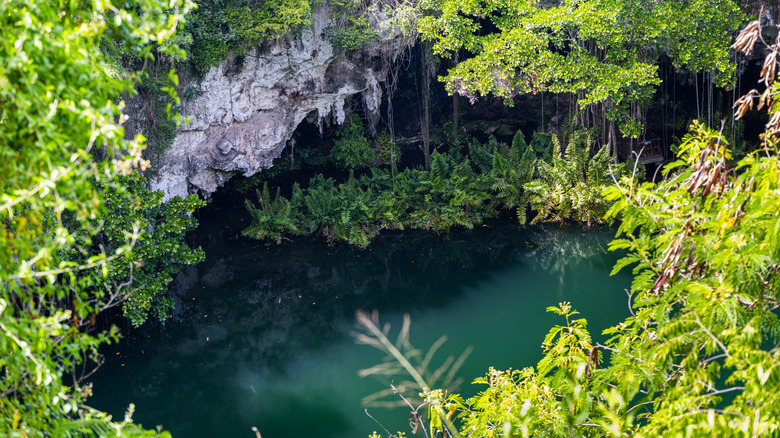
One of the most exciting parts of city travel is finding spots where the modern skylines and trafficked streets give way to something ancient-looking and almost untouched. Santo Domingo, the Dominican Republic's capital, has one of these, a geologically remarkable national park within one of its most-populated districts, though you'll have to descend below street level to take in its full beauty. It's called Three Eyes National Park (Parque Nacional Los Tres Ojos), named after its vibrant turquoise lagoons which are cradled in underground caves like primordial eye sockets, concealed from the surface of everyday life.
Thousands of years ago, the caverns of Three Eyes National Park were formed by rivers carving out the limestone bedrock. Originally, there was one large lake filling the cavern, but as some of the cave system eroded, it fell across the lake and divided it into multiple connected lagoons. Journeying to the lakes today involves a relatively short hike — about half a mile long — plus an optional, added boat ride. Just be prepared for a lot of stair-climbing as you go down beneath the city's surface into the otherworldly, subterranean park.
See the brilliant blue lagoons of Three Eyes National Park
From the surface, you'll only see one lake at Three Eyes National Park, an indication of just how deep you'll go to see the complete lagoon system of one of the Caribbean's most mesmerizing national parks. According to the Dominican Republic Ministry of Tourism, the lakes of Three Eyes were important ritual sites for the Taino people that lived here before colonialism. You'll also want to take a look at the petroglyphs and shards of pottery along the walking route.
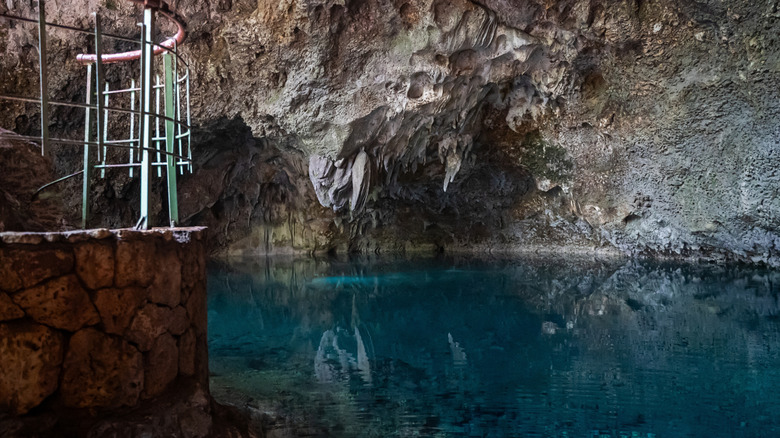
Shortly after passing through the entryway, you begin the descent. The first lagoon you'll see is Lago de Azufre, which has intensely blue water, owing to its high calcium content. The next lake along the way is El Lago de las Damas — it's shallower and is where local women used to bathe, which gives it its name (which means "The Ladies' Lake"). The third lagoon you can reach by foot is La Nevera, which you'll find in a cold, dark cavern that receives almost no sunlight.
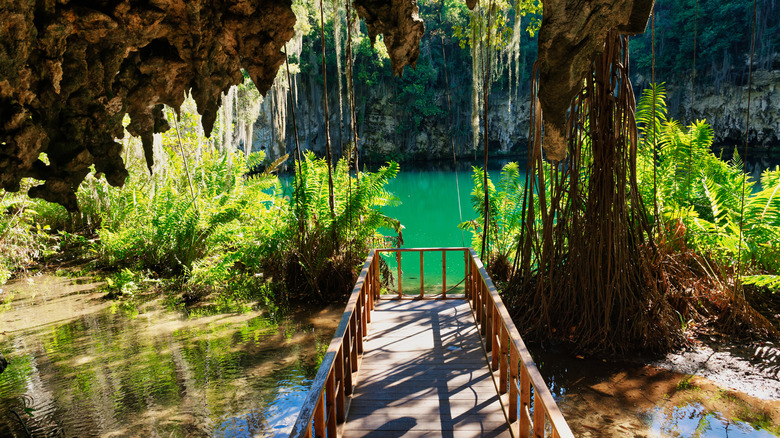
Though La Nevera marks the end of the lagoon system you see on the trail, there is a fourth lagoon — Los Zaramagullones — that's accessible by boat. You have to pay extra for the final boat ride, but many visitors have said it's worth it. "Although the ride is short, it gives you a taste of the uniqueness of the different water bodies within the system," said travel blogger Mark Around the World. The final lake isn't within a cave, but rather surrounded by cliffs and thick vegetation.
What to know before visiting Three Eyes National Park
When you arrive at Three Eyes National Park, you'll have the option to do a guided tour or go on your own. A guided tour might be worth it if you're curious about the history and geology of the area, but reviewers have noted that it's not really necessary otherwise, especially if you want to take your time on the trail. You'll still pay a small admission fee for self-guided entry (and bring a little extra money if you want to take the boat ride to the fourth lake).
It might be a good idea to plan on arriving early to see the park, as it's a popular spot that can get crowded later in the day. The park is fairly easy to reach from Santo Domingo's city center, making it easy to pair with other cultural and historical sites of the Caribbean's oldest capital. If you're staying in La Zona Colonial, one of the more historic and trendy neighborhoods of the city, you can reach the park in about a 15-minute taxi ride or 30 minutes with a public bus. Those flying into Santo Domingo (one of the most affordable direct Caribbean flights in the spring) can land at Las Américas International Airport, around a 45-minute drive east of the city center.