
Why More And More Tourists Are Vacationing In Malaysia In 2026
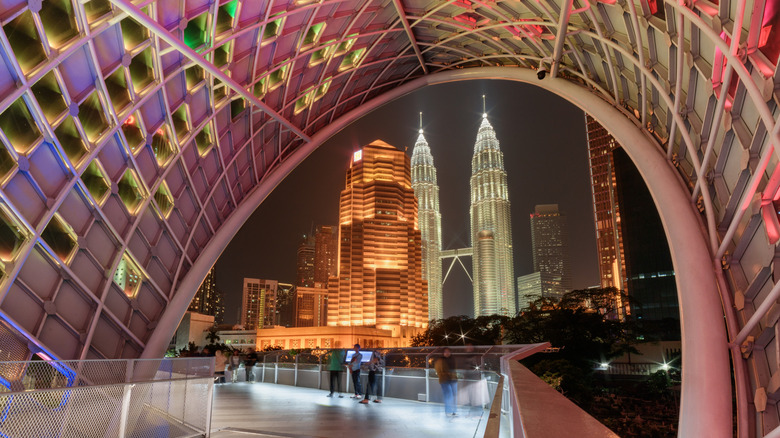
White sand beaches, cultural attractions, culinary discoveries, and warm tropical weather to top it all off — all these and more are items on a checklist that Southeast Asian countries deliver on. And while popular spots like Bali or Phuket attract their fair share of tourism, none of them carry the title of Southeast Asia's most-visited nation in 2026 — instead, it's Malaysia that has staked that claim.
Malaysia is known for its multicultural cities, multiethnic cultures, diverse natural landscapes, and a vibrant food scene, so it's no surprise that the growing number of visitors pouring into the country is far from modest. Tourism numbers hit the ground running in the first three months of 2026 with 10.6 million international arrivals. That's over a million more tourists than Thailand's 9.1 million during the same time frame.
There's no accidental skyrocketing here — these numbers are the result of the robust, year-long Visit Malaysia 2026 campaign launched by the Malaysia Tourism Promotion Board to attract travelers to the country. The ASEAN Magazine outlines the campaign's five main pillars: "sustainable tourism, cultural and heritage preservation, nature and adventure, digital innovation, and global connectivity." Along with traditional marketing campaigns, a calendar of exciting nationwide events and festivities, and prevalent English fluency that breaks down communication barriers, Malaysia has become one of the easiest destinations to explore in 2026. Plus, the country's visa-free entry policy for travelers from 158 nations — ranging from 14 to 90 days depending on nationality — has only added to its growing appeal.
Here's what travelers can expect in Malaysia in 2026

Malaysia is split into two distinct regions separated by the South China Sea: Western Malaysia, which borders Thailand, and Eastern Malaysia, located on the island of Borneo. Together, the two regions make the country a bingo card for curious travelers, offering a wide range of activities. Sure, a first-time visitor's introduction to the country is bound to be the capital, Kuala Lumpur, an easy-to-navigate city known as a melting pot of Southeast Asia, but beyond the modern cityscape lie numerous possibilities for a vacation tailored to one's whims.
To call Malaysia lush is an understatement: jungles cover a whopping 75% of the country. It's a haven for avid hikers and nature lovers, who get to access UNESCO World Heritage sites like the Gunung Mulu National Park and Kinabalu Park. Beguiling shores extend along 2,905 miles of coastline: there's Langkawi Island, where powder-white sand and clear turquoise waters are perfect for water sports and lounging on the beach, or Redang Island, where green turtles rest along the shores of Teluk Dalam Kecil Beach within the Terengganu Marine Park. And for those looking for more serene areas away from crowds, there are plenty of other under-the-radar Malaysian islands to choose from.
Travelers who want to embrace history and culture can head to the city of Malacca to bask in Malaysia's multicultural past. Here, vestiges of Portuguese, Dutch, and British rule are etched into the city's architecture, museums, and churches. There's also Penang, featuring an East-meets-West urban fabric that spans Muslim mosques and Anglican churches. Penang's renowned street food scene also makes it one of the best destinations in Asia for foodies. With this great mix of affordability, accessibility, and incredible diversity, it's easy to see why more travelers are choosing Malaysia in 2026.