
Stop Doing This When Visiting Yellowstone National Park (It Can Get You Fined By Park Rangers)
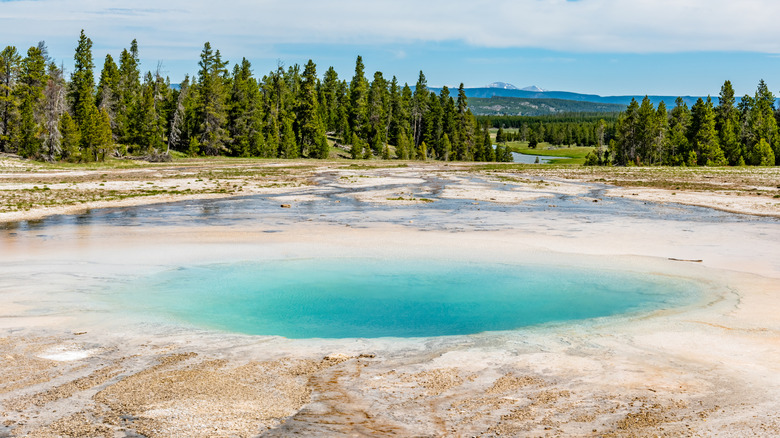
Some of North America's most iconic wildlife can be found in Wyoming's Yellowstone National Park. The iconic area is home to grizzly bears, elk, bison, otters, and much more. Conservation efforts at Yellowstone have long been important to wildlife research far beyond the park's boundaries, and causing any disturbance to the park's animals can actually result in big fines and safety risks.
When exploring the great outdoors, it's essential to leave any critters you encounter alone. Even well-intentioned human interaction can disrupt animal behavior and create risks for both people and wildlife. When wild animals repeatedly get too close to humans, authorities must sometimes euthanize them for the safety of other people and creatures. It sounds drastic, but such behaviors can't be easily unlearned by animals. This is especially relevant for grizzly and black bears that are comfortable being in human spaces, even outside of national parks.
In 2023, KRTV reported that a man was charged just over $1,000 in fines and community service payments after approaching a bison calf near a river in Yellowstone National Park. The calf was alone and appeared to be struggling along the sloped riverbank, so the man helped it along the incline and onto the road. Once on the road, the calf began following cars and other park visitors, risking traffic injuries. These fines help enforce the National Park Service's wildlife regulations.
Keep your distance from wild animals
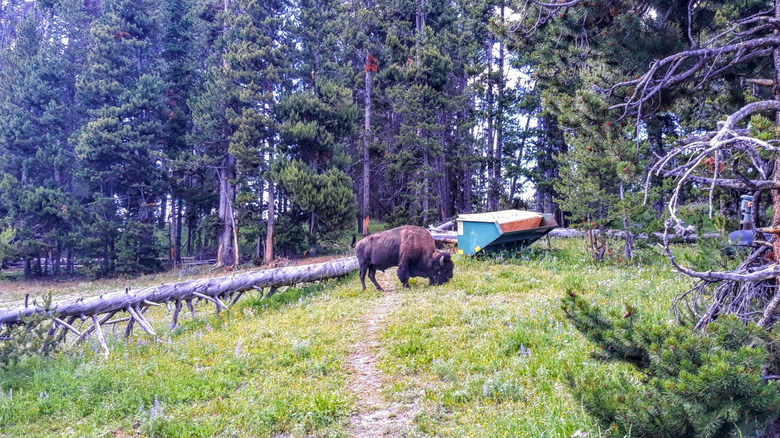
One of the things park rangers want you to know is that you must not feed or interact with animals. Aside from the hefty fine, rangers are not just concerned about the wildlife's safety when animals become accustomed to humans. There have been instances of animals severely injuring people in Yellowstone. Humans likely know that bears are dangerous, but bison or other wildlife might be more unassuming. Uniquely, Yellowstone is the only place in the country where bison have lived continuously since prehistoric times, so you're bound to encounter one on your visit. Along with sporting sharp horns, bison are capable of running 35 miles per hour (which is faster than track and field star Usain Bolt).
If you encounter bison in the wild, at Yellowstone or elsewhere, the National Park Service urges you to stay at least 25 yards away. This is the safety mandate for all other park animals except bears, wolves, and cougars, from which you must stay at least 100 yards away (a football field's length). Maintain these distances even if the animal is the one getting too close to you. It's important to remain on designated roads and trails as well. Lastly, Yellowstone's popularity makes it fairly busy, which can add more stress to the animals' habitat. To minimize your impact on the park's wildlife, keep in mind that there are parks other than Yellowstone where you can see bison, elk, bears, and more of the continent's amazing animals.