
Between Tampa And Gainesville Is Florida's Once-Thriving Lumber Town That's Now Ruins In A Nature Preserve
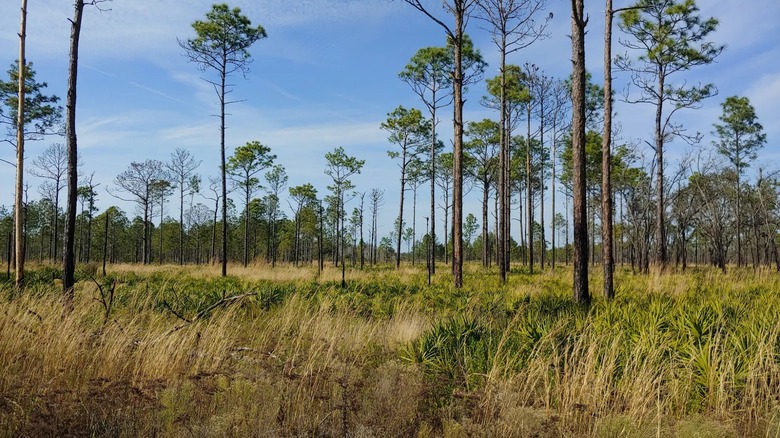
Long before tourism became Florida's defining industry, there was timber. Once swathed in sprawling cypress swamps and pine forests – even more so than today — the state was dominated by logging camps and sawmill operations throughout the 1800s and well into the early 20th century. Centralia was one of them. The logging boomtown and its mill cropped up in 1910 in the remote wilderness of Hernando County along the Gulf Coast.
Founded to house all the lumberjacks brought in to harvest the surrounding bald cypress trees, Centralia thrived in its heyday. The settlement's lumber mill was one of the largest in the entire state, and more than 1,000 sawmill workers and their families called the place home back then, according to the Historical Marker Database. Set along a railroad line between Tampa and Gainesville, the bustling town had it all, boasting a post office, general store, restaurant, bakery, apothecary, schoolhouse, church, and little movie theater to boot.
Unfortunately, Centralia's days were numbered. The forests were all cleared out by 1917, forcing the mill to close its doors. The town was all but abandoned by the next decade, and over time it was swallowed up by the returning woods. Centralia's ruins are now part of a peaceful nature preserve. The Florida Fish and Wildlife Conservation Commission bought the land in the 1980s and it's now part of the Chassahowitzka Wildlife Management Area, situated right next to the Chassahowitzka National Wildlife Refuge.
Explore the ruins of Florida's long-lost logging town, Centralia
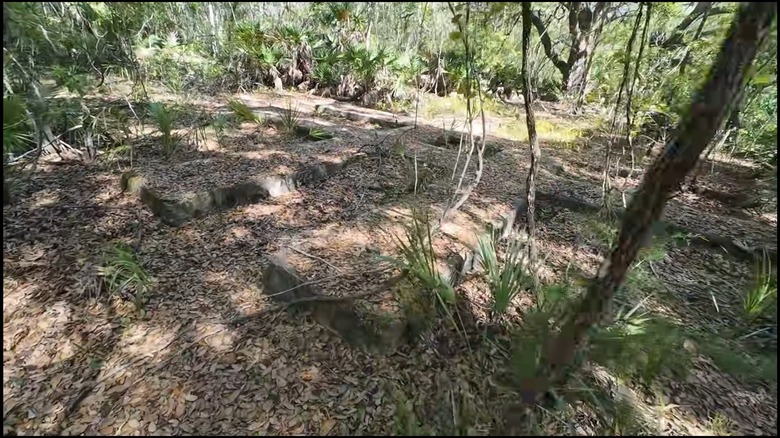
Like many of Florida's once-thriving boomtowns that now stand abandoned, there's not a whole lot of Centralia left today. Very little remains of the settlement's original structures, which were either burned down or worn down by the elements. However, there are several concrete ruins that are still visible, among them chunks of the sawmill's foundation and the ramp used to hoist logs out of the dried up float pond — which, when full of water, were common in lumber operations for cleaning, storing, and preserving cut timber. Some of the brick frameworks from the town's dilapidated buildings are also still standing, now covered in vegetation. And you can even see the capped-off well that provided water to the townsfolk more than a century ago.
You'll likely come across a few other odds and ends strewn across the grounds, from pieces of bricks and broken glassware to metal scraps and rusted out containers. But before setting out on your Florida ghost town hunting excursion, keep in mind that finding the remnants of Centralia can be a little tricky. The Chassahowitzka Wildlife Management Area is massive, encompassing more than 20,000 acres. The ruins are pretty close to the town's historic marker, which sits along U.S. Highway 19 going southbound near Centralia Road. You can access the ruins via the Centralia Sawmill Trail. The path spans just over a mile round-trip and sets out from the nearby parking area right off the highway. A portion of the route is unmarked and may be a bit challenging to navigate, so be sure to have a map of the route handy.
Do a bit of wildlife watching in Centralia's ruins
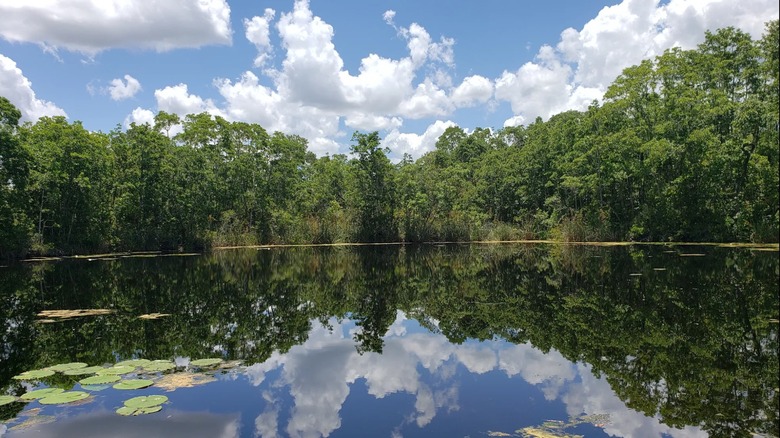
Beyond the ruins, Chassahowitzka Wildlife Management Area is a haven for all kinds of Florida critters, including white-tailed deer, armadillos, and coyotes. Keep an eye out for black bears, alligators, wild boars, and venomous snakes, too. If you're on the prowl for some of the best birdwatching destinations in Florida, the wildlife sanctuary also has a bevy of birds, with scrub-jays, swallow-tailed kites, and painted buntings spotted in the park.
If you plan to do a bit of wildlife watching, it's important to note that the nature preserve does allow hunting, so it's best to avoid the area during scheduled hunt days. You can find a calendar of the various hunting seasons here. If you do choose to visit when there's a planned hunt, the Florida Fish and Wildlife Conservation Commission advises parkgoers to wear fluorescent orange clothing that's highly visible during daylight hours, such as a shirt, vest, jacket or hat.
Chassahowitzka is also a popular spot for scuba diving. The wildlife management area is home to two stunning sinks, Eagles Nest and Buford Spring, which drop down about 310 feet and 165 feet, respectively. The underwater caverns are best tackled by advanced divers, and you do need to register for a license before entering the water. A daily-use permit is also needed for any recreational activity within the nature preserve, which can also be obtained online. Want to explore more of the Florida coast? You can see real-life mermaids at Weeki Wachee Springs State Park, which is only about a 10-minute drive away.