
What Is The Average Lifespan Of An RV?
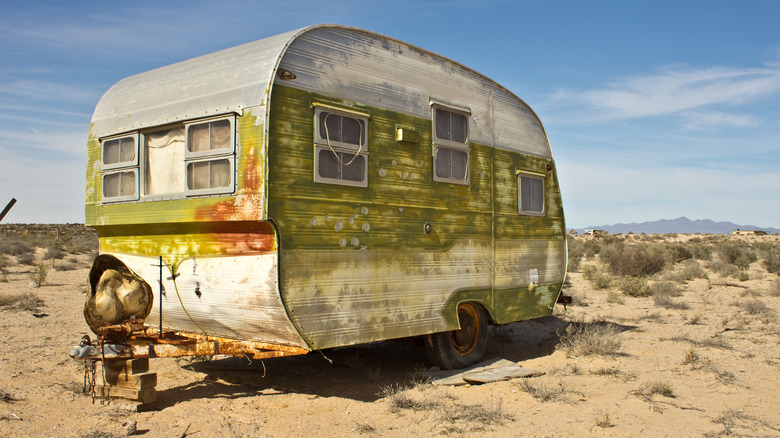
You just took out a 10-year loan to finance your dream RV, and now you're wondering how long you can expect your new camping machine to last. Will it get passed down to your kids, or will the goldfish you won at the county fair outlive it? The short answer, according to information published by RVshare, is that you can expect the average motorhome or trailer to last about 10 to 20 years. Some types, including diesel pushers and Airstream trailers, often last 20 to 30 years, while pop-up campers with canvas walls average closer to 10 to 15 years.
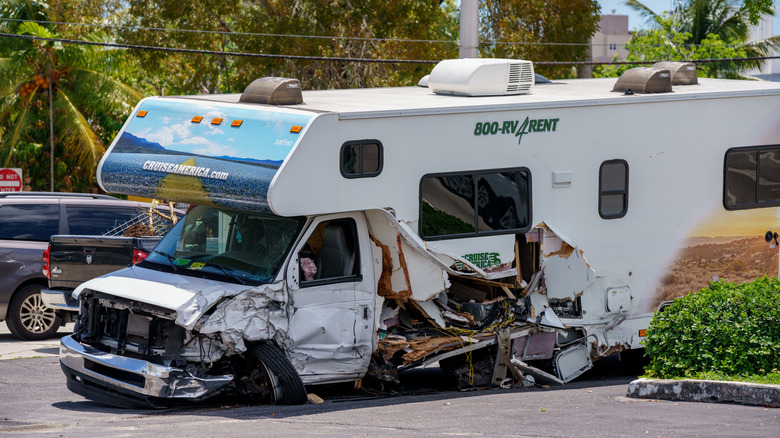
That's quite a range, and the longer answer is that an RV's lifespan depends on several factors. One is the original build quality. Another is the maintenance habits of its owners. Then there is the environment in which it's used and stored (extreme heat and UV exposure can cause deterioration, but so can water damage, including rain and humidity). There is also the fact that it's a vehicle, and thus could be totaled in an accident on the road – possibly through no fault of your own — or maybe because you overinflated a tire. Either way, a road mishap can lead to your beloved chariot's demise long before age does.
Factors that shorten (or extend) the lifespan of an RV
Deferred maintenance is a top killer of RVs. An RV parked uncovered in a driveway will generally have a shorter lifespan than one stored under a shelter or protected with a breathable cover. In desert destinations like the snowbird mecca of Quartzsite, Arizona, intense UV radiation can cause painted and fiberglass surfaces to oxidize (that dull, chalky appearance). Sun exposure also dries out rubber roof membranes and sealants, making the vehicle more susceptible to leaks when that desert monsoon rolls through. According to RV personality Josh the RV Nerd, water damage from a poorly maintained roof remains one of the most common reasons RVs are scrapped. A hole in the rubber membrane the size of a dime, he says, can cost you the whole RV.
Freezing weather can shorten the life of an RV as well, especially when owners fail to properly winterize their rigs before putting them into storage. Water left in pipes, pumps, holding tanks, and water heaters tends to freeze and expand, cracking or damaging those systems. To prevent this, an owner must drain all the pipes and partially refill them with RV antifreeze. Many repair shops and dealerships offer winterization services for those who don't want to tackle the job themselves.
Poorly-maintained tires that blow out at highway speeds can cause extensive damage to the undercarriage of an RV, leading your insurer to declare it "totaled." A visual inspection of tread depth alone isn't enough to determine tire health, as a low-mileage RV can have plenty of tread left while the tires are brittle from age. Replacing them every 5 to 7 years, regardless of tread condition, can help prevent this kind of catastrophic loss.
RVs with the longest lifespans
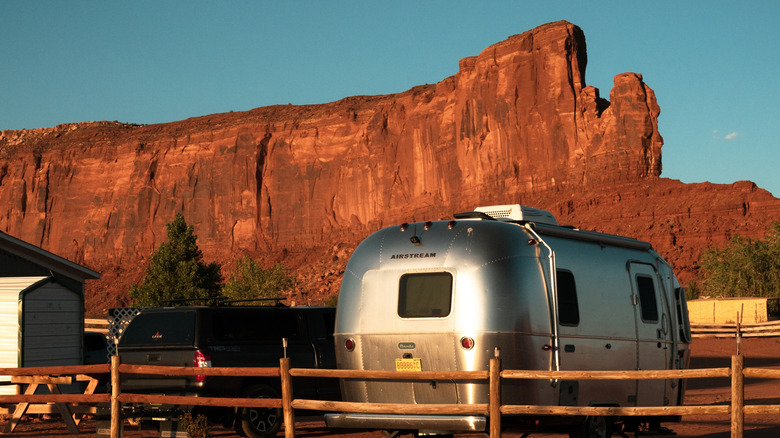
When it comes to longevity, look for simple, well-built designs. Some RV brands live longer, and as a bonus hold value better, than others. Airstream claims that 70% of its trailers ever built, from the 1930s onward, are still on the road. At the time of writing, the oldest Airstream listed for sale on RVTrader was a 23-foot 1950 Flying Cloud, with an asking price of $23,500 (new, it retailed for $4,200). The MSRP of a new Airstream Basecamp is around $60,000 today, reflecting that reputation for longevity.
If the "buy once, cry once" price of the Airstream is out of reach, molded fiberglass "egg" trailers are another option known for durability. Models such as the Scamp 13 Lite, which comes in around $17,000, along with other egg-style towables from brands like Happier Camper, Escape, and Oliver, offer molded fiberglass campers. They are essentially two pieces with a seam around the middle and no slide-outs, making water far less likely to find its way inside. The cult classic Casita trailers also continue to attract a loyal following, proving there's a growing market for small, simple trailers. The same goes for the canvas-walled pop-up campers, which blend the best of RV and tent camping. While it is true that canvas has a limited lifespan, a full canvas replacement for a Forest River Rockwood, one of the most popular models, costs around $1,500 to $1,800, which can significantly extend its usable life.
As for motorhomes, diesel rigs generally outlive gas ones, but are costlier to purchase and maintain. Maintenance, again, is the key sticking point. If the high cost of maintenance leads you to defer it, then you may be losing any benefit of owning a diesel RV, making gas the better choice for a long, happy life on the road.