
Goodbye Traditional Hotels — These Travel Trends Are Taking Over Vacations
When vacation time rolls around, many travelers default to what they know — a preferred airline, a familiar destination, and a reliable hotel that comes with a loyalty point or two. Preferred Hotels and Resorts' Luxury Travel Report for 2025 found that 62% of luxury travelers are noticing the "beige-ification" of luxury hotels, with a majority of Gen Z and Millennial survey participants noting that the same aesthetics, foods, and amenities of such accommodations aren't cutting it anymore.
It's inevitable, then, that travel trends would start moving beyond the hotel room entirely. Years ago, the idea of camping as a luxury experience would have seemed far-fetched. But in a world where humble water bottles and athletic wear are unlikely status symbols, it was only a matter of time before glamping (glamorous camping) became the travel trend that took sleeping outdoors to the next level. Fueling the fad are Gen Z and millennial travelers, whom a Research and Markets report describes as "seeking immersive, luxury-meets-nature stays that blend comfort with adventure."
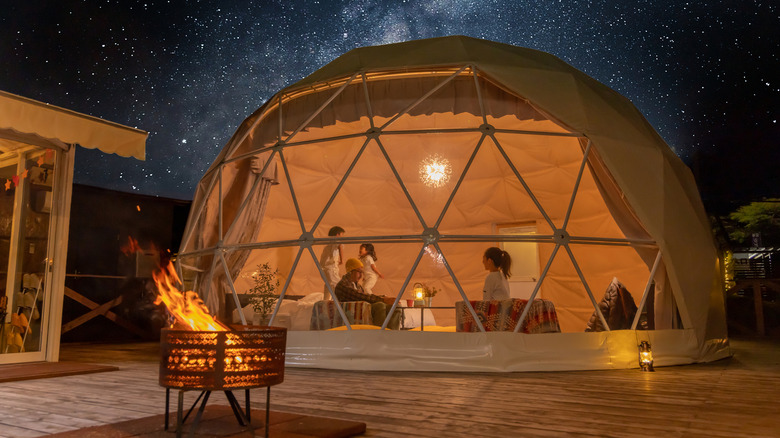
In contrast to the bland, nondescript furnishings of traditional hotels, glamping doesn't have a shade of beige. Equipped with creature comforts like proper bedding and private bathrooms, glamping options are plentiful, ranging from geodesic aurora borealis domes in Alaska and boutique tipis near national parks to tree hotels in Swedish forests and vintage trailer rentals in the New Mexico desert. The glamping market also weaves sustainability into its ethos, aligning with the 85% of travelers who consider sustainable travel important, according to Booking.com's 2026 Travel and Sustainability Report.
Alternative lodging is rising in popularity, and Airbnb delivers
And then there is the debate that most travelers wrestle with when planning a vacation: would a hotel or an Airbnb be the better choice? For Ohio's Patton College of Education hospitality and tourism professor Dr. Sandy Chen, the choice depends on the trip's purpose: "Today, travelers are less likely to default automatically to a hotel," via Ohio Today. Hotels may come with concierges, breakfast buffets, and extra perks when you check in, but 89% of luxury travelers find themselves wanting to be surrounded by local charm at their accommodations, per Preferred Hotels and Resorts' report. Enter Airbnb's slew of authentic accommodations that no traditional chain hotel can fully recreate.
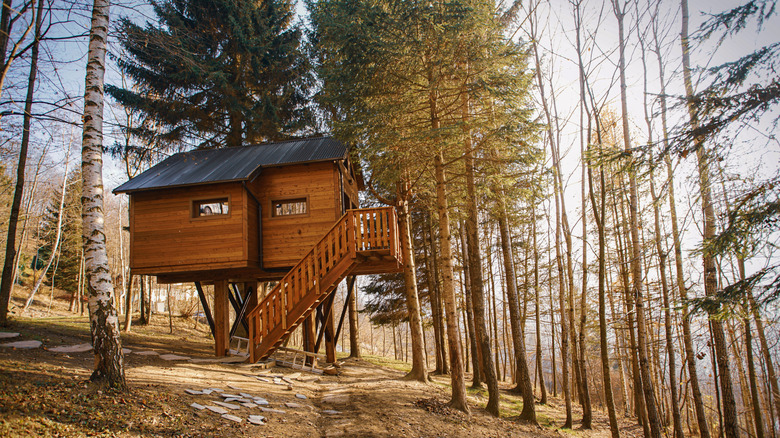
Looking for a rugged escape? Swap that hard-to-book ryokan for a sustainable treehouse in Okinawa's Yanbaru forest, or spend a night at a traditional, half-burrowed Icelandic turf farmhouse. Trade boring hotel rooms for a stay in the sculptural Bloomhouse in Austin, or Quetzalcoatl's Nest in Mexico, a private snake-shaped complex where the word "atypical" doesn't even begin to describe its architectural madness (and we mean that in a good way). For more palatial tastes, perhaps a 10th-century Spanish castle or an entire Moroccan riad would suffice.
Meanwhile, Susan Wheeldon, Australia and New Zealand's country manager for Airbnb, notes the upward trend of short "weekending" getaways in off-grid retreats, tiny homes, and nature-immersed stays (via an Airbnb article). Plus, large group vacations lean toward home rentals rather than hotel stays, making Airbnbs not just the more practical choice for groups, but also the more memorable one for everyone. Just remember to check the Airbnb review red flags that could ruin your next getaway.