
Forget Lake Tahoe, This High-Elevation Gem Is An Asian Escape With Color-Changing Waters, Camping, And Mountains
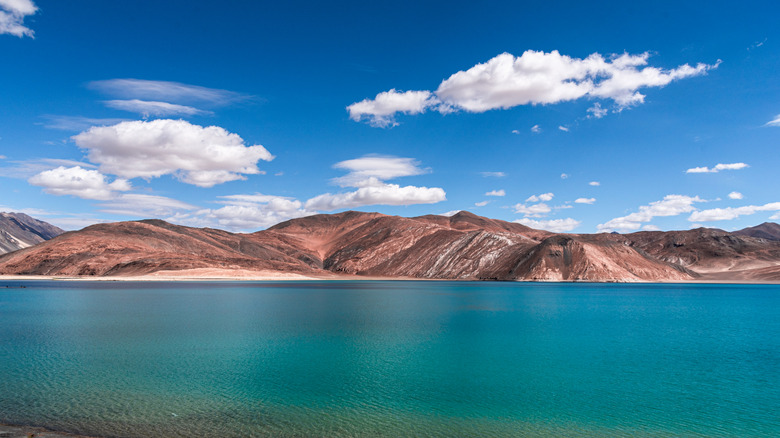
If you're searching for a brilliant blue lake in a rugged mountain setting in America, Lake Tahoe is the obvious choice. But cast your eyes a bit further — okay, a lot further — and you'll find an equally stunning mountain lake amid the most famous mountain range in the world. Set in the Himalayas at an altitude of 14,272 feet, Pangong Lake is the world's highest saltwater lake (via the Administration of Union Territory of Ladakh). Approximately one-third of the lake lies in Ladakh, India. The remaining two-thirds are in the Ngari Prefecture of Tibet, China.
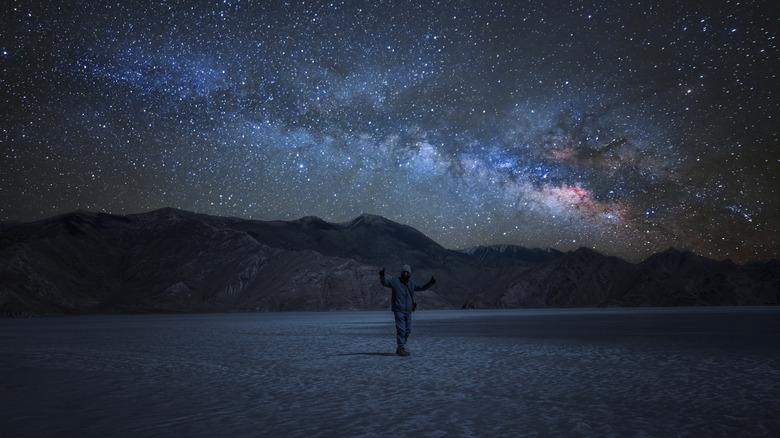
Pangong Lake is one of the most stunning destinations in the two countries known for their scenic beauty. Considered by Tripadvisor to be the No. 1 destination near Leh, Ladakh, Pangong Lake features shimmering water that changes color throughout the day and stands in stark contrast to the barren, grey-brown mountains surrounding it. At night, the high elevation makes the stars seem so close that you believe you could just reach out and touch them. While some people may take a quick day trip to the lake, we suggest camping overnight to take in the full extent of Pangong Lake's scenic vistas.
Visitors to Pangong Lake can enjoy an isolated, serene getaway right in the heart of the most populated part of the world, with uninterrupted views across the 83-mile-long lake and starry night skies framed by snow-capped mountains. From the Tibetan side, you'll have to drive 739 miles from Lhasa over multiple days to the Ngari Prefecture. On the Indian side, there are share taxis and private car rentals that will take you to the lake from Leh, 140 miles away. On your way, you'll see snowy mountain passes, some of the world's highest-elevation roads, and the most remote cultures of India and Tibet.
Admire the changing colors of Pangong Lake over a full day
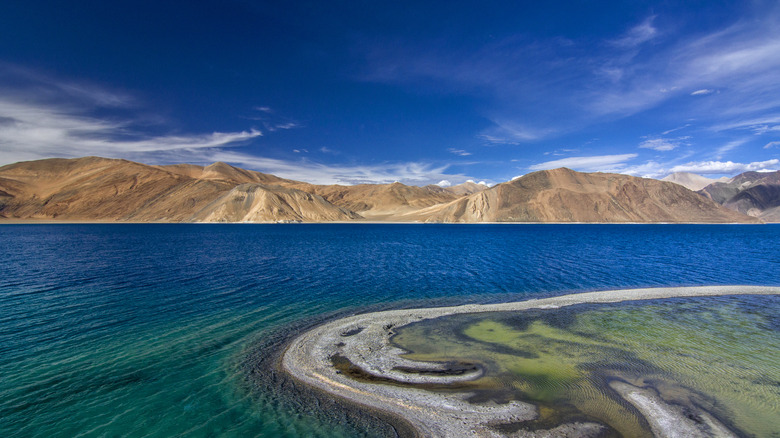
One would think that such a high-elevation mountain lake would be a glacial freshwater lake, but Pangong Lake is actually a brackish saltwater lake. However, not all parts of it are equally saline. The Tibetan section of the lake is generally less brackish than the Indian one, and this variation in salt and mineral levels is also responsible for one of the lake's most famous features: the color-changing water. The minerals in the lake refract sunlight at varying wavelengths, making the water appear different colors throughout the day. As the sun's position changes, sections of the lake switch between deep blues and bright greens, occasionally even looking greyish or red in the sunlight. Spend one night at Pangong Lake, and you'll see why Rick Steves says his favorite country to visit is India.
On the Indian side in the adventure-magnet 'Little Tibet' territory of Ladakh, there are campsites right beside the lake in the villages of Lukung, Spangmik, Mann, and Merak, ranging all the way from basic chadar tents (large, communal tents) to more luxurious accommodations. According to the listings on Tripadvisor, nightly rates for tents or rooms in Spangmik range between $25 and $120.
Accommodations on the Tibetan side are sparse due to the lake's remote, mostly undeveloped location. According to Tibet Vista, visitors from the Tibetan side typically stay in guesthouses in Rutog County or Shiquanhe Town — the nearest developed areas in the Ngari Prefecture — and can expect moderate comfort, with hot water and electricity. Some tour operators may organize lakeside camping and birdwatching retreats during summer, as the isolated Tibetan side of Pangong Lake is an important ecological area for migratory birds.
Planning a trip to Pangong Lake
Visiting Pangong Lake requires planning, regardless of which country you choose to visit from. Just as Lake Tahoe stretches across the borders of two states, Pangong Lake straddles two countries with a contentious history. As a result, the Indian and Chinese governments allow only travelers with valid permits to make the trip.
To visit Pangong Lake on the Indian side, non-Indians will need their passports and visas to get a Protected Area Permit (PAP), which is valid for 15 days. While you can technically apply for a PAP on your own, it's much simpler to contact a registered travel agent in Leh — the full list of registered agents is available from the Ladakh Autonomous Hill Development Council. According to Travel Coffee, you'll probably pay around $4 or $5 (450-500 Indian Rupees) plus the agent's fees — the total cost for your permit will most likely be around the $10 range. On the Tibetan side, your only option is to arrange your permits through a licensed travel agency, according to Tibet Vista. Plan your trip in advance because it might take time to get your permits, regardless of which country you're visiting from.
Pangong Lake is best seen in the summer months between May and September, but the high altitude means even summer temperatures hover around 45 degrees Fahrenheit at the highest. It's also pretty windy, so pack thermal underwear, your warmest clothes, socks, gloves, and even a blanket if you can fit it into your bag — electricity and centralized heating are in short supply in these parts. Because altitude sickness can be a real problem in the Himalayas, stay at least 48 hours in Leh or Lhasa before traveling to Pangong Lake to acclimatize to the high altitude.