
Forget Yellowstone, Visit This Midwest Preserve Where Bison Roam Wild Amid Fishing Spots And Scenic Trails
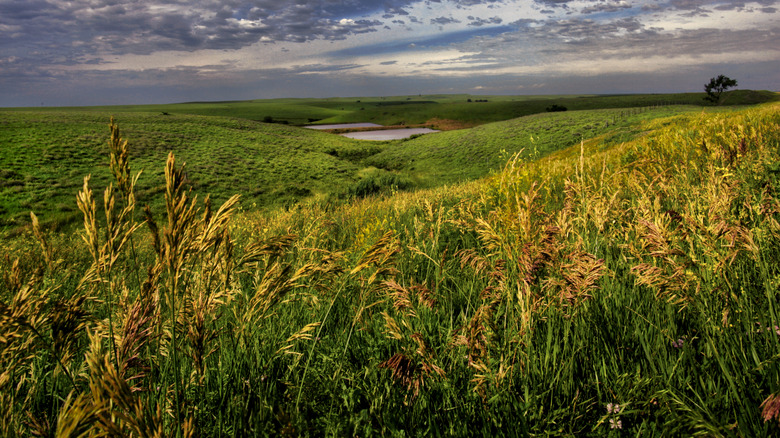
One of the biggest tourism draws for Yellowstone National Park is its wildlife. Aside from grizzly bears, wolves, elk, and more, herds of bison roam throughout the park. As North America's largest land animal and the national mammal of the United States, bison are truly a sight to behold. However, there are plenty more places to see these 2,000-pound giants than just Yellowstone. One of them is at the 11,000-acre Tallgrass Prairie National Preserve near Strong City, Kansas. Only two hours southwest of Kansas City by car, this national preserve is the only place in the National Park Service network dedicated to protecting the tallgrass prairie ecosystem.
Prairies used to cover a majority of the Midwestern United States and even parts of Canada, but now less than 4% remain. While prairies have imagery of less-than-exciting flat swaths of grassland, the number of things to do and see throughout Tallgrass Prairie National Preserve might come as a surprise. Of course, the preserve's bison population is a major highlight, but you can also enjoy relaxing scenic drives, hiking trails, fishing, and historic buildings.
View the preserve's bison from the Scenic Overlook Trail
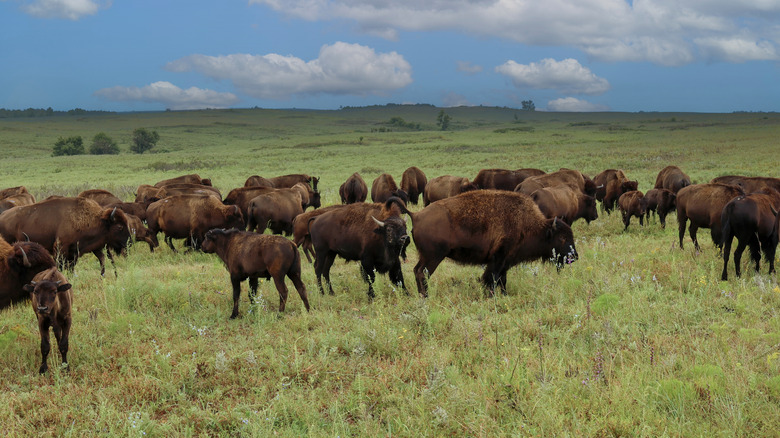
Bison herds at the Tallgrass Prairie National Preserve roam throughout the Windmill Pasture. If you visit from mid-April to early July, you could spot calves as well. To get to the pasture, use the Windmill Pasture Scenic Overlook Trail, a gravel hiking trail which begins slightly northwest of the visitor center. When on this 3-mile route and at the overlook itself, remember to stay at least 100 yards from the bison. Among the top things park rangers want you to know is that keeping your distance from wildlife is not merely a suggestion. Though they may appear docile, bison are dangerous – they have sharp horns and can run 30 to 40 mph. Perhaps bring binoculars or a camera with zoom to get better views.
Close to the visitor center is the Fox Creek Trail. This 6-mile trail takes you through sweeping, peaceful meadows dotted with trees and to Fox Creek itself. On the trail, keep your eye out for white-tailed deer and other animals that call the Tallgrass Prairie home. Birds are especially abundant here, with species including bald eagles, multiple types of hawks, owls, prairie falcons, turkeys, and many more. Fox Creek Trail is accessible from the Bottomland Trail as well, located on 227th Road, just outside of Strong City.
Fishing and historic sites in Tallgrass Prairie National Preserve
Tallgrass Prairie National Preserve visitors can fish at ponds in the Two Section Pasture part of the preserve, accessible via the 3-mile Two Section Trail. Its trailhead is located on U Road, which intersects with U.S. 50, just 1.5 miles east of Strong City. Fishing is also allowed on around 2 miles of Fox Creek, specifically between the Bottomland Trail's 227th Road access point and the low-water crossing. Fish in the preserve include Topeka shiners, spotted suckers, and flathead catfish. Keep in mind that you must have a fishing license, and, in order to keep the natural ecosystem intact, only catch-and-release fishing is allowed.
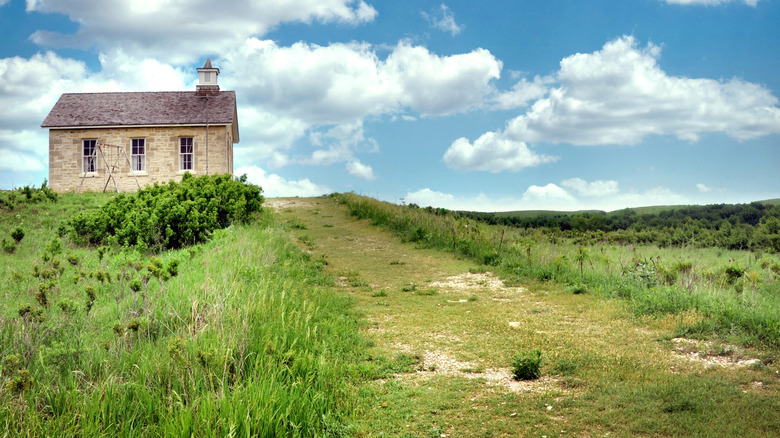
Self-guided tours of the Tallgrass Prairie National Preserve are available for download onto your cell phone. Aside from teaching you more about one of the world's last remaining tallgrass prairies and the Flint Hills National Scenic Byway, the tours reveal details on the preserve's historic buildings. The Spring Hill Ranch House, a stately home built in 1881, is close to the visitor center. The home is an example of the rise of huge ranching businesses, a key aspect of Midwestern development. Lower Fox Creek School, an 1880s one-room schoolhouse slightly north of Spring Hill Ranch House, is also included in the cell phone tours.