
This Glitzy, Famous Desert City Wasn't Always In 'Best Of' Lists
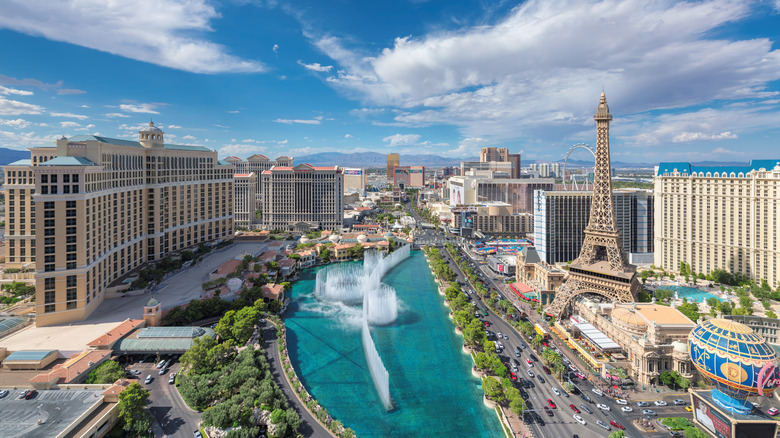
Survival in a desert comes down to adaptation and evolution. Perhaps no city on earth shows that better than Las Vegas, Nevada. The iconic city known for flashy displays, elite entertainment, and round-the-clock gambling drew in nearly 40 million visitors in 2025, making it one of the top 20 most visited cities worldwide. With attention comes accolades. In 2026, Resonance placed Las Vegas at No. 7 on its list of America's Best Cities.
Las Vegas is known by many nicknames: Sin City, The Entertainment Capital of the World, and Glitter Gulch, just to name a few. Through its evolution from a rare underground spring in an unforgiving desert to placement on today's "Best Cities" lists, it was also known by other, less flattering names. Former Secretary of the Interior Harold Ickes once insinuated Vegas was a "boisterous frontier town." Other phrases collected in "Changing Perceptions of Las Vegas" by Larry Dale Gragg were "awful place", "ugly little town," and "a combination of Sodom, Gomorrah, and perdition."
Most people know the modern history of Las Vegas — it was once a mob town that transitioned through the Sin City era into the present day. One detail that is too often lost in translation is how Las Vegas, since 1905, always seemed to meet America where it was, from necessity to nefariousness.
Long before the acclaim, Las Vegas did its best to survive
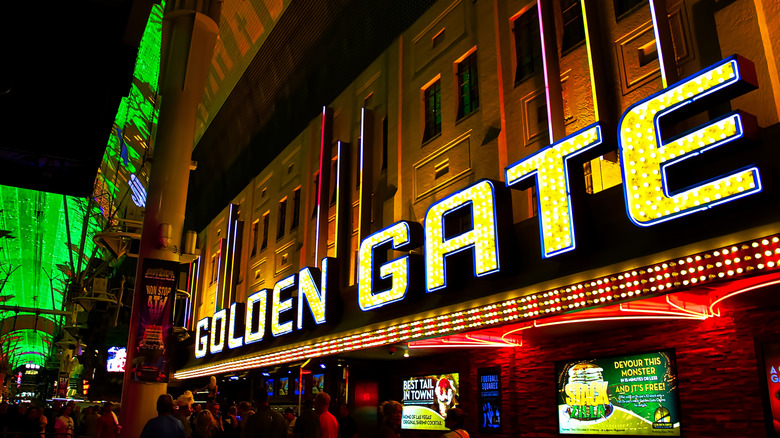
The irony of Las Vegas starts with its name, which translates to "The Meadows" in Spanish. Mormons settled on the springs near modern-day downtown Las Vegas. The railroad came in the early 1900s, and Las Vegas was born, with only Block 16 zoned off for alcohol. Sex work quickly followed. The Hotel Nevada, now the Golden Gate, was built in the first decade of the 1900s, and it stands today as Las Vegas' oldest casino, with plenty of historic charm on display.
A 1910 statewide gambling ban had about as much impact as the 1920 nationwide alcohol ban. The activities went underground and were largely overlooked by law enforcement. A big pivot point came in the 1930s, not long after the gambling and alcohol bans disappeared. The Great Depression had slowed the railroad industry, and even the mineral-loaded mines of Southern Nevada weren't worth digging up. The West needed water and power, and another flood of income was on the way.
Boulder Dam, later named the Hoover Dam, brought 5,000 workers to the area. Las Vegas adopted the nickname "The Gateway to Boulder Dam," and the government built Boulder City to keep workers away from the vices Las Vegas had to offer. (Spoiler alert: It didn't work). Then, what is now known as Nellis Air Force Base was established in 1941. The surge of workers sent the population doubling by 1930 and tripling that by 1950. The El Rancho Hotel and Casino opened on what is now the Las Vegas Strip. World War II ended, the "Golden Age of the American Road Trip" was underway, and alongside the crowds of visitors came organized crime. More casinos and hotels brought in popular performers like the Rat Pack, Elvis Presley, and Wayne Newton. Enter the "Entertainment Capital of the World" era for Las Vegas.
From Old Vegas to a new megaresort era
While organized crime was exploding in Vegas, another bomb was about to drop. Atomic testing north of Las Vegas changed the nickname again to "Atomic City" in the 1950s and '60s. That was right about the time that reports of UFOs started flying over those dark desert skies. The extraterrestrial subculture put the tiny town of Rachel, two hours north of Las Vegas, on the map (literally). Rachel is now known as the "UFO Capital of the World," due to how close visitors can get to Area 51.
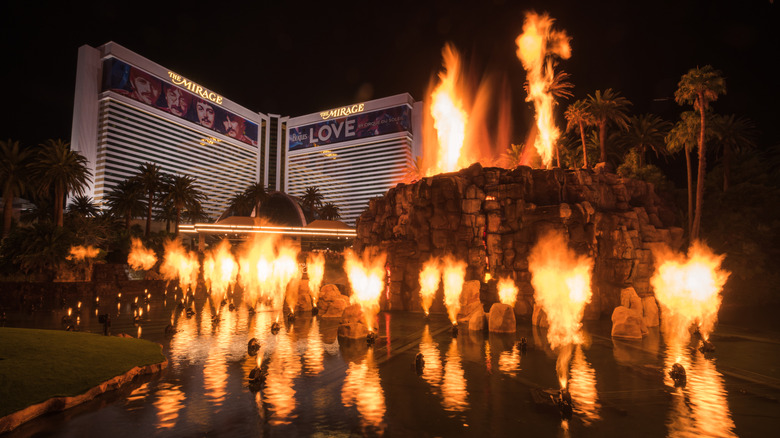
Government crackdowns came for the gangsters, while books like "The Green Felt Jungle" and "Fear and Loathing in Las Vegas" exposed the underbelly of Vegas to America. Las Vegas' new nickname was "Sin City." As mob ties were unraveled in Las Vegas, big corporate names like Howard Hughes, Kirk Kerkorian, and Steve Wynn entered Vegas development. When the Mirage opened in 1989, Las Vegas kicked off the "Megaresort Era." Older casinos were torn down, and megaresorts were built.
Movies like "Vegas Vacation" (1997) and "Casino" (1995) tried to shine a neon light on several sides of the Las Vegas evolution. However, Las Vegas still couldn't shake the "Sin City" moniker, despite attempts to be more family-friendly — but did it really need to? Las Vegas voters seemingly answered that question in 1999 when they elected Oscar Goodman as mayor, a former mob attorney who played himself in the movie "Casino." The self-proclaimed "Happiest Mayor in the World," usually armed with a martini and flanked by showgirls, was about to blaze a path to "best of" lists in the new millennium.
Las Vegas entered the 21st century poised for success
In the early 2000s, the slogan "What Happens Here, Stays Here" was introduced. Luxury options replaced bargain buffets, enticing people to fancy meals, top-tier shows, and elaborate spa experiences. The "Entertainment Capital of the World" kicked off an era of residencies that included the likes of Britney Spears, Elton John, and Garth Brooks.
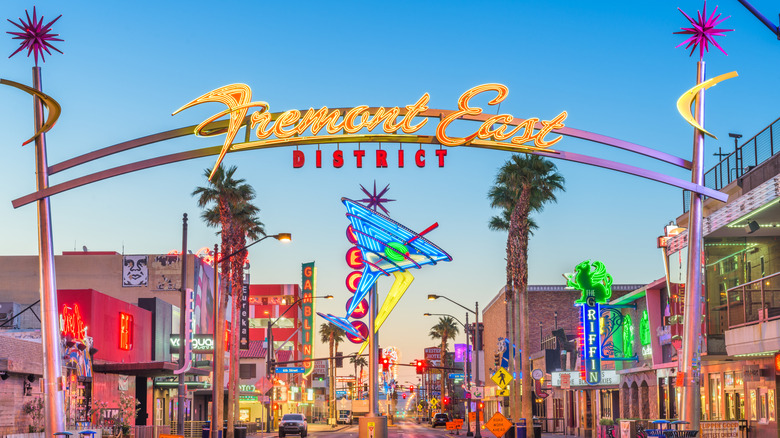
The Strip was star-studded, but remember the watering hole on the railroad from 1905? That's downtown Las Vegas. The Strip isn't within the city limits (or the mayor's purview). Mayor Goodman and his wife, Carolyn — who served as mayor immediately after him — set out to revitalize downtown. The Fremont Street canopy, installed in the 1990s, kicked off efforts to reimagine what visiting and living downtown looked like. This led to the opening of Fremont East, Symphony Park, and the World Expo Market, just to name a few.
The Las Vegas economy faltered during the 2008 housing crisis, but it rebounded. The city began attracting more conventions while welcoming national sports franchises, leading to the self-proclaimed "Sports Capital of the World" era. In 2016, tourism peaked at nearly 43 million visitors. The following year, convention attendance hit a high-water mark at nearly 6.7 million. Las Vegas reached a new seemingly unshakeable stride — that is, until October 1, 2017. The October 1st mass shooting tragedy hurt the soul of the city, but it also impacted the tourism perception. The #VegasStrong sentiment echoed globally, with tourism rebounding the next spring. Then, the COVID-19 pandemic shut down The Strip, and films like "CoronaVegas" portrayed the city in a way that looked post-apocalyptic. It was time to adapt and evolve... again.
Las Vegas does more than survive — it evolves
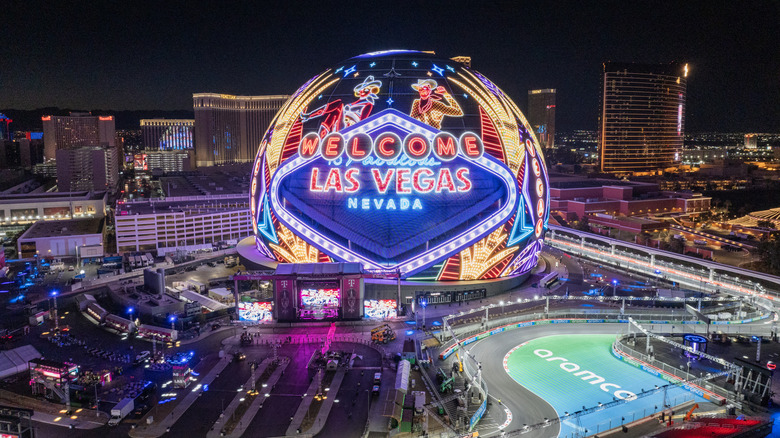
While the tourism marketing engines roared toward branding Las Vegas as an affordable vacation destination in the early 2020s, local and state leaders went to work to diversify the economy. The NFL's Raiders moved to Las Vegas in 2020, and the MLB's Athletics are set to relocate there in 2028. As the tech industry grew, Las Vegas leaned into things like sports betting, finance, and clean technologies. The growing tech industry landscape boosted the population. From 2000 to 2024, the Clark County population increased by nearly 60%. By 2045, the county could reach 3 million residents.
The greater footprint of the Las Vegas outdoor scene reached fever pitch when WalletHub put it at the top of its Best U.S. Cities for Recreation list. Vegas is also one of the best places to retire, particularly if you're seeking good weather. Tourism? Still drawing in "best of" nods, as evident by U.S. News & World Report's inaugural Best Conference Cities list (Per Fox5 Las Vegas). Resonance even saved Vegas the #55 spot on the World's Best Cities list. Once a makeshift railroad town that made some questionable choices along the way, Las Vegas did what any desert dweller must to — adapt, evolve, and survive. Nobody has a crystal ball for the next iteration of Las Vegas, but the city does have a Sphere.