
Between Gateshead And Newcastle Upon Tyne Is A Riverside Walk With Bridges, Art, And Historical Views
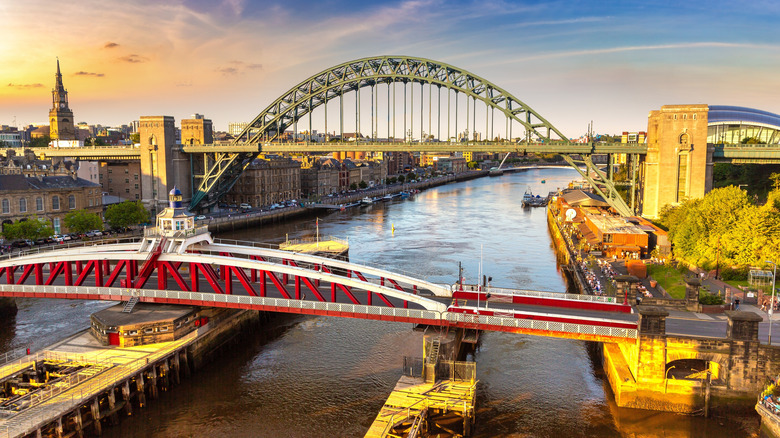
Newcastle upon Tyne and Gateshead have a lot in common, not least the River Tyne flowing between them and a collection of bridges with distinct characters. Once a busy artery for the region's coal trade and shipping industry, the waterfront has grown into a bustling spread of historic architecture, contemporary art, restaurants, and riverside hangouts. You can take in the river's views and explore its history on a walk along the Quayside, where people can weave between the two cities over bridges and follow the water's edge past converted dockside buildings. You'll get photogenic views of the Gateshead Millennium Bridge, which tilts upward like a giant eyelid to let boats pass, and cultural landmarks such as the Baltic Centre for Contemporary Art.
The Quayside links the two sides of the River Tyne: Gateshead with its arts-and-culture scene and Newcastle's eclectic, Victorian-era charm. From Newcastle Central Station, which connects the city by rail to major hubs, the waterfront is about a 10-minute walk away (if traveling by train, get familiar with bizarre British train ticket rules to avoid accidental conviction). Once there, the mostly flat, paved riverside paths make for a relaxed stroll or an easy bike ride, with cycle routes running along both banks and the Gateshead Millennium Bridge open to cyclists and pedestrians alike.
There's no fee for the public waterfront nor a single prescribed route. Instead, you can wander as far as your curiosity takes you — that might be a riverside loop of an hour or two to tick off the sights, or stretch the visit into a full day by dipping into arts centers, breweries, or (if timed for a Sunday visit) the Quayside Sunday Market.
A walking tour along the Quayside
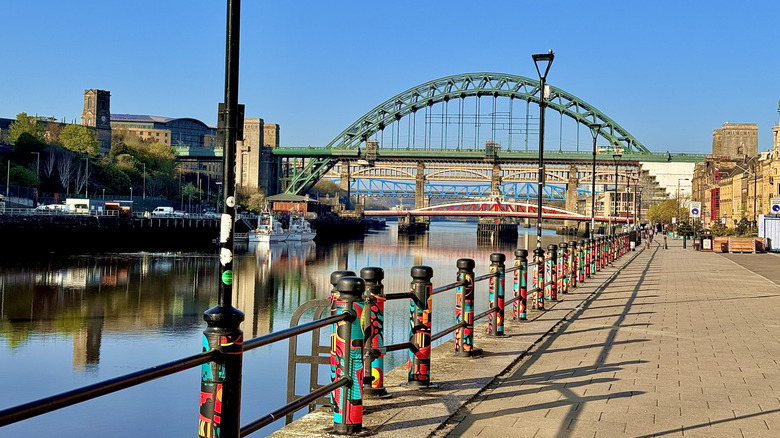
The Quayside crawls through several centuries of history, with contemporary art and interesting architecture along the way. On the Newcastle side, you might begin near the Swing Bridge, which dates to 1876. At the time, it was an engineering feat for its swinging mechanism. At the bridge's Newcastle end, look for the Bessie Surtees House, a 17th-century set of two buildings with timber framing and overhanging upper levels. Once merchants' dwellings, it's a glimpse of an older Newcastle, when the waterfront was a center of trade. You can sometimes pop in for free tours, but check the calendar in advance, since tour dates are irregular.
Continue east along the waterfront past a couple more bridges: the Tyne Bridge, with its sweeping steel arch, and the Gateshead Millennium Bridge, a 21st-century showpiece that you can watch tilt upward to let vessels pass beneath. At the latter's entrance, you'll see a perched sculpture called "River God," modeled on a real fire-eating street performer who once performed on the Quayside, per Newcastle History.
Cross the Millennium Bridge to the Gateshead bank, where much of the waterfront's industrial past has been repurposed for cultural destinations. The large former Baltic Flour Mill is now home to the Baltic Centre for Contemporary Art, which hosts changing exhibitions and a viewing terrace looking back across the Tyne (tip: admission is free). Heading west, The Glasshouse International Centre for Music was built on the site of a defunct rope and wire factory. Check ahead for scheduled concerts or ongoing, free audio installations. Visitors looking for a coastal destination to tack on after a day on the Quayside can make a side trip to Blyth, a coastal town with maritime history and local eats.