
'England's Cultural Heart' Is A City With A Vibrant Culture And Shops Between Birmingham And Sheffield
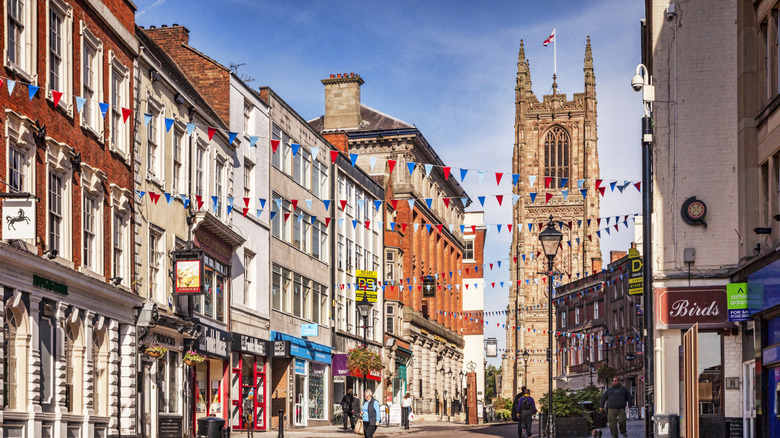
Most visitors to England tend to overlook the Midlands. With the exception of Birmingham, itineraries usually follow the well-trodden destinations of London, Edinburgh, and Manchester, effectively splitting visits between the south and the north. However, one of England's cultural gems sits right in the middle of the country, and goes by the name of Derby.
The city is conveniently situated almost dead center between Sheffield and Birmingham, and just 30 minutes' drive west of Nottingham, an underrated, historic city packed with shops and restaurants. It's an excellent afternoon layover if you're passing through the Midlands, and a gateway to the beloved Peak District National Park.
Derby sits on the remains of a Roman fort, and was permanently settled by Danes in the ninth century. It was also at the heart of the Industrial Revolution and has a textile legacy, so it deserves a closer look. Considering its impact on the world, this city of 278,000 residents according to World Population Review punches above its weight. It weaves culture, nature, and heritage neatly together and is near Kedleston Hall, a gorgeous, 18th-century manor and garden with a storied past that's used as a film set.
Derby's cultural legacy, museums, and galleries
Start your visit by booking a guided tour of Derby Cathedral, formerly The Cathedral Church of All Saints, which has crowned Derby since A.D. 943. Climb its 189 steps to witness the city and its surrounding four counties on a clear day. The 500-year old tower also hosts the world's oldest set of 10 church bells, which still ring.
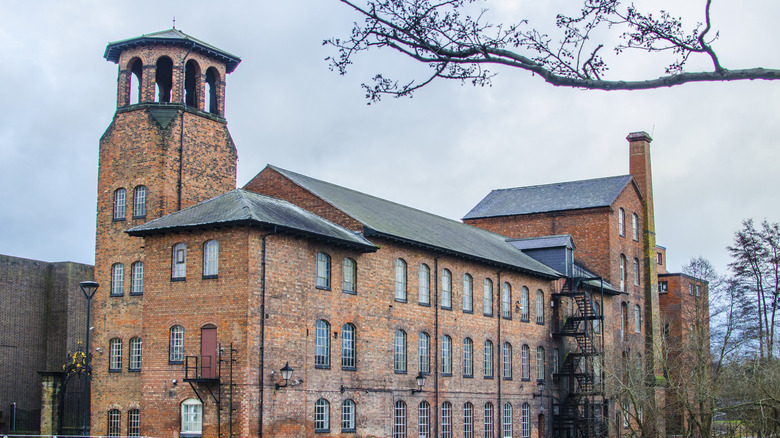
Fast forward to the 1700s, when the local River Derwent was gaining momentum as a crucial artery for trade and commerce and the Derwent Valley was taking center stage as the birthplace of the Industrial Revolution. Derby Silk Mill's history is worthy of a film script. A product of industrial espionage by its founder John Lombe, the silk throwing mill was the world's first fully mechanized factory. Today, it's the Museum of Making, and a UNESCO World Heritage Site. It houses 30,000 objects and machinery, including a model railway, miniature engine, and Rolls-Royce engine.
To cap off your immersion into Derby's Industrial Revolution era, head to Museum and Art Gallery on the scenic Strand. Its humble size houses several exhibitions, including the world's largest collection of paintings by Joseph Wright, who is recognized as a master of capturing light and early industrial scenery.
Derby's endearing market, shops, and parks
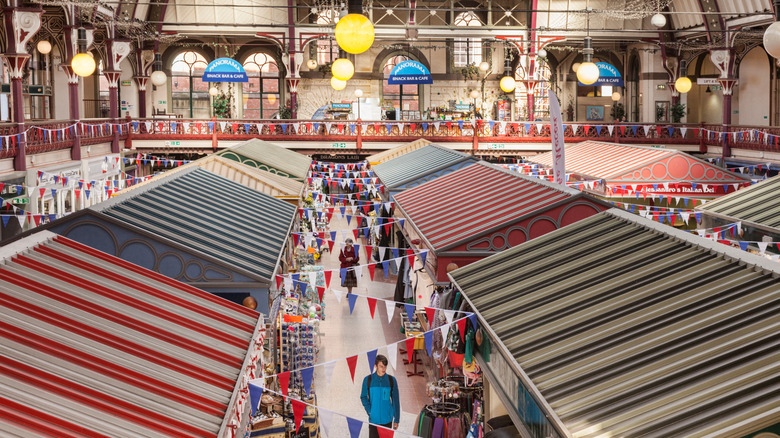
While Stoke-on-Trent, a 50-minute train ride away, is celebrated for its vibrant food scene and beautiful pottery, Derby holds its own with Derby Market Hall, which is a surefire way to relieve your museum fatigue. It opened in 1866, making it Britain's first purpose-built market hall. Its spacious interior has been abuzz ever since, with various stalls, cafés, and bars underneath a grandiose, barrel-vaulted roof. You will find a tempting range of food, including classic British fare, Caribbean dishes, and French-African flavors.
The market hall sits conveniently within Derby's Cathedral Quarter, which has a plethora of shops. Its 500 businesses range from unique boutiques and delis to theaters and hotels. Craft Haus on the Strand stands out as a local curiosity, as it offers an impressive collection of esoteric and occult literature, an apothecary, and a coffee house. Tucked on 33 Queen Street, Antiques in the Quarter is a fun destination to pick up a souvenir. Look out for fine china manufactured locally by Royal Crown Derby – the British royal family has been patrons of the company since 1761.
Having combed through the Cathedral Quarter, visiting Derby Arboretum is a must before wrapping up your tour. As Britain's first public park, it doubles as a botanical tree garden and a leisure garden, allegedly serving as inspiration for the design of Central Park in New York City. If the call of nature is pulling you farther into the outdoors, take the A52 road northwest for half an hour to the Peak District, England's first national park which is cherished for its windswept trails and unrivaled beauty.