
Scotland's 'Queen Of The South' Is A Lovely Market Town With River Views, Nature Retreats, And Historic Charm
What do Robert the Bruce, the poet Robert Burns, and creator of "Peter Pan" J.M. Barrie all have in common? Aside from being Scotsmen, these three historic figures also spent some time in Dumfries, a little market town in Scotland not too far from the English border. With the bends of the River Nith forming picturesque backdrops all across town, it's no wonder Dumfries is known as the "Queen of the South." From exploring literary landmarks to strolling by the waterfront, both history buffs and nature fiends will no doubt have a good time here.
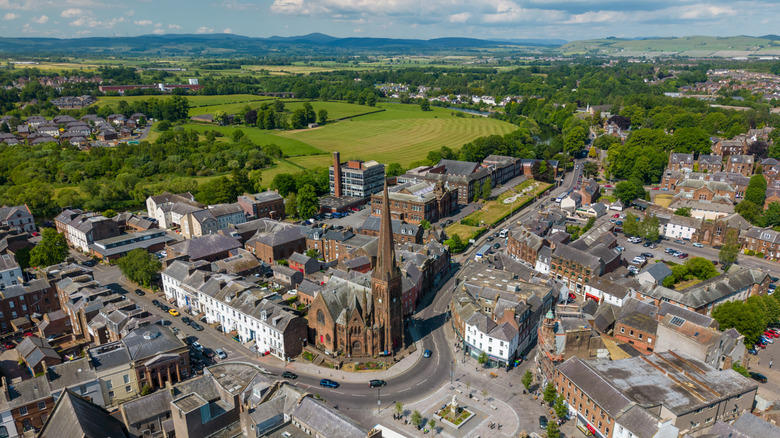
Upon arriving in town, the winding lanes and picturesque landmarks will entice visitors to spend the day ambling around. Looming over the rooftops is the soaring spire of the Greyfriars Church, a Victorian-era edifice built with red sandstone. A statue of Robert Burns stands in the cobblestone square in front of the church. From there, sightseers can wander down the High Street towards the Robert Burns House for a peek at the humble abode where the poet lived out his final years.
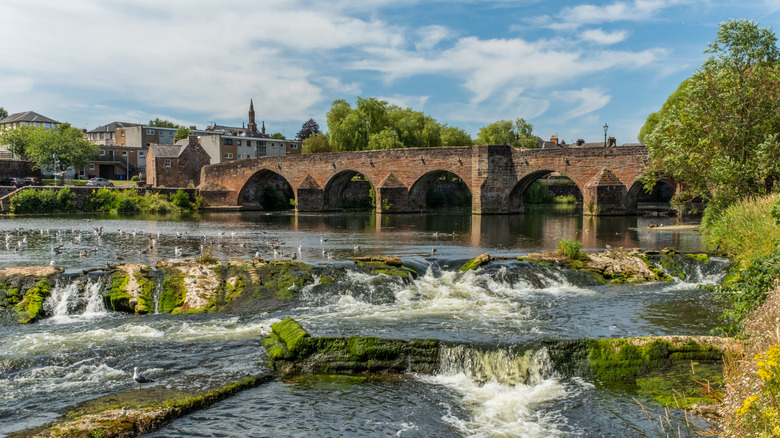
Meanwhile, outdoor enthusiasts can enjoy the town's countryside scenery. Across the River Nith is Devorgilla's Bridge, which dates back to the medieval era. Head across the bridge to bask in panoramic views of the town alongside the river, or stroll amid swaying wildflowers and leafy trees at Castledykes Park. Travelers in Edinburgh can drive, or take a train and bus, to Dumfries in roughly two hours. Those down by the English border can drive to town in less than an hour. For visitors wanting to extend their stay, accommodation options range from posh resorts like The Cairndale Hotel & Spa to cozy bed-and-breakfast cottages.
The historic charm of Dumfries, Scotland
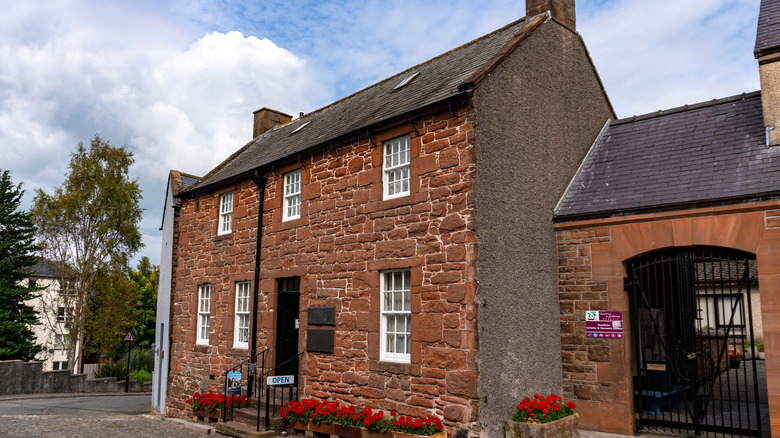
Fans of Scotland's national poet will no doubt want to visit the Robert Burns House, which can be found on Burns Street. Snap photos with the rust-hued stone cottage before stepping inside for a glimpse back in time. Though Burns died way back in the 1790s, a tour through the various rooms with their rustic furnishings gives the impression that the poet might be back at any moment. The desk and chair where Burns sat down to work is also still preserved. What's more, "you can touch some of the exhibits," according to a previous visitor.
If poetry doesn't excite you, then Dumfries offers up medieval history too. Back in the early 14th century, Robert the Bruce became the king of Scotland — but only after he had eliminated another contender for the throne, a nobleman named John Comyn, by killing him. If you had been inside the Old Greyfriars Church in Dumfries back in the winter of 1306, you would have been a witness to this brutal slaying by Robert the Bruce. Though the Old Greyfriars Church no longer stands, history fiends can view the commemorative plaque marking the site where the incident took place, which is just opposite the new Greyfriars Church in the town's cobblestone square.
Explore more of the town's history at the Dumfries Museum, just a short walk across the river. Shaped like a rounded tower, the museum was originally built as an observatory back in Victorian times. Visitors can wander through exhibits showcasing a variety of artifacts, from early Christian carvings to the fossilized footprints of prehistoric animals. After you've crossed Dumfries off your list, keep the Scottish adventures going with a 90-minute drive to Kirkcudbright, a wildly charming river town with pastel homes, seafood, and creative vibes.
River views and nature escapes in Dumfries
As the River Nith meanders its way through town, there is no shortage of panoramic vistas. From the town square, a short walk brings visitors to the Whitesands, a riverfront promenade that is notorious for frequently becoming flooded. When not submerged beneath the river, however, the Whitesands offers an excellent glimpse of Devorgilla's Bridge, its swooping arches stretching across the water.
To enjoy family fun surrounded by idyllic nature, continue walking from the Whitesands along the riverbank until you reach Dock Park. A playground with swings and climbing frames will be a thrill for the kids, while grassy lawns also offer space to run around. A paved footpath runs parallel to the river, shaded by tall trees and dotted with benches for relaxing amidst the calming waterfront scenery. Bring snacks and spread a blanket on the riverbank to enjoy a picnic accompanied by the sound of the rushing water. Keen trekkers can also follow the paved trail beyond the boundary of the park to enjoy panoramas of the river surrounded by the wilderness.
Another popular nature retreat in Dumfries is Castledykes Park, only about a 15-minute walk from Dock Park. Back in the Middle Ages, the park was home to Dumfries Castle — the castle has since been destroyed, and a monument stands in its place today. Wildflowers and shrubbery within the landscaped Sunken Garden create a serene backdrop for leisurely strolls. Winding footpaths lead visitors through sloping lawns with picnic tables between the trees, which are especially scenic in autumn. Travelers will find more river scenery over in Hawick, a small town with tasty eats and cute shops. Those with a car can embark on the South West Coastal 300, Scotland's underrated road trip route.