
Between Exeter And Poole Is A Jurassic Coast Resort Town Called 'The Pearl Of Dorset' With Gorgeous Beaches
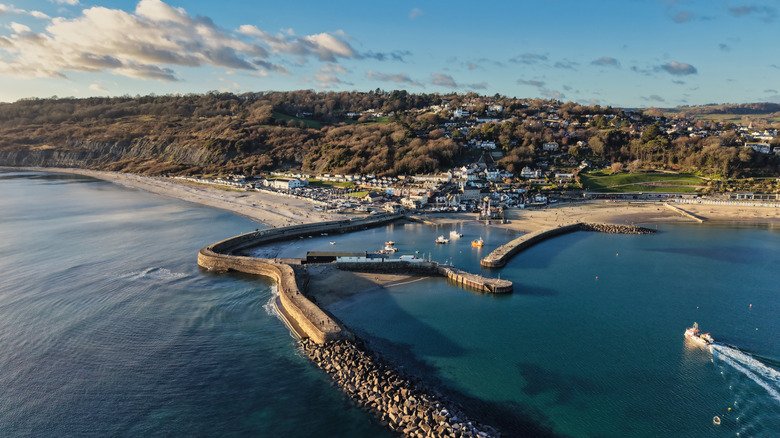
Along the English coast, you'll find any number of delightful seaside towns. One beautiful example is Lyme Regis in Dorset. In Southwest England, along Lyme Bay in the English Channel, Lyme Regis is about a one-hour drive east from both Exeter and Poole. It's a part of the Jurassic Coast — a 95-mile stretch of coastline known for its wealth of fossils from the Jurassic, Cretaceous, and Triassic periods. Thanks to its famous beaches, scenic beauty, and unique history, Lyme Regis has earned the nickname "the Pearl of Dorset."
One of the major, can't-miss landmarks in Lyme Regis is the Cobb. The town wouldn't exist without this large stone wall that curves into the bay. It created the harbor that established the town as a port destination and helps protect against the waves and tides. It dates back to at least 1294, and it's about 870 feet long. While it's been damaged by storms and even entirely destroyed at one point, it's always been rebuilt and serves as a popular place to go for a walk with beautiful views of the water. One notable visitor was Jane Austen, who mentioned the Cobb in her book "Persuasion."
The Cobb is also home to the Lyme Regis Marine Aquarium. While small, it has several exhibits on the marine animals that live off the Jurassic Coast. Visitors will also enjoy the Victoria Pier, which extends out from the Cobb itself. From here, you can board boats for a pleasure cruise along the coast or a deep-sea fishing excursion. Fish and crabbing are two other popular pastimes, particularly in summer, from the Cobb or the harbor.
Beaches in Lyme Regis, England
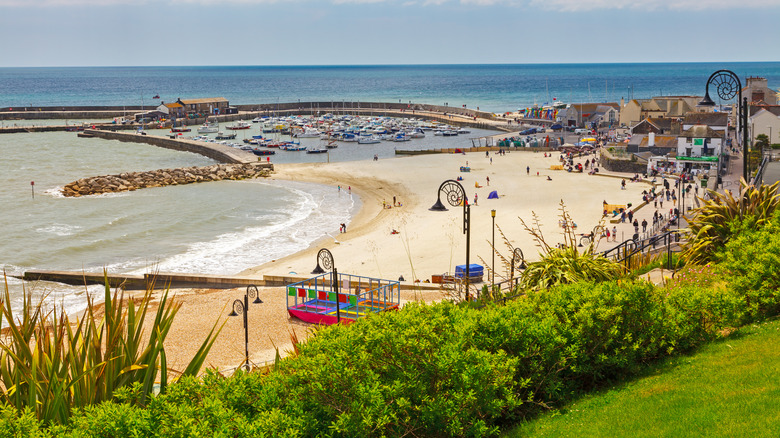
Just north of the Cobb in Lyme Regis is Front Beach. The sandy stretch closest to the harbor is a popular and family-friendly spot with lifeguards watching the water in summer and colorful beach huts you can rent. Front Beach continues past a jetty, and the sand turns to pebbles and rocks. From here, you can see out over Lyme Bay and along the dramatic cliffs of the Jurassic Coast. To get more of a panoramic view of the seafront, visit the Langmoor and Lister Gardens above Front Beach. It's a great place for a picnic on the grassy lawns and has a flower display and sculpture trail.
For a quieter spot, head to Monmouth Beach on the other side of the harbor. It's a good place to look for fossils and take in more cliff and sea views. Another typically quiet spot is East Cliff Beach, which stretches to the neighboring town of Charmouth, although this beach is inaccessible at high tide. All this incredible seafront scenery helped this part of Dorset earn the official designation of Area of Outstanding Natural Beauty.
The coastline is more than just beautiful. Lyme Regis is known as the birthplace of paleontology, thanks in large part to Mary Anning. Anning was born in Lyme Regis in 1799, and at just 12 years old, found the remains of an ichthyosaur from around 200 million years ago. It became the first scientifically studied marine reptile of its kind. She also found the first skeleton of a plesiosaur here, and her discoveries helped advance scientific understanding. These very fossils are why this stretch of the Jurassic Coast is a must-visit for any history and paleontology lover's bucket list.
Looking for fossils on the Lyme Regis beaches
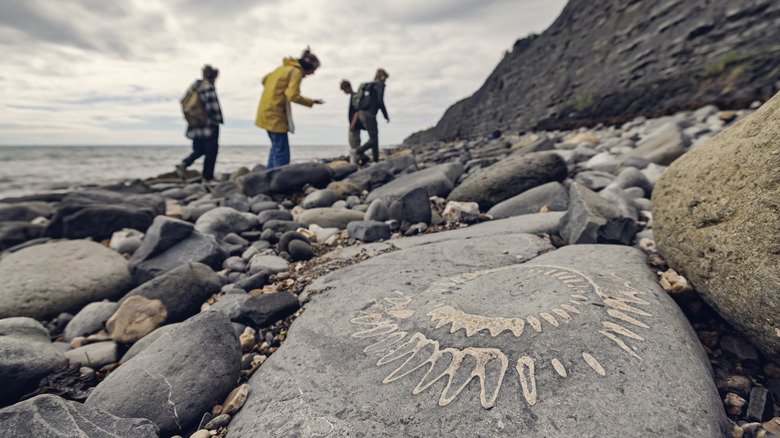
As you explore the beaches of Lyme Regis, you're unlikely to find the remains of a dinosaur or marine reptile (though you never know.) You're more likely to spot fossils of ammonites, instead. The stunning cliffs along the coast that we see now used to be the seafloor some hundreds of millions of years ago, and the round, swirling shells of the fossilized ammonites can be found on the beach as erosion breaks them loose from the cliffs. Monmouth and East Cliff are some of the best places to find them.
While you can look for fossils by yourself, you can also go on specific guided fossil walks. For those who find a fossil out on the public beaches of Lyme Regis, you are allowed to keep it. If you're curious about any find, you can take it to the Lyme Regis Museum. However, in keeping with the Fossil Collecting Code of Conduct, you shouldn't dig in the cliffs for anything and don't trespass on private land. If you're really into paleontology, each year for a weekend in June is the Lyme Regis Fossil Festival — a celebration of all things fossil-related. It's a free event that includes guided beach walks, interactive exhibits, lectures, craft activities for kids, food, and more.
If you're coming down to Lyme Regis from London, it's about a 3.5-hour drive. If you're taking the train, it can take between four and five hours. Another good spot to check out while you're visiting England's southwest coast is Teignmouth, a seaside town with quaint shops and fresh seafood. It's about a one-hour drive west from Lyme Regis. About a 45-minute drive to the southeast from Lyme Regis, you'll find Chesil Beach, a town with great fishing and the longest beach in the U.K.