
Just Minutes From Hull Is A Medieval Village For A Day Trip With River Views, Scenic Walks, And Quiet Charm
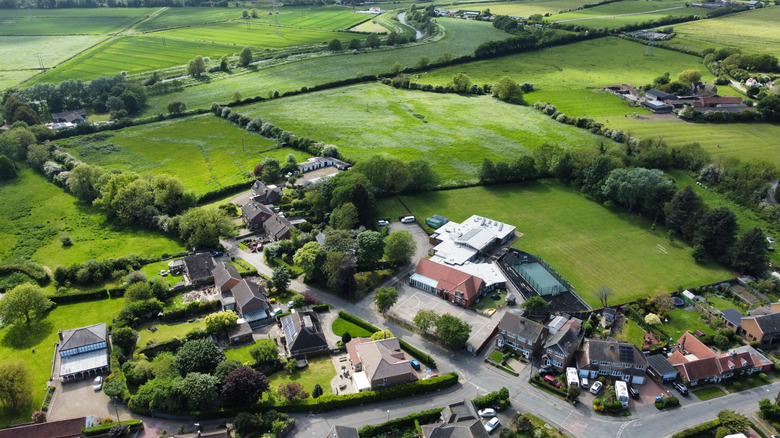
On the eastern side of the River Hull sits the village of Wawne in East Riding. The English parish is steeped in rich medieval history, and it has charming streets and plenty of scenic walks.
Wawne is situated between Beverley and Bransholme. It's also just over 3 miles from the village of Sutton, so it's relatively easy to get to, regardless of which direction you're coming from. Driving from Hull takes about 15 minutes. Or, for a small fee and anywhere from 30 to 60 minutes of your time (due to the stops along the way), you can take the bus. For those who are big fans of walking, note that it only takes about 1.5 hours on foot if you leave from Hull. If you fancy a stroll through the British countryside, this is a pretty great place to do it.
This charming East Riding parish is quite small, and visitors describe it as a rural space with a neighborhood feel. Surrounded by countryside, the lanes of the village are bustling — here you'll find historic sites, a post office, a school, and a community center hall. For more amenities, suburban areas are just a few miles away, with fast food, gas stations, bowling, and even a mall. While the parish doesn't have any dining, there are pubs and local eateries in nearby villages (head to Pipe and Glass in Beverley, a highly recommended Michelin-starred restaurant that dates back to the 15th century).
Step into the fascinating medieval history of Wawne in East Riding
Wawne, from the Anglian word for quagmire, was recorded in the Domesday Book in 1086. It was home to about 15 households, and the archbishop of York and Drogo of la Beuvrière were tenants-in-chief. The archbishop was Thomas of Bayeux, who led the development of St. Peter's Cathedral, or York Minster — a Gothic site that sits halfway between London and Edinburgh. As for Drogo, it is recorded that he fought beside William the Conqueror in the Battle of Hastings and married one of the king's relatives (he'd flee after this wife's death, which some believe he was behind).
Though many died of the plague in the mid-1300s, survivors continued to call Wawne home. A 20th century renovation revealed sunken lanes, longhouses, and pottery from the 12th to 14th centuries. Meanwhile, Meaux Abbey, founded in about 1150, stood until 1542. It was similar to Rievaulx Abbey, located in scenic Robin Hood's Bay, which still has its original tile flooring and holds significance as a Yorkshire monastery.
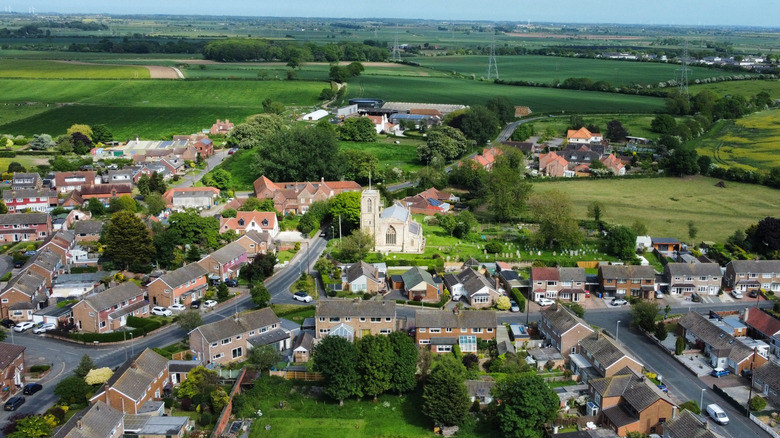
While these historic sites in Wawne are all gone, St. Peter's Church still stands. It was first recorded in 1115, when Monks from Meaux Abbey began building it. It's classic English, with a wide, Y-shaped chancel that dates back to 1230 and a piscina. If you're even remotely interested in architecture, visiting this heritage site is perhaps the best thing to do in Wawne. Just don't forget to look for Norman-era stones on the west wall, and wander through the cemetery.
Wander along the River Hull and enjoy pastoral scenery
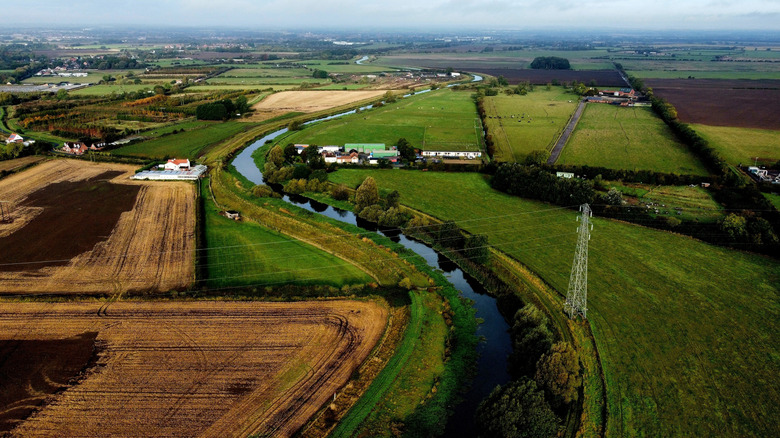
The region of East Riding is especially lovely, so travelers might want to carve out some time for wandering and exploration outside. Consider the Tickton River Walk, which stretches along the River Hull through a nature reserve. The flat, looping path is right on the banks (so it can be muddy), and it stretches for nearly 4.5 miles. It'll take about 1 hour, 45 minutes to do, and it gets you up close to the water, plant life, and birds. For something slightly longer but with similar views, you can do a big loop from Wawne, walking along the river before turning into the nearby village of Kingswood, and walking straight back up to Wawne. This 5.85-mile walking route takes about 2 hours, 25 minutes to complete.
If you do plan on walking a lot, bring extra pairs of socks and shoes that are comfortable and broken-in (and good for mud or rain). East Riding in Yorkshire enjoys a very mild climate, so — like most of the coastal U.K. — the weather and temperatures feel very maritime. July is the hottest month, and it averages about 60 degrees; the coldest month, January, usually brings 40-degree days. Rain is likely, so waterproof clothing, layers, rain jackets, and umbrellas are always a good idea. We'd recommend the same packing list if you were visiting Wharram Percy, a similarly pastoral, once-thriving medieval village in Yorkshire that's under an hour away.