
What Does It Mean When A Cruise Ship Gets 'Dry Docked'?
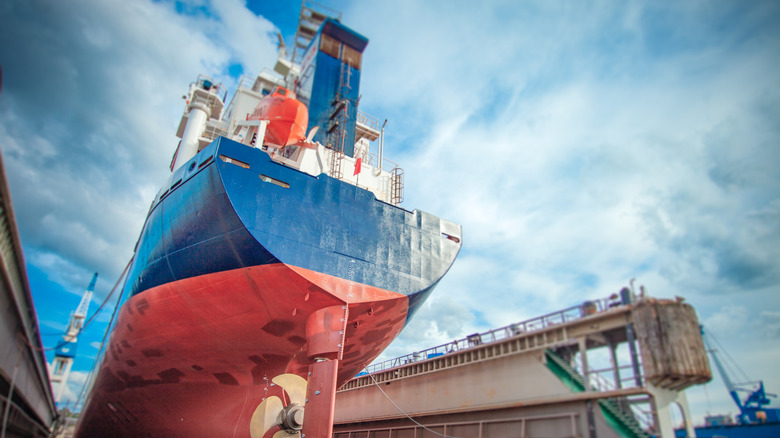
Whether you're taking your first cruise or your 50th, perhaps you've come across a strange term in your planning: dry docked. In a dry dock, the ship is parked and supported on braces while the water is drained, allowing maintenance crews to inspect the ship for repairs.
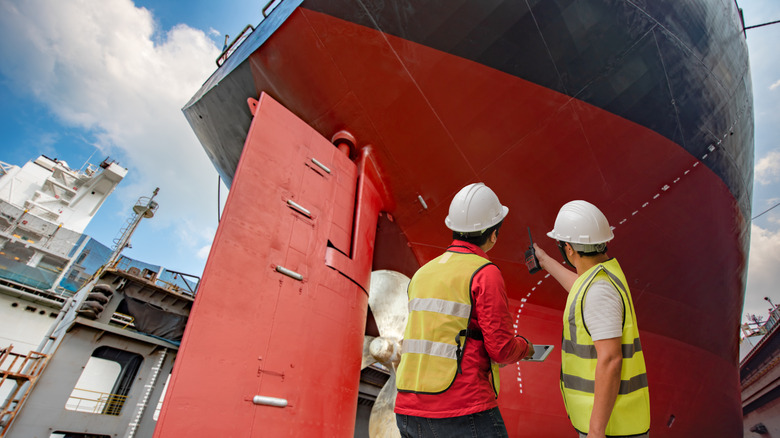
Dry docking is essential for cruise ships. Typically, it happens every three to five years for routine maintenance and safety checks of lifeboats, fire alarms, and engines. It's also a time to revamp and modernize ships by fixing up rooms and adding new amenities and attractions. A dry dock takes a few weeks, and the season to do so is usually from January to May and September to December, so cruise companies plan their itineraries around these scheduled maintenance times.
Although dry dockings are generally planned up to two years in advance to avoid booking conflicts, unexpected schedule changes can happen. For example, if one vessel's dry dock runs past the planned end date, it can cause a domino effect and push back the itineraries of other ships as well. Or perhaps a last-minute repair is needed, causing an unplanned dry dock that can change the itinerary, depending on the problem. A slew of Carnival dry dock cancellations in 2026 and 2027 brought to light that this commonplace cruise practice is something to keep in mind when booking your next cruise.
Planning your trip around dry docking
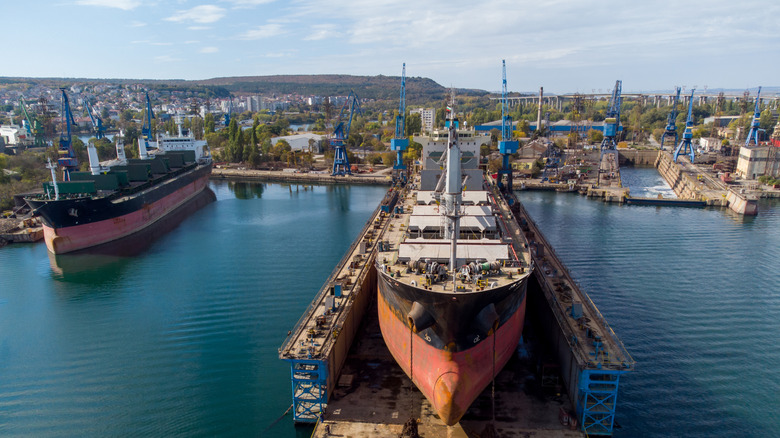
So, how do you know when a cruise has a planned dry dock? There are a few ways to check. Cruising Earth has a list of dry dock schedules for different lines, while Cruise Critic keeps track of which vessels have scheduled refurbishments. You can also look for gaps in a ship's sailing schedule and check with the operator to see if a dry dock is scheduled in that period. Why does the timing of a dry dock matter so much? Well, it can actually affect your experience of a cruise.
If you sail just before a scheduled dry dock, you might find the vessel to be lacking or even run-down. Carpets may be rolled up, areas might be closed, and furniture can be put away, making the already liminal space of a cruise ship even more so. On the other hand, booking after a dry dock can be the jackpot. Ideally, things will be fresh and fixed, and you may even get new amenities. But there's a catch: The first sailing immediately after a dry dock can be at risk of getting canceled if the service goes past its scheduled time. And repairs may even be ongoing during your trip.
Samantha Brown offers these top tips for planning your dream cruise, and we suggest adding "consider the dry dock schedule" to that list. If you want to take advantage of a vessel being updated during dry dock without risking cancellation or onboard construction, look at sailings at least a month after the end of this maintenance period. If you do book a sailing either right before or after a scheduled dry dock, it's a good idea to make your trip as flexible as possible in case of any unexpected cancellations or changes.
What happens if your cruise gets canceled because of dry docking?
So, what happens if your itinerary gets changed because of dry docking? That depends on the cruise company. Generally, companies offer a full refund on the cruise and pre-purchased items or excursions booked through the cruise line (i.e., not third-party sites). They may offer protected rates on comparable sailings, along with perks like onboard credit. In addition to full refunds and rebookings, many companies also give the option of receiving future cruise credit. Double-check the expiration date of that credit to make sure that the time frame aligns with yours.
Some cruise lines may also offer some reimbursement to cover non-refundable flights or change fees to those who choose not to rebook. Cruise lines aren't obligated to the same type of compensation that airlines are. In the years after COVID, many adopted more generous and flexible offerings for unexpected cancellations, such as full refunds of fees, including ancillary ones, for canceled trips.
The compensation you can receive also depends on where you are, as the U.S., U.K., and EU all have different traveler protection laws. One of the most common mistakes people make when booking cruises is not reading the fine print of the company's cancellation policies. It's a good idea to read the cruise policy carefully or speak with the company before booking to see what you are entitled to if your trip is canceled or rescheduled due to dry docking. Once you find that out, it can help you decide if cruise insurance is worth it. It may be because an insurance plan may cover non-refundable costs and excursions that the cruise company doesn't cover in the case of a dry docking-related issue.