
TSA PreCheck Or Clear: Which One Is Actually Worth The Cost?
Frequent fliers know that air travel is all about preparation. One of the most time-consuming aspects of air travel is getting through airport security, especially at busy hubs during peak travel periods. Security lines can create delays, cause missed flights, and add to the general frustration of airport chaos. By now, though, you've likely heard of the biggest names in expedited airport security: TSA PreCheck and Clear+. Both are paid services intended to streamline airport security. But what's the difference, and which one offers the best value?
TSA PreCheck and Clear+ are separate programs, and signing up for one does not automatically enroll you in the other. TSA PreCheck is a U.S. government program administered by the Transportation Security Administration (TSA). Open to U.S. citizens, nationals, and lawful permanent residents, enrollment requires an online application and a brief in-person appointment for identity verification and a security threat assessment. Approved members receive a Known Traveler Number (KTN), which must be added to airline reservations and denoted on passengers' boarding passes. Approved travelers can then access expedited screening lanes where they generally can keep their shoes, belts, and light jackets on and leave approved electronics and liquids in their bags. TSA reports most of their PreCheck passengers wait less than 10 minutes in line for screening.
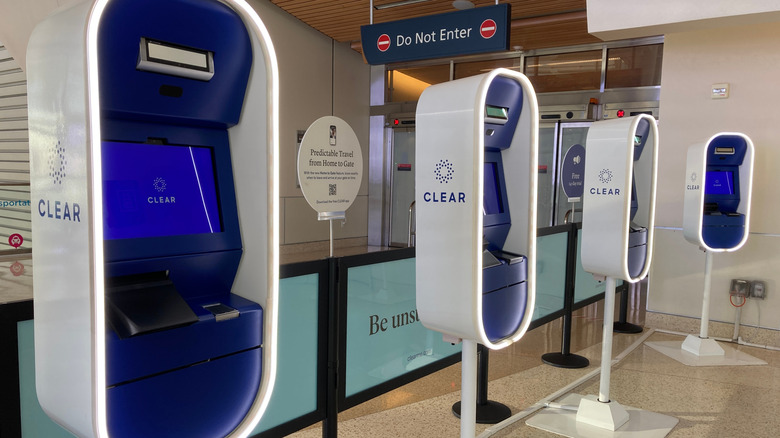
Clear+, on the other hand, is a privately operated service from Clear, a security company. Clear+ uses biometric technology, like iris scans and facial recognition, to verify travelers' identities, typically bypassing the need to present physical ID. Theoretically, this also reduces time spent in line. However, Clear+ does not replace TSA screening, and travelers who don't also carry PreCheck must still follow standard screening procedures, including removing their shoes and laptops. Unlike PreCheck, Clear+ is open to citizens of over 40 different countries. Additional Clear+ features include a mobile app for real-time queue updates and optional add-ons like its concierge service.
Location, cost, efficiency, and bundling options all factor in
Any traveler applying for PreCheck will need to enroll through one of TSA's three cybersecurity providers: Idemia, Telos, and Clear, the most recent TSA PreCheck addition. As of this writing, Clear has an annual one-year fee of $219, which includes fees for TSA PreCheck. Alternatively, Idemia and Telos offer a roughly $80 to $85 application fee for TSA PreCheck and its yearly renewal. Some credit cards and airline loyalty programs also offer statement credits or discounts for enrolling in Clear+.
One of the biggest factors to consider in the TSA PreCheck vs Clear+ debate is location access. TSA PreCheck is now in more than 1,300 airports around the United States, while Clear+ is only currently available in 63 airports, primarily major hubs. However, Clear+ kiosks are also utilized at some large event venues for sports and concerts, allowing users to skip long security queues upon entry. Both TSA PreCheck and Clear+ are only available at United States airports. However, those who travel frequently internationally may prefer to apply for Global Entry, the expedited international customs and immigration screening, which includes TSA PreCheck.
Combining both programs can technically provide the fastest security experience and help avoid making security mistakes that slow you down. "If you have to choose between both, get PreCheck," writes a traveler on Reddit thread r/travel. "Adding Clear is useful and can be a time saver but on its own is inferior." Other users in different regions see some value in Clear+, acknowledging its queuing advantages. One Reddit user says, "I was at Denver last week and the Clear line literally cuts in front of the PreCheck ID line." Ultimately, it comes down to your location. As another Reddit user notes, "Sometimes the TSA line is long enough that adding in the Clear makes sense. Other times, not so much or there isn't a distinction."