
South Of The Washington-Canadian Border Is An Abandoned Mining Town Cloaked In Mystery And Rugged Beauty
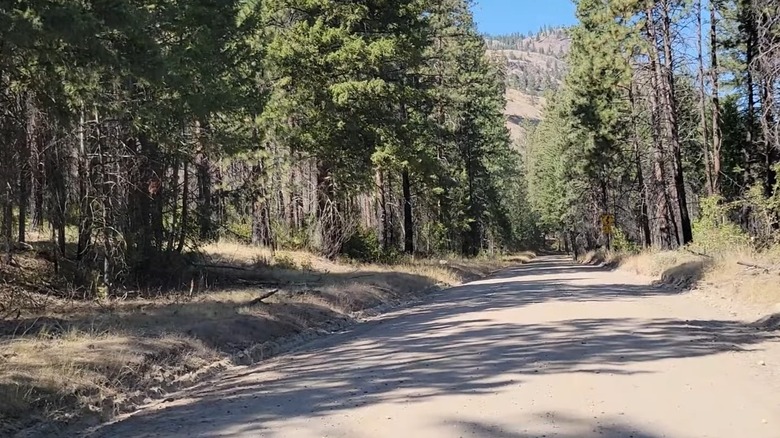
Washington is widely known for its scenic beauty and hidden gems stretching from the Pacific Coast to the lush Palouse in eastern Washington. Nestled along the Central Washington-British Columbia border, the Okanogan Highlands (locally known as Okanogan Country) is often overshadowed by the state's three National Parks. It's a little-known, natural wonderland that's full of history and mystery, though it used to be full of gold and silver. Similar to this Oregon gold rush boom town as well as mining towns like Nighthawk and Molson (yes, it was financed by Molson, the Canadian brewing family) which popped up along the rich deposits, the residents of the Okanogan Highlands disappeared once the metals ran out, leaving behind time capsules of the past.
Immediately after the federal government opened up mining in North Central Washington on May 1, 1886, prospectors made claims, opened mines, and founded one of the wildest mining towns along the Washington-British Columbia border: Ruby City. Even though Ruby survived as a town for less than a decade, its mines produced millions of dollars worth of silver. During its heyday, Ruby gained the nickname "the Babylon of the West," where high times and cheap whiskey flowed like the river of silver which paid for it. Less than a decade later during the Panic of 1893, the party came to a halt and Ruby largely shut down overnight. Today, the site of Ruby is a Washington State Park Heritage Site where mother nature has taken back over. Apart from a sign and a few foundations, there is little evidence that over 1,000 men, women, and children lived in the area just one century ago.
Scenic beauty and mystery around Ruby

If you're looking for scenic beauty and wildlife enjoying its natural habitat, you've come to the right place. North of Ruby, you'll find picturesque Conconully State Park as well as Washington's oldest animal reserve, the Sinlahekin Wildlife Area, which was created to protect mule deer. Be sure to bring your camera, hiking boots, and fishing pole.
As you trek through the pine forests and wetlands running to the Canadian border, you can spot wild turkeys, hundreds of species of songbirds, eagles, deer, and other wildlife from six different spotting blinds. If you're looking for an easy hike or a place to take the kids fishing, don't miss Conners Lake in early summer. You'll need to purchase a Discover Pass ($11.50 daily or $35 annually until October 10th, then $51.50) to park at these state-managed parks and wildlife areas.
Just a few miles south of Ruby lies one of Washington's most puzzling and mysterious hidden gems, the China Wall. As gold fever struck Washington in 1888, Jonathan Bourne Jr., a lawyer and U.S. Senator from Oregon, bought many of the claim sites, including the Arlington Mine. Bourne hired 150 men to construct a massive stamp mill out of granite blocks that was never fully completed. While not as big or tall as the Great Wall of China, Bourne's mill, standing 27 feet tall and 80 feet long, is mysteriously called the China Wall, despite having no connection to China or Chinese builders. Even more mysteriously, despite the large investment, the mine never fully operated until the late 1930s. The site is currently marked as private property.