
Indiana's Once-Thriving Giant Downtown Mall Is Now Sad, Desolate, And On Its Last Legs
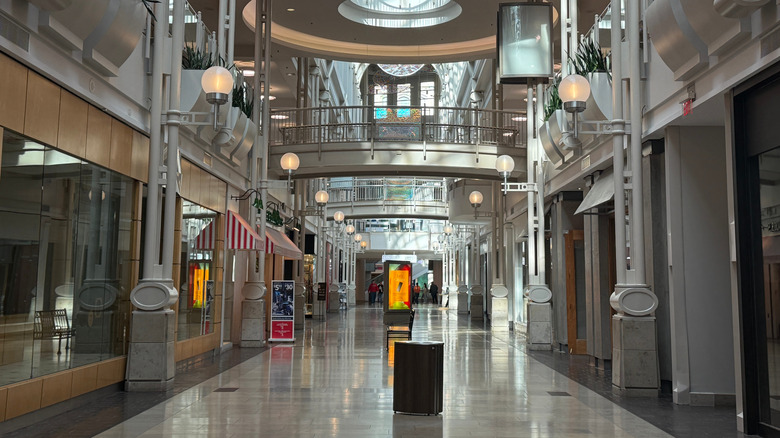
When the Circle Centre Mall first opened in 1995, the 725,000-square-foot shopping complex was a boon for downtown Indianapolis. Unlike the many malls that had sprung up in suburbs across the United States, this structure opened right in the middle of Indiana's largest city, just a block from the convention center and a 5-minute walk from the statehouse. It represented a coup in postwar urban design: Instead of luring people into surrounding sprawl, Circle Centre enriched the city center with commerce and pedestrian traffic. The mall took its name from Indianapolis' nickname, "Circle City," derived from the downtown rotary known as "Monument Circle" — a landmark that happens to be just around the corner. The mall is also a short distance from Mass Ave, a scenic district full of art and shops boasting many of Indiana's most famous establishments.
Three decades after its grand opening, Circle Centre appears to be on its last legs, the latest casualty in a nationwide shopping mall crisis. Low patronage, fleeing tenants, and general apathy toward in-person purchases all point to looming closure. As the Indianapolis Star bluntly put it in a November 2025 business story: "It's unclear if any retail stores will remain open past the end of the year." Online videos drive this point home with footage of empty walkways, shuttered storefronts, and food courts devoid of diners.
Indeed, the current owners, Hendricks Commercial Properties, announced plans in April 2025 to redevelop the property to the tune of $600 million (as reported by WTHR). The company has released mock-ups and general concepts, but details for the next incarnation are still a work in progress. Whatever happens in the coming years, it seems that the lifespan of Circle Centre has come, well, full circle.
The start of a new era in downtown Indianapolis
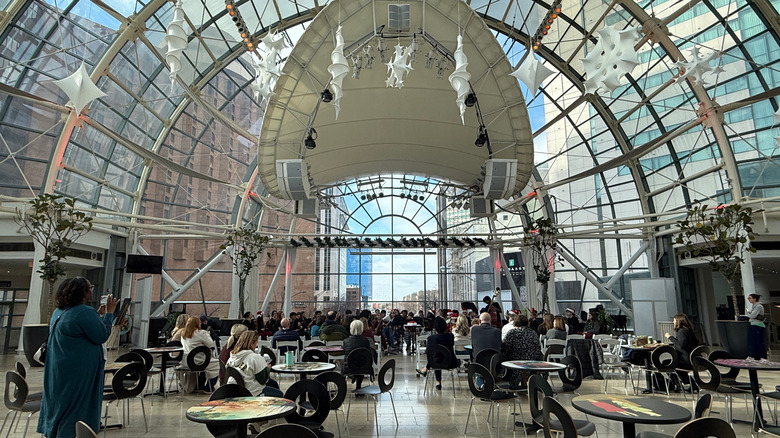
Many out-of-state visitors know Indianapolis mainly for its auto racing, yet "Indy" has come a long way since its founding more than 200 years ago, especially downtown. The city's heart — Mile Square — was laid out as a grid with several diagonal streets, and the neighborhood is home to many historic buildings, modern skyscrapers, and ambitious new construction. The older architecture made Circle Centre a controversial project when it was first proposed in the early 1990s. Several historic buildings were demolished to make way for the shiny new complex, frustrating preservationists. Circle Centre also faced delays and funding issues early on, and many viewed the mall as a risky, $300 million gamble.
Yet the mall opened to great fanfare, and many locals credit Circle Centre with energizing downtown redevelopment. One of its most remarkable facets is the Indianapolis Artsgarden, a massive glass-and-steel dome that hovers over the intersection of West Washington and North Illinois streets. This voluminous enclosure has become a coveted venue for weddings and corporate events, and it's expected to remain open during the mall's reconstruction phase, although long-term plans are still forthcoming.
One could argue that Circle Centre has served its purpose, riding the shopping-mall wave of the Valley Girl era and gradually falling behind the times as virtual shopping — and later the COVID-19 pandemic — took their toll. In general, Indianapolis is asserting itself as more than just the Indianapolis 500; one of its best neighborhoods is an artsy gem with retro bowling alleys and buzzing taco joints, and another underrated district is full of cobblestone charm and blooming trees. This chunk of Mile Square is now one valuable piece of real estate, and many travelers will be curious to see what becomes of it next.