
The Essential Item Yellowstone National Park Wants All Visitors To Bring On Winter Trips
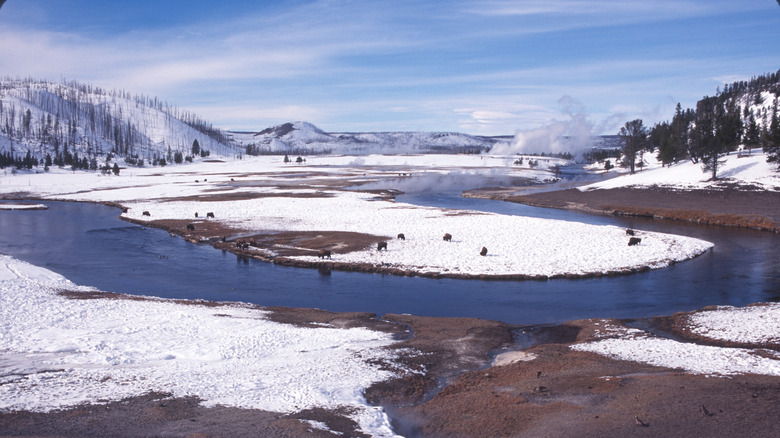
Winter isn't generally considered the best time to visit Yellowstone National Park. Since the park is primarily in Wyoming, with bits extending into Montana and Idaho, it goes without saying that the area can get pretty frosty in the colder months. Daytime temperatures usually stay under 30 degrees Fahrenheit, while nighttime lows drop well below zero. And while the park itself is open year-round, the majority of roads and facilities, including most of the spacious Yellowstone campgrounds, close for the season as heavy snowfall transforms the region into a white abyss. If you do decide to visit, however, don't forget to bring sunglasses.
If you don't mind the chill, Yellowstone can feel downright magical in the winter — especially if you want to avoid the crowds that frequent the park at other times of the year. "Experiencing Yellowstone [National Park] in winter is a MUST do," one parkgoer raved on Tripadvisor. "Visiting in the winter is a quiet time. No crowds, as you must use a snow coach to travel around the park. There is so much to do if you enjoy being outdoors in the winter. Just bring lots of layers to stay warm."
Beyond layers, a trusty pair of sun-blocking spectacles is one of the surprising items the National Park Service recommends for winter Yellowstone visitors. "Sunglasses are essential — snow reflects intense sunlight, increasing the risk of snow blindness," the agency notes on its website. Yes, snow blindness is a real thing. And yes, ultraviolet rays from the sun can still pack a punch in the winter, causing damage to the eyes similar to a sunburn, according to the American Academy of Ophthalmology. Long before modern eyewear, Alaska's Indigenous people actually devised snow goggles thousands of years ago to avoid snow blindness. Talk about lessons from the past.
Eye protection, and other winter safety tips
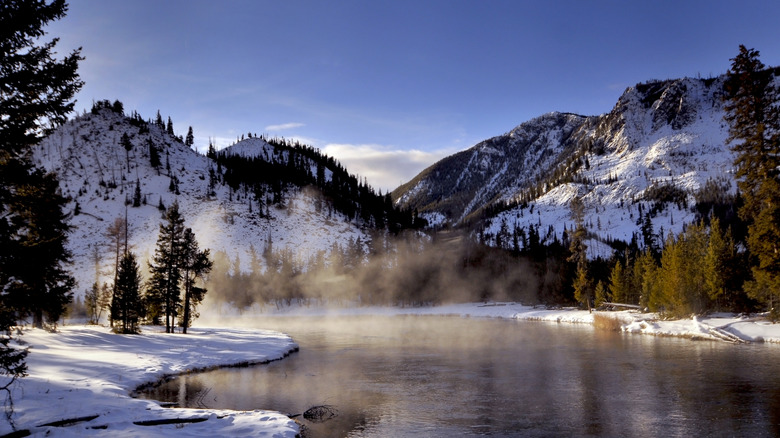
Speaking of eye care, did you know it's possible to freeze your corneas? Per the American Academy of Ophthalmology, snow blindness is a blanket term that can also describe a bad case of ocular frostbite. This can occur when engaging in winter activities, such as snowmobiling and skiing, without proper eye protection. So be sure to pack both goggles — and shades. And since the sun's rays don't disappear in the winter, protect any exposed skin peeking out from your cozy layers with sunscreen.
To safeguard your skin further, the National Park Service suggests dressing in adjustable layers, which makes it easier to adapt to changing temperatures without getting too hot or cold. The types of materials you opt to wear are equally important. "Avoid cotton — it won't keep you warm when wet," the government agency notes, recommending wool or synthetic materials instead, along with waterproof gear. And of course, don't forget a pair of mittens or gloves. If you plan to do a bit of snow hiking, you may want to splurge on some ice traction gear for your boots to help reduce the risk of a nasty fall.
Driving dangerously on park roads is one of the most upsetting tourist mistakes you can make at Yosemite National Park, so navigate cautiously on the routes that remain open in winter. You can always visit the National Park Service website to check the status of roads before buckling up and heading over. Last but certainly not least, keep your eyes peeled for deadly avalanches and any wild animals that may be wandering about. As always, prioritize safety — and enjoy the view.