
Yellowstone National Park Advises Winter Visitors To Avoid Wearing This Type Of Fabric
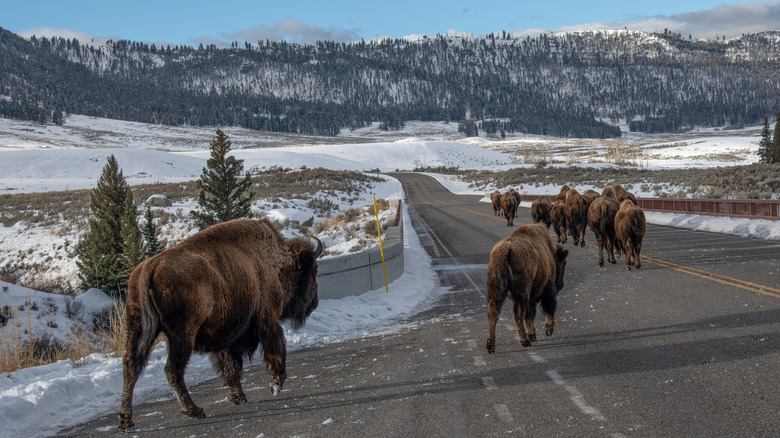
The fabrics that hold up best when traveling are also best for visiting Yellowstone National Park in the winter, meaning that a super-soft cotton T-shirt is a no-go. When packing for a cold-weather trip to Yellowstone, the National Park Service (NPS) recommends avoiding cotton, as it will not keep you dry. And trust us, you do not want to be soaked to the bone at an altitude of above 6,000 feet in subfreezing temperatures.
Ken Knapp, an editor for outdoor retailer REI, writes, "When cotton gets wet, it takes a very long time to dry, which can leave you feeling damp, cold, and miserable." Exactly how cold and miserable? On an average day in the park during the winter, temperatures can reach 30 degrees Fahrenheit during the day and plunge to 30 degrees below zero at night. Thus, it's critical to choose the right layers and fabrics to stay safe and comfortable on a winter visit to Yellowstone.
What to pack for your winter trip to Yellowstone
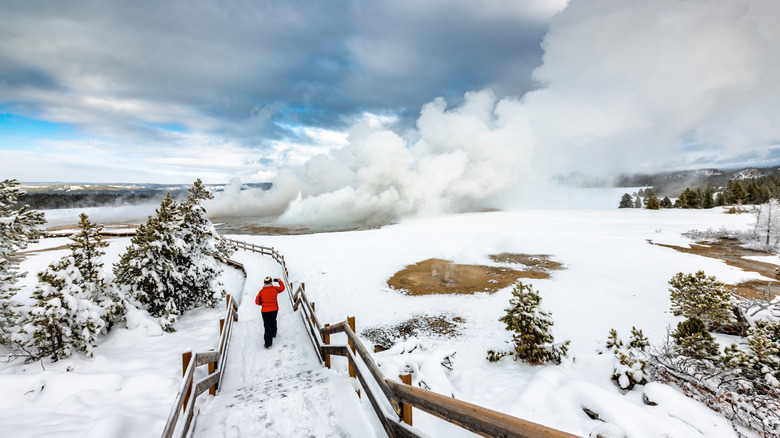
Instead of cotton, the National Park Service recommends wearing wool and synthetic inner layers. A synthetic Capilene base layer from Patagonia will wick moisture away, while choices like Smartwool's classic Merino base layer, made from 100% Merino wool, will absorb all of the wet and sweat, then dry through evaporation. NPS also recommends wearing a windproof, hooded outer layer, wool socks, and insulated boots to lock in body heat. Important tip: Even though it's icy cold out there, sunscreen and sunglasses are musts due to the high altitude and snow glare. And there's no need to worry about heavy, thick layers fitting in your suitcase with these game-changing packing hacks to save space.
Despite its challenges, visiting Yellowstone National Park in the winter does have its benefits, including less traffic and better chances for certain wildlife encounters. But bear in mind the majority of the park shuts down for the season due to heavy snow and the extreme cold, with most roads closed to all vehicles. The corridor between the North and Northeast entrances is the only road open to public vehicles and leads to Lamar Valley, often called the "Serengeti of America" for its diverse offering of animals.