
What Exactly Does A Commercial Airliner Go Through During A Maintenance Check?
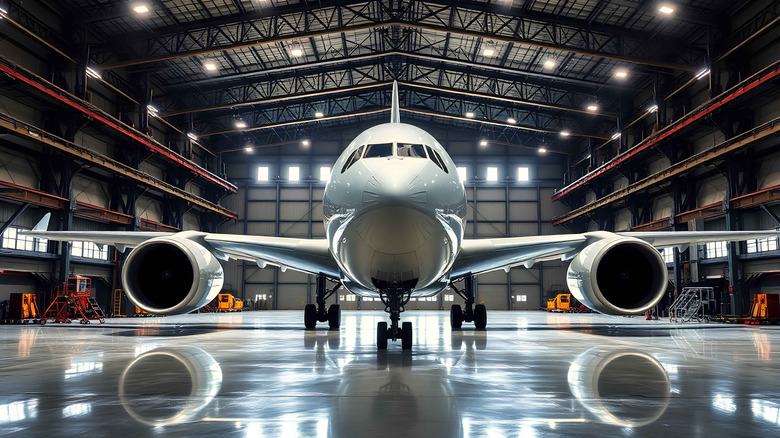
We all know that planes go through a serious amount of safety and maintenance checks. In fact, for many nervous fliers it can be one of the only things that makes them comfortable enough to step on board. Seriously, how many of us have told ourselves "it's safe" over and over again as we buckle in, especially when these weird plane noises start. But have you ever wondered what exactly these checks are? While the FAA may set the regulations and oversee them, it's up to the individual airline to make sure these are actually done, and done up to standard.
Airlines follow detailed programs that tick off both routine inspections and larger, well in advance scheduled overhauls. Maintenance checks are important because they stop issues before they happen. You don't want to be mid-flight and have a problem discovered with the engines, landing gear, or cabin components. Even between flights, aircraft undergo flight line or pre-flight checks such as inspecting tires, brakes, fluid levels, lights, and other important systems.
So, what actually happens during maintenance checks (and while we're asking, why do we always board on the left side of the plane)? Airline checks are broken down into categories of intensity. Some happen regularly, others happen just every few years. These categories of maintenance are ranked and lettered A-D.
What are the different airline maintenance checks?

A-checks are the least severe checks, only performed every 400-600 flight hours. These involve routine tasks like visual inspections, fluid level checks, and basic systems testing. B-checks are slightly more detailed. For these, the plane will undergo additional component checks such as avionics or structural elements, sometimes combined with A-checks depending on the airline.
C-checks are major overhauls conducted roughly every 18–24 months. Planes will be partially taken apart so mechanics can inspect engines, landing gear, structural integrity, and cabin systems, completing necessary repairs before returning the plane to service. D-checks are the most serious and take several weeks and usually occur every six to 10 years. During these there is a near-total teardown and inspection of every system and component. These are scheduled far in advance due to cost and time, but they are essential for extending the aircraft's lifespan.
Each level, from A to D, makes sure that planes remain airworthy and safe. For the nervous fliers among us, even if we don't see the work behind the scenes, don't worry, it's happening. And have you ever wondered how much it costs a plane to de-ice before take off?