
California's Once-Thriving Lake Has Come And Gone With Possible Plans For Future Revitalization
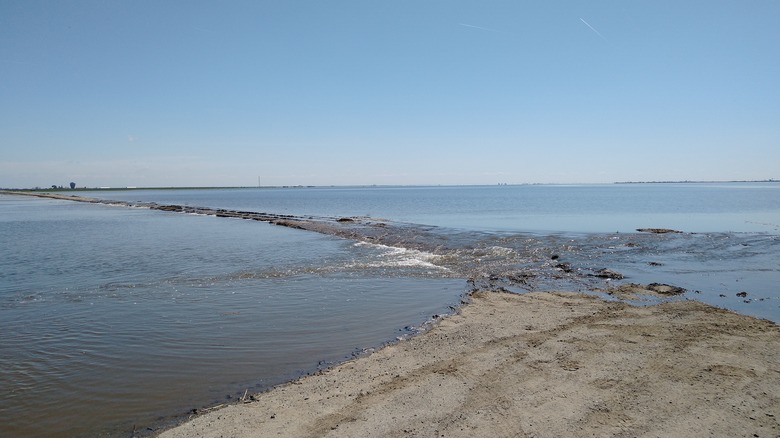
The San Joaquin Valley has seen a brief comeback of one of its prehistoric lakes, re-emerging from the arid desert heat after an extensive dry spell. After a 130-year drought, Tulare Lake has teased locals with a possible return. Melting snow in recent years caused extensive flooding in the area, resulting in several farms and orchards finding themselves underwater. While rising water levels have subsided, water management efforts are being discussed to prevent future inundation.
There was a time when the waters of Tulare Lake were once plentiful in this valley. It got its name from the "tules" that would grow alongside it, which early inhabitants used to make homes. They even named Tulare, a gorgeous city with breathtaking forests and mountain views, after it. The San Joaquin Valley was such a watery paradise around the early part of the 19th century that industrial shipping boats could travel along connecting water routes for almost 300 miles across California. Around the middle of the 19th century, the lake began to disappear as a result of land reclamation practices, which involved redirecting water used for agriculture to more arid farming areas.
Whether you're rooting for the farms or the lake, it's difficult to predict how long the return of Tulare Lake will truly endure. Although there were some roads flooded in 2023 because of the lake's encore appearance, much of this water has since subsided. For a short time, locals and officials believed the lake had made a full comeback, covering 100,000 acres of flooded farmland; however, most of the water has disappeared once again. Some expect the lake will re-emerge during wetter seasons, and the water will eventually end up where it was naturally meant to go. There have been talks of mitigating future flooding through possible revitalization efforts.
An uncertain fate for Tulare Lake
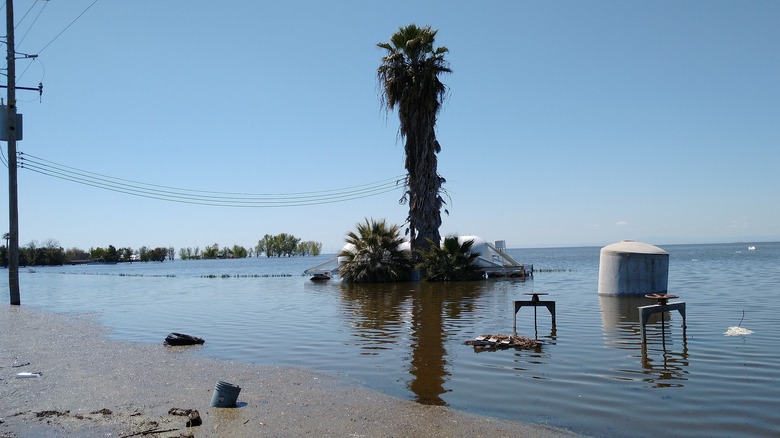
Tulare Lake is situated between the Yosemite gateway city, Fresno, and Bakersfield, near the charming small town of Corcoran. Originally named Pa'ashi by the local tribe who lived along its banks and used it as a source of food and transportation, the lake supplied life-giving waters to the San Joaquin Valley and nearby towns. The lake was home to a variety of wildlife, such as bears, antelopes, coyotes, and many bird species. When the lake dried up, so did their resources and means of sustenance. When lake waters began to re-emerge, wetland birds began to appear, signifying a positive turn of events for local wildlife.
Water tends to evaporate quickly from Tulare Lake, since the clay bottom prevents reabsorption into the groundwater. Although precipitation of past years had brought back 114,000 acres of water runoff, mainly from melted snow, they receded within the year. Fluctuating climate adds to the lake's uncertainty. While the agricultural industry is invested in draining the lands for the sake of business, increasing floods and climate change could make this an uphill battle.
Nevertheless, there are plans to revitalize the lake, possibly by building a reservoir near the area. This would allow excess water to be used for irrigating drier areas and spare farms from unnecessary flooding. Levees are an option, but they would require quite a bit of funding to allocate the land and create the proper infrastructure to control the water flow. If supporters of this proposal are able to secure enough acres of land and address the challenges that arise, these revitalization efforts might be a viable solution. Lake revitalization is crucial for flood protection and the welfare of the wetlands.