
Why Foreign-Made Goods Could Soon Be Banned From National Park Stores
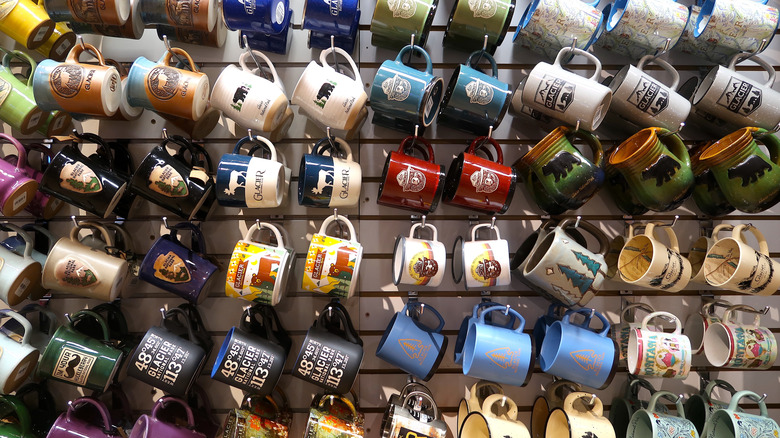
If you've visited national parks, you likely know this scene: You step into an official gift shop and browse the wares. You sort through T-shirts, coffee mugs, and novelty spoons, contemplating what to buy for the folks back home. You have many outdoor enthusiasts in your life, and you want the perfect gift idea. You see photos and logos, slogans and jokes. When you find exactly the right keychain, you flip it over, looking for a price tag, and then you see it: a sticker marked "Made in Taiwan."
This has long been a joke among travelers, who cover great distances to see all-American national treasures, then buy mass-produced souvenirs from overseas. We tend to shrug this off; most physical products in U.S. stores are sourced from other countries, so why would we be surprised that a shot glass sold in Arches National Park was actually made in Mexico or China? Isn't that just a globalized economy at work?
Well, according to a press release from the U.S. House of Representatives, it's possible that this will change. In December 2025, U.S. Congressman Josh Gottheimer introduced a bill called the American Products in Parks Act, which would ban the sale of foreign-made goods in U.S. national parks. According to the bill, all products would have to be assembled or processed in the U.S., and all ("or virtually all") materials should be sourced within U.S. borders. Gottheimer, a Democrat from New Jersey, drafted the bill in the hopes of supporting U.S. enterprises, especially small businesses. "It's not only the patriotic thing to do, but it's good for our economy — our families and their jobs, our manufacturers and our communities," Gottheimer expressed in a speech.
What national park gift shops could look like
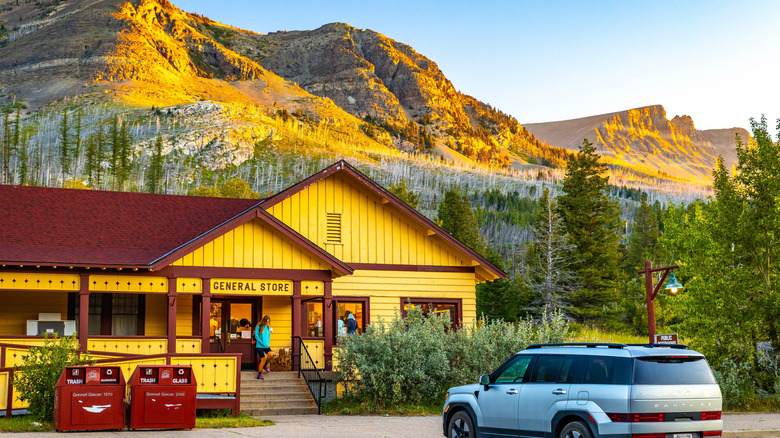
In a year full of controversial foreign policy, H.R. 6714 — as the bill is officially known — is quiet but mighty. The bill has won bipartisan support, and could change a lot considering that a review from 2008 concluded that more than 60% of products sold in national parks were fully or partly made outside the U.S. These figures may be old, but a quick visit to any NPS souvenir shop will make that percentage feel current.
The reasons also seem obvious: assembly line gifts are cheap and easy to stock. A $13 Yellowstone pin will appeal to impulse shoppers, and the little graphic of Old Faithful will serve as a reminder of this trip for years to come, no matter where the metal was pressed. Many of us will turn our road trips into treasure hunts for amazing one-of-a-kind souvenirs, but if we're on a budget or pressed for time, a Shenandoah bandana should do the trick. Was it made locally? Who cares — it was only $20.
But what if national parks stores could only sell domestic products? The prices might go up, but the quality and uniqueness could as well. There could be more shelf space for artists and crafters who normally scrape by at specialty markets. Local entrepreneurs, who know their communities well, could do more than slap a "Yosemite" patch onto a baseball cap; they could lean into local landmarks and humor, source local materials and ingredients, and expand local operations. The future of this bill is hard to predict, but a law like this has a lot of potential. The area in question is vast — the complete list of every national park in America is startlingly long. A new policy could be a gift that keeps on giving; however, while it comes with a lot of benefits, the law will likely make those parks souvenirs less budget-friendly.