
Tokyo's 5 Best Ramen Shops With Unique Flavors
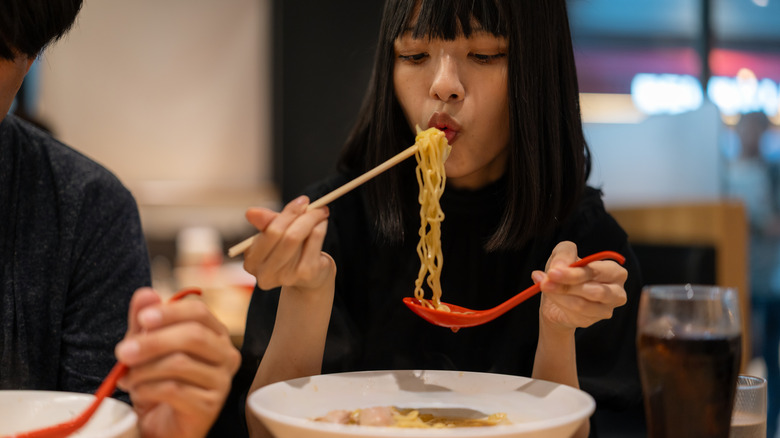
Japan is adept at toeing the line between tradition and modernity. A walk through Tokyo streets drives this point home: You might pass someone dressed in a traditional kimono, then turn a corner and bump into a blue-haired teenager in full cosplay regalia. This duality extends to Tokyo's ramen scene, too. Since Chinese traders first served ramen in Yokohama's Chinatown in the mid-1880s, the comforting noodle and soup dish has evolved into a well-loved Japanese staple. And getting your ramen fix in Japan's capital is hardly a challenge: Go Tokyo, the city's official travel guide, estimates there are over 10,000 ramen spots in the city.
Different regions adopted local flavor profiles and ingredients to create their own versions of ramen, many of which you can conveniently sample around Tokyo without setting foot on the Shinkansen. Browse the Tsukiji Outer Market — a food town filled with stalls of the tastiest traditional Japanese eats — or sign up for a Tokyo ramen tour to get a taste of Japan's ramen variations, from Sapporo's miso-infused ramen to Fukuoka's creamy tonkotsu version.
Yet the Tokyo ramen scene caters to the unique and adventurous palate as well. With the help of passionate ramen connoisseurs, food blogs, spirited Reddit threads, and Google reviews, we've narrowed down five of Tokyo's most surprising bowls that put a spin on traditional ramen as we know it. We're talking cheese, spice, risotto, prosciutto, and crickets (yes, the insect). So, whether you're traveling with friends or eating alone (which shouldn't be a problem, with Japan being the ultimate destination for solo travelers), let noodles and broth work their magic on you with this guide to Tokyo's five best unique spots for ramen.
Put your spice tolerance to the test at Kikanbo
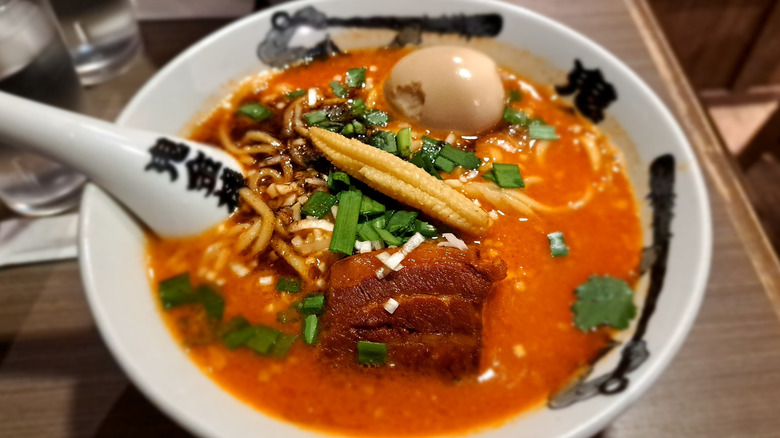
The restaurant decor should be the first inkling of what to expect from Kikanbo Ramen's spice levels. The interiors are adorned with demon masks, and spiked metal clubs (the weapon of choice of the ogres of Japanese mythology) hang over the counter. Overhead, a red glow of light illuminates the space, accompanied by the steady thrum of traditional Japanese drums playing over the speakers. This is, after all, a kitchen that serves "ramen to delight all five senses," though spice is definitely its top priority. Kikanbo expertly uses the heat of red peppers and numbing oil to add that definitive kick to its miso broth; noodles; and delicious toppings of braised pork belly, baby corn, bean sprouts, and egg.
Diners must first pay for a ramen voucher via a cash-only vending machine (English language option available) and then queue to get inside, where you can choose your ramen's spice level ranging from a safe "1" (no spices involved) to a devilish "5." Though some online reviewers found the food overrated and lacking in "depth of flavor," the overall response to Kikanbo has been positive. Japan-based German blogger Nama Japan called Kikanbo ramen "one of the most influential ramen shops in regards of the international ramen scene," while other customers praised the delicious pork belly, whose generous portion, according to one Google reviewer, was "so tender it practically melted into the bowl." Customers have reportedly waited 10 minutes to more than an hour to be seated, so be prepared for a wait depending on the time of day. Kikanbo has branches in Kanda and Ikebukuro.
Japanese ramen meets lobster bisque at Ebimaru
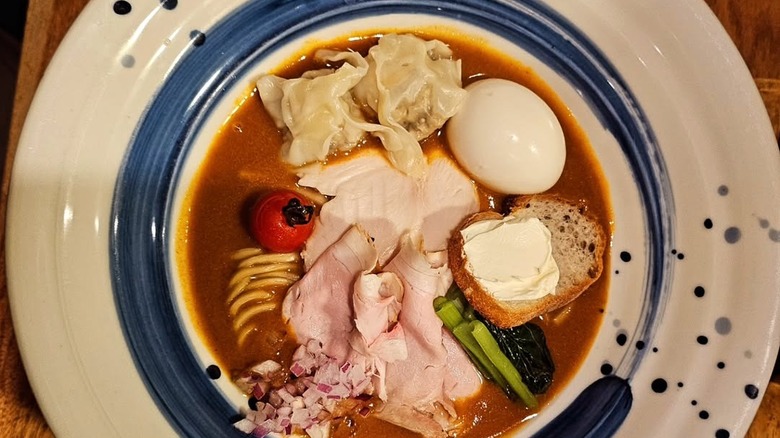
Japanese ramen by way of France? If you're craving fusion, head over to Ebimaru Ramen in Jimbocho, where the flavor of lobster bisque defines its signature broth. At the helm of this delightful Franco-Japanese ramen affair is Chef Masa, who trained in a French kitchen in Tokyo before applying his expertise to his own ramen restaurant.
Ebimaru's signature lobster bisque comes alive in its flavorful broth, which is carefully prepared by stewing lobster shells, brandy, wine, and vegetables. It's accompanied by chewy noodles cooked al-dente, premium cuts of either pork or chicken, and refreshing bites of stir-fried greens and a cherry tomato. Feel free to dip the accompanying baguette into the broth, just like how the French mop up their plates' sauces with bread after meals. When it comes to amazing meal finales, Ebimaru's house speciality makes the cut. Here, diners can finish off their ramen's lobster broth with a DIY risotto: You're encouraged to mix your leftover broth into a bowl of rice with shrimp and egg, unleashing the gourmand (or glutton) in you.
Needless to say, Ebimaru's 4.5/5-star Google rating shows that the lobster bisque-inspired ramen lives up to the hype. Despite queuing for more than an hour to get in, one diner called it "one of the highlights of our Tokyo trip and one of the best and [most] unique ramen I've had!" However, the risotto portion was a dealbreaker for another diner, who criticized the serving for being "smaller compared to other ramen shops" — though after a feast of both ramen noodles and rice, maybe that's a good thing.
Due Italian's ramen pays homage to Mediterranean flavors
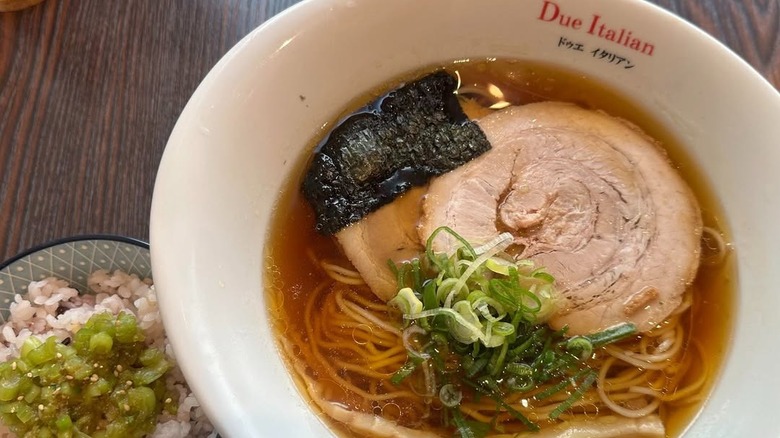
Though ramen purists may find it hard to accept foreign flavors in a traditional bowl of ramen, the success of chef Kazuo Ishizuka's Due Italian shows how some diners are eager to seek out unique places to eat while on vacation. Its signature dish — Prosciutto and Fromage Ramen — is pretty self-explanatory: The ramen is composed of thin noodles in a clear salt broth.The soup turns thick and creamy as the unconventional topping, a sticky dollop of cheddar and gorgonzola cheese, melts into it. Slices of prosciutto complete the Italian-inspired bowl. Just when you thought you'd gotten your fair share of carbs, a "risotto" can be enjoyed afterwards by mixing a bowl of rice with the leftover milky ramen broth.
Doubling down on the creativity front, Due Italian also serves a Lemon Ramen, whose lemon, Sicilian lime, and chili pepper-infused broth was made for palates that lean toward spicy and sour, as well as a summer-only Chilled Tomato Collection with fresh tomatoes. "If you're up for a ramen adventure that breaks all the rules, this spot is a must," one Google reviewer raved. "It's not just food; it's an edible escapade that'll stick with you."
Sample cricket ramen at Antcicada
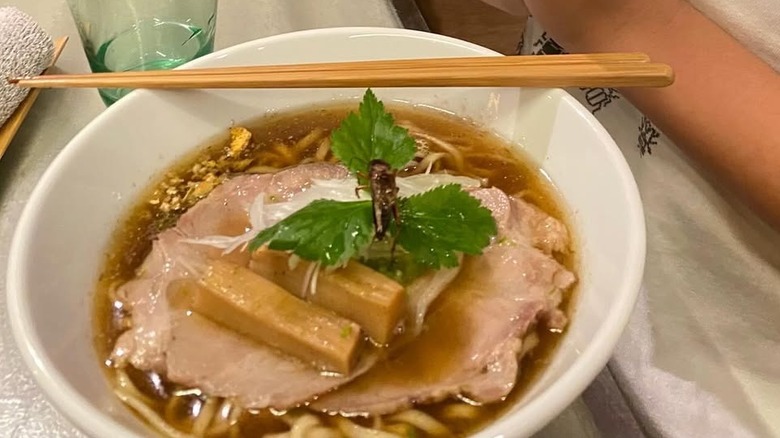
Normally, a restaurant with bugs would be something to steer clear of. Not the case of Antcicada, a ramen restaurant in Asakusabashi that wields its star ingredient — crickets — with pride. At its helm is Yuta Shinohara, whose crafted insect-based menu was influenced by more than two decades of eating insects (known as entomophagy). The cricket ramen has garnered buzz not just for its novelty but for its distinctively unique taste as well — a ByFood review described its flavor as salty umami with a nutty aftertaste.
On the outside, cricket ramen looks like any other noodle dish. On the inside, it's anything but. According to ByFood, there are about 170 crickets flavoring a bowl of broth, and Web Japan says that the noodles integrate ground-up crickets. Even the soy sauce and oil have cricket in them. The only giveaway would be the solitary fried cricket garnish on the ramen bowl, which adds a crunchy bite to the meal. The rest of the menu (which is also offered in English) features soy sauce-preserved cricket, locust, or bee larva accompaniments, and gelato desserts are made from silkworm.
Judging from the 4.8/5-star average rating on Google, Antcicada has managed to ignite and hold the gastronomic curiosity of local and foreign diners, insect enthusiast or otherwise. "This is not usually my thing and I hesitated at first, but everything was of such extraordinary quality and done so tastefully," wrote one reviewer who stumbled upon the restaurant without prior knowledge of its cuisine. Another diner described Antcicada's cricket ramen as exciting, balanced, and genuinely delicious, lauding it as "a must visit if you're interested in boundary pushing food or unique ramen."
Looks like cappuccino, tastes like ramen at Rahmen Eddie
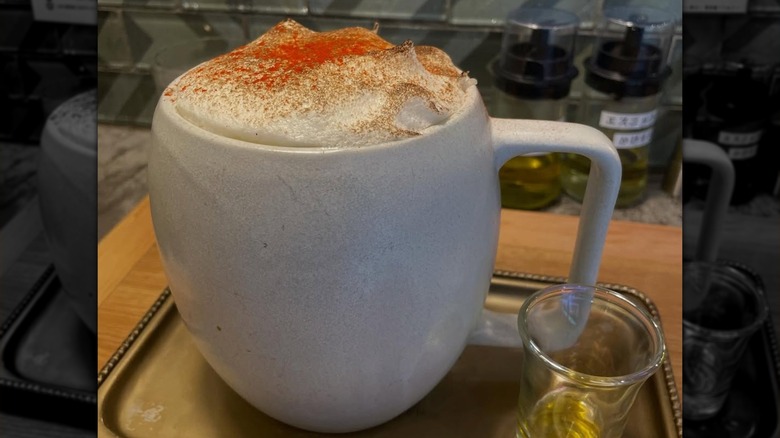
Contrary to the muted decor and solemn atmosphere of traditional ramen spots, Rahmen Eddie's interiors are awash with the glow of neon signs, exuding a playful and modern vibe. And while this Shinjuku restaurant offers classic ramen flavors on the menu, one item stands out for looking like a giant mug of cappuccino. In a city like Tokyo where even architect-designed public toilets can become a trendy tourist attraction, the viral popularity of Rahmen Eddie's unique Cappuccino Ramen isn't surprising at all.
Let's set the record straight: The Cappuccino Ramen has no coffee in it. It's ramen in a mug infused with truffle and porcini mushrooms, and the frothy topping is actually frothed egg whites. It's served with a side of truffle oil, which you can drizzle into the ramen as you make your way through the mug. The result is a ramen-pasta crossover, succinctly described by one reviewer as "if ramen and carbonara had a daughter and that daughter was more on the carbonara side."
Though diners appreciated the chewy noodles and broth packed with truffle flavor, the glaring lack of toppings rendered the dish monotonous. In a video, ramen blogger Nama Japan suggested pairing the ramen with onigiri for some diversity. Though the shop earned a 4.4-star rating on Google, opinions were divided, with some genuinely impressed with its creativity and others disappointed by the ramen's lack of depth. But in a world where it doesn't hurt to try new things once, Rahmen Eddie can be an interesting culinary detour if you're on the hunt for a unique bowl of ramen in Tokyo.
Methodology
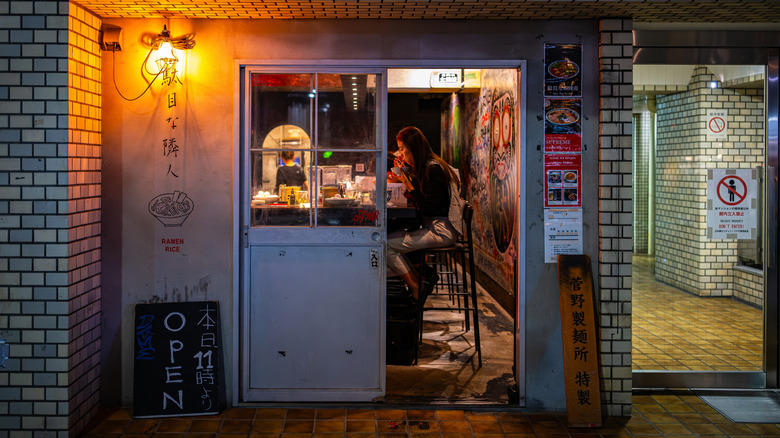
With thousands of ramen restaurants in Tokyo alone, we focused on narrowing down ramen shops using surprising ingredients, novel techniques, and exciting culinary elements. We scoured customers' reviews and opinions on the most unique ramen flavors from platforms like Google, Tabelog (Japan's restaurant review site), and Reddit. We drew more information on the restaurants, atmosphere, and flavor profiles from passionate ramen blogs like Nama, Ramen Adventures, and 5AM Ramen, as well as from Japan-based platforms including ByFood, SoraNews24, Time Out Tokyo, and Tokyo Weekender.