
Pennsylvania's Riverfront Borough Near Pittsburgh Is A Walkable Gem With Historic Charm And Tasty Eats
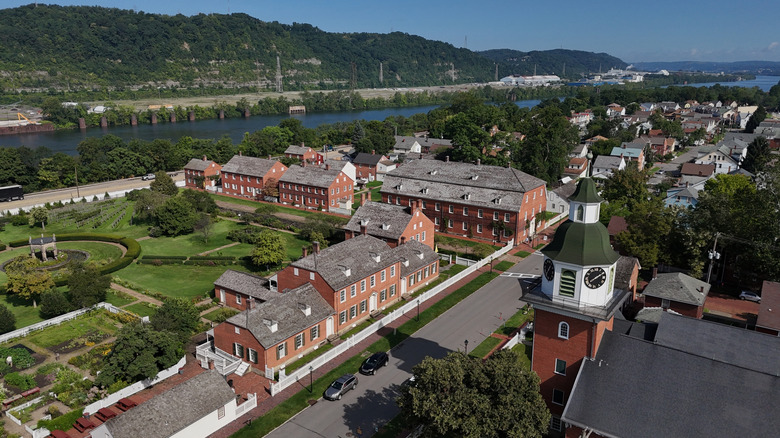
Western Pennsylvania is full of former steel and coal towns that have redefined themselves since those industries' departure. The largest and best-known of these is Pittsburgh, the one-time steel capital that's transformed into one of America's most livable cities. Many of the smaller towns around Pittsburgh have gone through a similar evolution.
One example is Ambridge, a Beaver County town of just under 7,800 people (according to the U.S. Census Bureau) that grew as a company town for the American Bridge Company. Its manufacturing plant anchored Ambridge's economy until it closed in 1982. In the decades since, Ambridge has reinvented itself as a charming and historic getaway whose revitalized downtown pays homage to its 19th-century roots.
Ambridge is about a half-hour drive northwest of Pittsburgh, and about the same distance east from the waterfall, beach, and wildflowers of the underrated Raccoon Creek State Park. Its history goes back well before the arrival of the American Bridge Company. In fact, the town celebrated its bicentennial in June of 2024, and many of its buildings date back to the early 19th century. St. John's Lutheran Church is one of the oldest churches in southwest Pennsylvania, built in 1838. Some of its historic homes have been converted into bed-and-breakfasts, like the Hestlet House, a log home built in the 1820s, and The Epochary Inn, an 1824 brick home whose quaint historic furnishings are complemented by a fully modern vegan menu. Along with historic buildings occupied by inns, restaurants, and other businesses, visitors can check out the Old Economy Village, an outdoor museum where visitors can see artifacts, images, and documents from Ambridge's earliest days.
Historic Ambridge
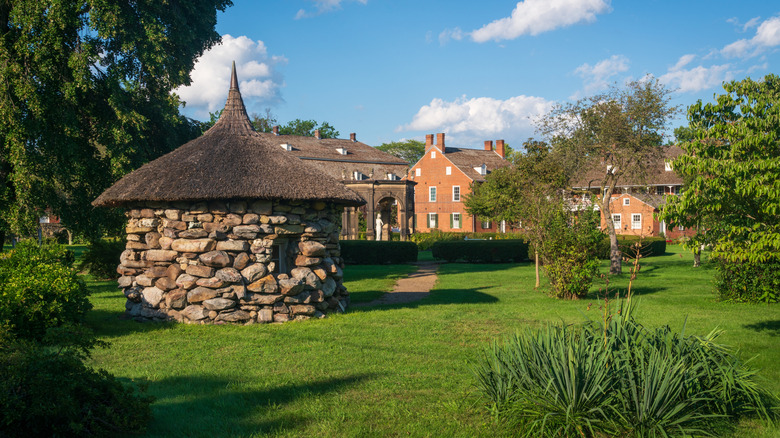
In the 1780s, German priest Johann Georg Rapp founded the Harmony Society, a group that believed the second coming was imminent and they needed to remain pure and ready for the rapture. In 1803, Rapp and his followers immigrated to the United States to establish Harmony, which still exists today as a quaint historic borough just outside Pittsburgh. The community grew to about 700 members by 1814, when crop struggles and conflicts with neighbors prompted their move — first to a settlement in Indiana, then back to Pennsylvania in 1824 to found Oekonomie (or "Economy" in modern parlance).
Economy was a prosperous agricultural community through the 19th century, but the Harmonist commitment to celibacy made it difficult to sustain their population. By 1905, the Harmony Society disbanded, and the American Bridge Company purchased the land for a manufacturing plant and a surrounding company town called Ambridge. The buildings constructed by the Harmonists were integrated into the new town, and today make up the 32-acre Ambridge Historic District.
At the heart of the Historic District is Old Economy Village, where visitors can see 17 restored Harmony Society buildings in their original locations. These buildings include a mix of residences and community buildings like the Post Office, Mechanic's Building, and Feast Hall, which once hosted the group's communal meals and housed their Natural History Museum. Reenactors help to bring the past to life and act out the daily tasks that commune members would have engaged in. The historic village is open Fridays through Sundays from April through December, when you can take a docent-led tour of the Rapp Houses or buildings along Cobblestone Street or explore on your own. You can start your tour at the Visitors Center, where you can see exhibits and a short video explaining the history of the site.
Dining and events in Ambridge
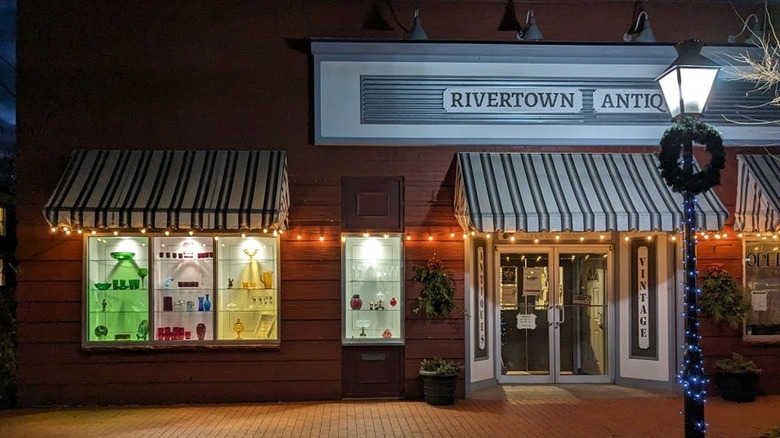
Old Economy Village isn't the only place in Ambridge where you'll find historic buildings. Independent shops and restaurants have moved into many of the brick rowhouses throughout Ambridge's Historic District. It's an especially great place to find collectibles and vintage goods, which you can peruse at antique shops like Bird & Bear, Good Intent Trading, and Rivertown Antiques, all of which are within easy walking distance of the Old Economy Village. The borough is so walkable that Walk Score, a platform that rates how pedestrian-friendly communities are, gives Ambridge a score of 80, or "Very Walkable."
When you work up an appetite, The Orbit Bar & Grill is a favorite spot for affordable home-style cooking. Its Friday fish fry is especially popular (so much so that the fish is often sold out by 6 p.m.), with one Yelp reviewer calling its cheesesteak "the best I've ever had in Pennsylvania." If you're in the mood for German fare, head to Mad Anthony's Bier Stube, a tavern named for a Revolutionary War general housed in a 200-year-old building that serves authentic German dishes like schnitzel, späetzle, and wurst. The specialty cheesecakes and pastries at Caffè Nero will satisfy your sweet tooth, while Old Crow Coffeehouse is a top spot to start your day with a breakfast sandwich and a cup of joe.
The Ambridge Historic District also puts on community-wide festivals throughout the year. September is the time for the popular Crush & Brew, an event featuring food trucks, live music, and tastings of wine, beer, and mead. Ambridge also goes all-out for Christmas, with activities around town including carriage rides, a live nativity, and a model railroad exhibit. Whatever time of year you visit, interpretive signs are posted throughout the Historic District, and you can pick up a walking tour map from the Information Kiosk on Church Street to guide your exploration of Ambridge's original 19th-century buildings.