
Hawai'i Is Renaming One Of Its Islands, And Both Tourists And Locals Are Confused
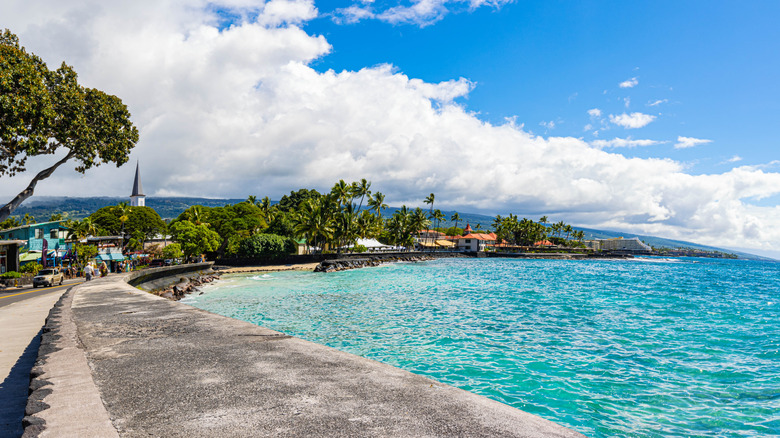
Hawaii consists of 137 islands, but most are uninhabited. The majority of the population lives on one of eight major islands, including the iconic Maui, the so-called "Garden Island" of Kauai, and Oahu, home to the state capital of Honolulu, also known as Hawaii's happiest city. The largest island in the archipelago recently made headlines when the Hawaiʻi State Board on Geographic Names announced a slight change to its name. From now on, the Island of Hawaiʻi will be called simply "Hawaiʻi" — a decision that has both tourists and locals confused.
First, a bit of background: the change has to do with naming conventions. One of the board's functions, as laid out in a statement, is "to assure uniformity in the use and spelling of the names of geographic features within the State." In the late 1990s, in collaboration with the U.S. Geological Survey, the Hawaiʻi Board on Geographic Names updated state maps. The process that included adding Hawaiian diacritical markings — namely the ʻokina (written as ', as in the word Hawaiʻi) and the kahakō (a line over a vowel, as in the island name Lānaʻi), both used to clarify pronunciation — to place names.
More recently, the board reconsidered other details, notably the use of the word "island" in the name "Island of Hawaiʻi." According to Hawaiʻi" Public Radio, the island's name was probably initially used to distinguish the island's name from the state's name. "We wanted to honor the island's name by returning it just to Hawaiʻi," said board member Marques Hanalei Marzan, "like all of its neighboring islands of Maui, Lānaʻi, Molokaʻi, Oʻahu, Kauaʻi, and Niʻihau, and give it that distinction as that is its true name, and not 'island of.'"
The Big Island gets a name change
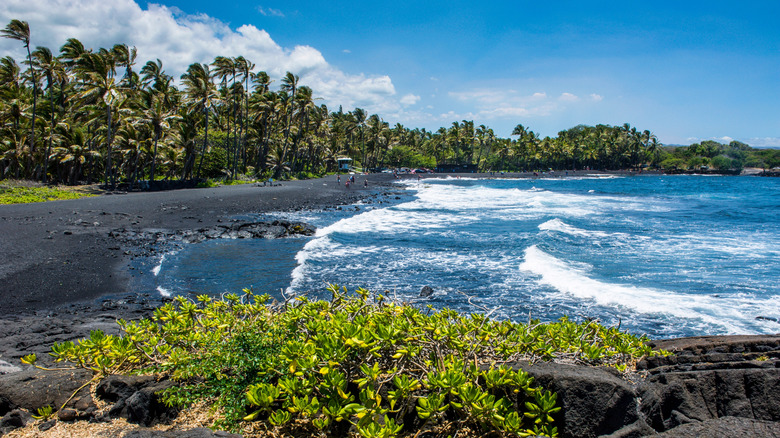
Some residents agree with the board that the descriptive "island of" phrasing isn't needed, as context and preposition use help keep the island name distinct from the state name. "If I say I am from and born 'in Hawaiʻi,'" said one lifelong resident in the Hawai'i Public Radio report, "that to me means the state, [but] 'on Hawaiʻi' means this island."
Others feel that the name change is unnecessary, calling it confusing for both residents and visitors. In an interview with news channel KITV-TV, one resident called it "ridiculous." Another said she preferred the "island of" phrasing to "clear up the ambiguity" between the state and island names. Even Kimo Alameda, the Mayor of Hawai'i County, expressed displeasure with the decision. "Hawai'i Island is how I would've kept it," he said in an article published on the news website Big Island Now.
It seems that the name change might be more perplexing for visitors than locals, many of whom call their home "the Big Island" or the Hawaiian "Moku o Keawe" instead of its official name. But Marzan was quick to point out in an email to SFGATE that the official name change only applies to legal state documents — the public can call the island whatever they want. Planning a trip to Hawaiʻi? Find out the ten beaches everyone should visit on the Big Island.