
The Proper Etiquette For Flying With Golf Clubs, According To The PGA

We may receive a commission on purchases made from links.
Golf vacations have boomed in the post-pandemic world, with more than 12 million Americans traveling to play the sport every year since 2022, according to the National Golf Foundation. Keen golfers dream of hacking a ball around the blustery, desperately beautiful links courses of Scotland and Ireland, teeing it up on legendary American tracks like TPC Sawgrass and Pebble Beach, or splitting the sun-stunned fairways threaded throughout Portugal's Algarve region. But the farther afield you go, the more likely it is you'll have to fly with your golf clubs — and for that, there's some etiquette you ought to know.
The PGA of America, an association of golf club professionals and instructors, offers guidance on bringing clubs on a plane, covering baggage fees and weight limits, as well as protecting your equipment in transit. The organization also suggests booking a nonstop flight whenever possible – fewer connections mean fewer hands handling your bag – investing in a hard-shell case, packing clubs securely inside, and attaching some identifying markers. Also consider whether you need a travel insurance policy with golf equipment cover, including loss, damage, or delayed arrival of your clubs.
It's worth noting that you can skip flying with your clubs altogether and ship them ahead. Companies like Ship Sticks have been established to do exactly that. The service is reliable but does come at a premium: it would cost around $170 for a return shipment of your clubs from New York to California, and often double that for international shipping. Sometimes, though, golf vacations are impromptu, and when you're planning the trip at the last minute, flying with your clubs may be the only realistic option.
PGA tips for flying with clubs
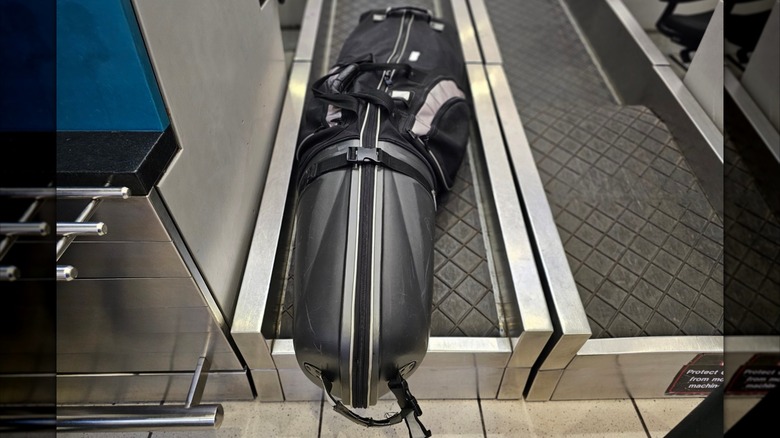
Start by comparing airline baggage policies. If flying with American Airlines, sports equipment, including golf clubs, must have a linear dimension (length plus width plus height) of no more than 115 inches and a maximum weight of 70 pounds. Anything over 50 pounds will incur overweight fees, but this should be ample for most golf bags, even when filled with clubs, balls, and all the other gear a golfer needs for their holiday. A golf bag is considered a normal item of checked luggage, meaning you won't be subjected to the airline's standard oversize baggage fees, which start at $150 each way. So, depending on your destination, you can fly your clubs for as little as $35 per flight.
Golf Pass recommends using Delta Air Lines, which has a similar policy for flying with golf equipment and a strong on-time performance record – it's known as the airline that suffers the fewest delays — a small but meaningful comfort if you're trying to make a tee time. Like American, Delta will also charge overweight fees if your golf bag exceeds 50 pounds. Both airlines have lists of allowable contents in the bag, including clubs, tees, balls, and a pair of shoes; check the specifications of each to see which (if any) golf-related items are forbidden.
To avoid extra fees, it's important to keep your bag weight down, and you can do so by bringing fewer golf balls. Granted, if you're a 20-plus handicapper playing a challenging links setup like Carnoustie — where the wind whips like a hurricane, and the rough is thicker than a lion's mane — you should expect to lose a few. But rather than packing several boxes' worth, consider grabbing any extras at the local pro shop (and maybe playing irons off the tee).
Prepare for mishaps

Golf clubs are delicate things, but ferrying luggage in the hold of a plane is anything but. Stories of snapped drivers and wandering golf clubs are common — United Airlines even lost Rory McIlroy's clubs between Newark and Dublin (so presumably somewhere in the mid-Atlantic) in 2014. Admittedly, they managed to get the clubs to McIlroy within a couple of days, just in time for him to play dismally at that year's Irish Open. But if an airline can't always keep an eye on a generational talent's clubs, then what hope do the rest of us mere mortals have?
A travel insurance policy designed for golf trips is a good way to give yourself some protection against lost clubs and other fees — some of these even cover a bar tab after a hole-in-one, should fortune smile on you. To prevent damage to your clubs, it's wise to send your bag in a hard-shell case with lots of padding. You'll find plenty of good options on sites like Amazon in the $100 to $200 price range. Support rods, which look a little bit like Inspector Gadget umbrellas, are used to protect the clubs in your bag, and you can buy one for less than $20.
The PGA of America also suggests using towels and other soft gear, like wool hats and jackets, as extra padding for your clubs. If the heads of your clubs are adjustable, you could even remove them and store them in a safer place, like your carry-on bag. Just don't try to bring a whole club onto the plane; it's classified as a prohibited item by the TSA and may trigger a secondary screening.