
How To Spot An Air Marshal (And Are They Really On Every Flight?)
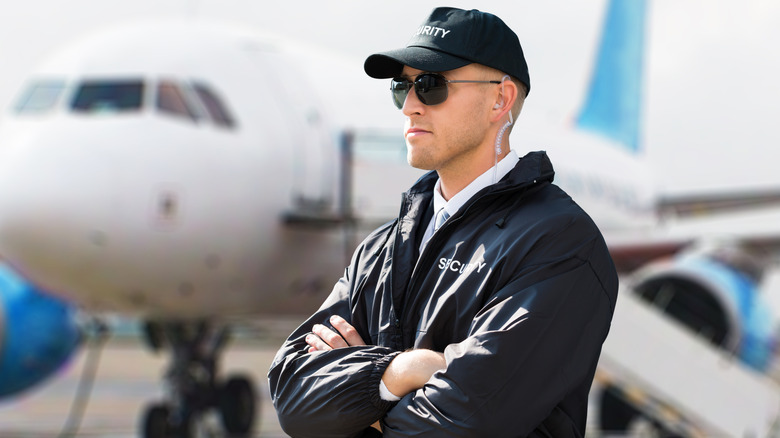
It's good that things don't go awry on flights too often. Passengers can be tense, tired, bored, jetlagged, just plain antsy, or some mixture of the above, yet unruly-passenger incidents, as they are officially known, aren't that common. According to the Federal Aviation Administration (FAA), there were only 1,621 unruly passenger reports in 2025, the lowest number since the pandemic, despite the 16 million-plus flights the FAA handles annually. So it might not feel like there's much of a need for peacekeepers in the air, but air marshals are sometimes stationed in the cabin, prepared to deal with certain threats when they arise.
The Federal Air Marshal Service is TSA's main arm of law enforcement, tasked with mitigating risks and tackling security issues aboard commercial aircraft. Though 9/11 caused significant intensification of airport security infrastructure, air marshals are a relic of a much older rage, first appearing under the title "Sky Marshals" in the 1960s, following a spate of high-profile hijackings. There were a little over 30 air marshals when the Twin Towers were hit, but the number has grown around 100-fold since, with 3,000 or more now in operation, according to figures reported in The New York Times and military lifestyle publication We Are The Mighty.
We Are The Mighty suggests that an air marshal is present on about 5% of flights, and they are more likely to be on flights heading into or out of Washington, D.C., or places experiencing sociopolitical instability, like countries on the United States' "Do Not Travel" list. However, air marshals don't typically intervene in basic unruly passenger situations — so if you commit one of the trivial offenses that can get you kicked off a plane, it probably won't be a marshal doing the kicking. Their main role is to neutralize severe threats, like physical violence and terrorism.
How to spot an air marshal
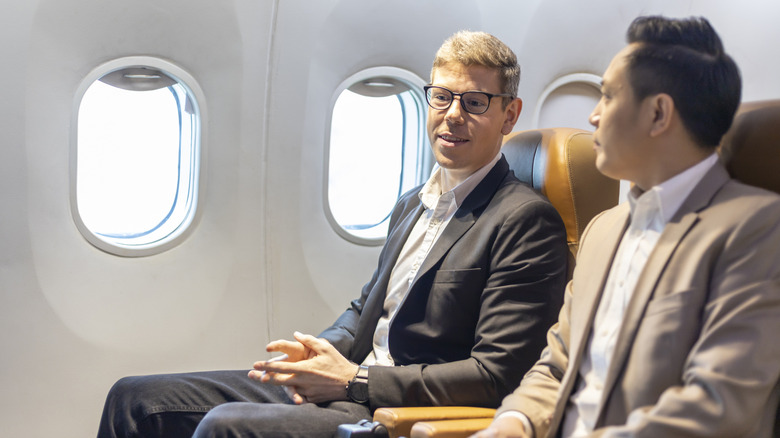
The presence of air marshals is another one of the secrets airlines don't want you to know. So how do you spot that which does not want to be spotted? Air marshals will identify themselves to the crew, but aside from that they travel incognito, dressed in plain clothes.
Sometimes, air marshals come in pairs, especially on flights deemed high risk, though they won't sit together. They normally sit in aisle seats, perhaps even in business or first class, with a view of the cockpit door and any potential hijackers. They're unlikely to be over-encumbered with luggage, and you'll never see an air marshal sleeping, listening to music, or indulging in the booze cart (not if they're any good at their job, anyway). And because blending in is a key aspect of the job role, if you engage an air marshal in conversation, expect to get a fake albeit convincing backstory.
When interviewed by USA Today in 2014, John Casaretti, who's still President of the Air Marshal Association, said that one of the tell-tale signs is spotting a person who fits the classic profile of an air marshal. "It's pretty evident when you walk down the aisle and see a guy who looks out of place," he said, "for example in good physical condition with a military haircut sitting in first class." If something does go drastically wrong on a plane, you'll hopefully spot the air marshals quickly, as they're licensed to carry and use a weapon, and engage other self-defense tactics to deal with threats. That marshals could be on any given flight is seen as a boon to security, deterring would-be attackers. So, if you think you've spotted one, try to take it as a sign that you're in safe hands.