
One Of California's Richest Gold-Mining Settlements Brims With A Historic Hotel And Small-Town Charm
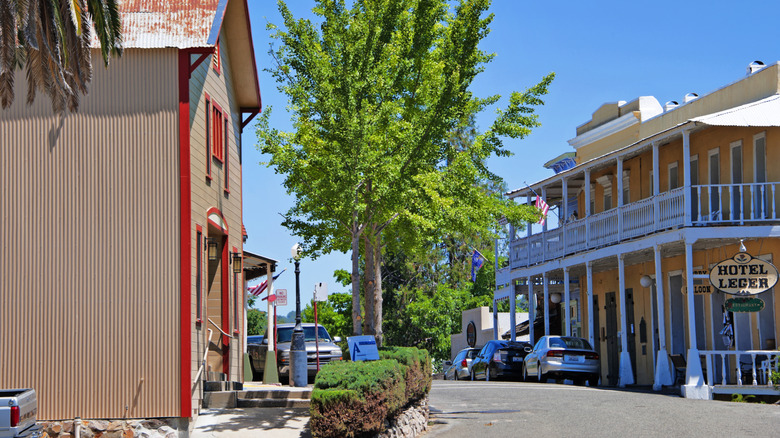
There's gold in them thar hills... well, figuratively. The ore that sparked the American West's Gold Rush is mostly long gone, but California is still dotted with tiny towns left over from the mid-19th-century, when families and fortune-makers alike headed west in search of lucrative livelihoods. Some of those towns faded into ghost towns when gold — or other mineable ores — ran out. Others held on, reinventing themselves as destination hubs for outdoor enthusiasts and history lovers — like Mariposa, a former Gold Rush town that now serves as a gateway to Yosemite. One of the most well-preserved settlements from the era is Mokelumne Hill, a designated California Historical Landmark located in the backcountry of the Sierra Nevada foothills along scenic Highway 49 with a current population of just over 1,000.
Highway 49 is also known as the Golden Chain Highway for the string of Gold Rush towns it connects, including Placerville, with its boutiques full of art and antiques. Mokelumne Hill — or "Moke Hill," as it's known locally – has become a popular stop for visitors exploring the region. With historic hotels, museums, a gallery, hiking, nearby whitewater rafting on the Mokelumne River, plus a local winery and cidery, it deserves a gold star on your next California road trip itinerary.
The name Mokelumne Hill (pronounced muh-KUH-lum-nee) comes from the Miwok tribe that once roamed California's Central Valley. During the Gold Rush, they were key traders for early settlers as Mokelumne Hill grew into one of the largest towns in the Mother Lode, also serving as the Calaveras County seat at the time. Today, Mokelumne Hill sits about 130 miles (a two- to three-hour drive) east of San Francisco and 57 miles southeast of Sacramento, making it a surprisingly easy side quest if you're visiting either major metro area.
Downtown features historically authentic buildings
"One night at the Hotel Léger comes with 170 years of California History," to quote SFGate. This storied structure — one of the oldest and longest-operating hotels in California — is one of Mokelumne Hill's centerpieces. Hotel Léger was built in 1851 as a Gold Rush-era lodging called Hotel d'France and has survived several fires and rebuilds over the decades. A renovation featured on The Travel Channel's "Hotel Impossible" in 2013 helped preserve the hotel's Greek Revival motif, Victorian-era stone foundation, and wood flooring. A recent update in 2023 brought new bathrooms and fresh paint. Today, Hotel Léger is a favorite field trip destination for local schools, and travelers can book one of its dozen rooms. It has a dining room and bar open Thursdays through Sundays, where visitors can stop in for classic American fare like burgers, breakfast, and barbecue ribs.
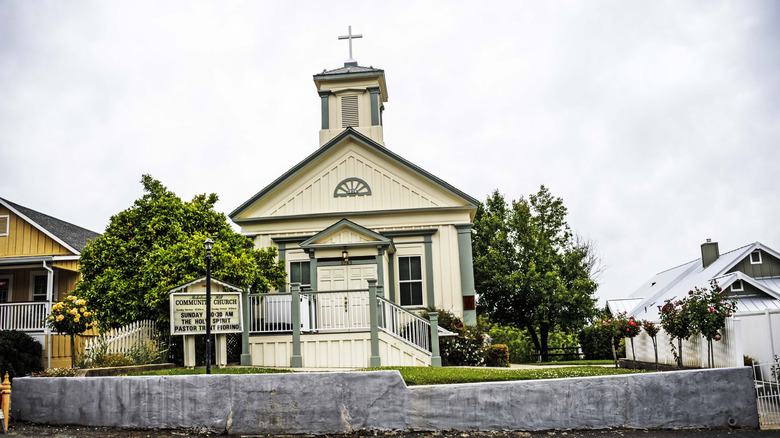
Whether you're stopping in for a day or fueling up for adventures after an overnight at Hotel Léger, downtown's fun to explore. Grab a coffee and pastry at Moke-A-Java Café, located inside Moke Hill Nuts and Candies (while you're there, pick up some nuts to go). Browse contemporary fine art at Petroglyphe Gallery, and take a walking tour of the town's historic buildings beginning at the library, where the Mokelumne Hill History Society maintains an archive along with exhibits and artifacts. The Society has also compiled a map of a few dozen historic buildings, including the First Congregational Church, built in 1856; the 1854 I.O.O.F. Hall, said to be one of the first non-coastal, three-story buildings in the West, and the former Baldwin Hotel, now a private residence.
Mokelumne Hill is a gateway to gardens, beverages, and the great outdoors
During the Gold Rush — and prior to the Chinese Exclusion Act of 1882 – Chinese immigrants settled throughout California, often creating distinctive Asian-style gardens within their communities. Mokelumne Hill's Chinatown Gardens burned more than a century ago and were long overgrown until 2015, when archaeologists uncovered terraced walls, a pond dugout, and the remains of a stone oven and Buddhist temple. The site was later purchased by the History Society and is now preserved as the Chinatown Gardens Archaeological District, listed on the National Register of Historic Places. Today, visitors can stroll the grounds and reflect on this important piece of local history.
On the way back down Main Street from Chinatown Gardens, you'll pass Renegade Winery & Bistro. Stop in to taste owner-produced, award-winning wines and local microbrews, and enjoy house-made paninis, pizza, and rotating specials like handcrafted chicken pot pie. "What a special night it was!" wrote a Tripadvisor reviewer. "Music on the patio, great wine, delicious food, friendly service. Couldn't ask for anything better." On the other side of downtown, Posterity Ciderworks offers a tasting room featuring rotating ciders pressed with fruit from reclaimed heirloom trees and locally foraged ingredients, creating unique flavor profiles like "alpine strawberries and cream" and "cherry and chrysanthemum."
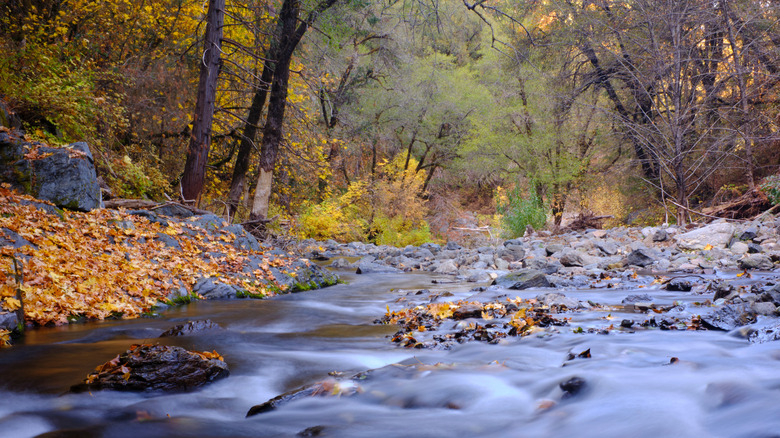
Mokelumne Hill's also a great jumping-off point for outdoor adventure. The Mokelumne River — source of the Gold Rush's famed gold — has tranquil stretches for paddling and hiking, as well as whitewater rafting from May to September with local outfitters ready to kit you up. Calaveras County is also home to a network of caves and caverns within an easy drive, including guided tours at Moaning Cavern Adventure Park and self-guided exploration at the Black Chasm Canyon.