
Rick Steves Says This Is The 'Most Delicious Creature Of The Sea' He's Ever Had In Europe

Travel writer Rick Steves spent decades eating his way across Europe, so when he makes a food recommendation, his audience listens. During his 2026 Travel Festival, he shared his thoughts about a unique sea creature that is a prized culinary treasure along the Iberian Peninsula. The specific dish is called percebes, also known as goose/gooseneck barnacles, and Steves singles them out above all others in Europe, calling them "the most delicious, delicious creatures of the sea." These barnacles deliver an intense hit of salty, briny flavor with a subtly sweet finish. They are quickly boiled in saltwater, giving them a tender, chewy texture — similar to that of mussels.
Percebes are harvested along the northern coast of Spain, particularly in Galicia and Asturias, as well as Portugal's Atlantic coast. This includes Nazaré, which is famously known for its giant waves and its seafood scene. The barnacle hunters, known as percebeiros, step on slippery rocks to gather barnacles that cling to the cliffs, all while enduring powerful waves. While Steves compares percebes to "beer nuts," they don't come cheap — prices start at around $235 for 2.2 pounds. The cost reflects the danger involved in harvesting them from wave-stricken rocks. No matter the price tag, Steves highlights that this impressive dish, from sea to plate, is worth every penny. He says he's typically a regular backpacker who enjoys "dorm food," but this is one of those cases where you have to stretch your dollars to enjoy the gastronomic gem.
Percebes: A cultural phenomenon
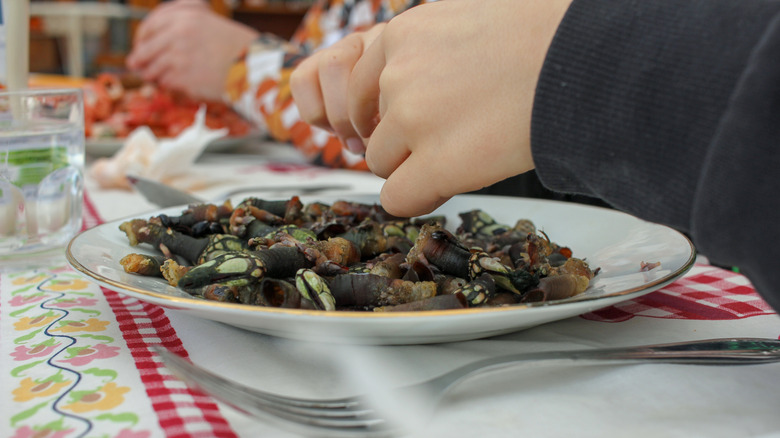
There are many ways to tell if a tourist spot is not worth the hype, but if you see percebes on the menu in northern Spain or along the Portuguese coast, you know you're in the right place. Not only have they received accolades from Steves, but he says that trying them is part of the "cultural experience." In fact, a local Galician newspaper, La Voz de Galicia, reported in May 2024 that steps were being taken to get the barnacle an intangible cultural heritage (ICH) designation by UNESCO.
The daring work of percebeiros, who brave jagged rocks and crashing waves, is what makes each bite of barnacle so celebrated. They can't harvest them year-round — for safety reasons, harvesting is prohibited from September to December, according to a barnacle diver interviewed by Vice. Prime percebes season runs from spring to summer. In June, travelers can go to the Festival do Perceve in Vila do Bispo, Portugal, and they can travel to Ribeira a month later for the Festa do Percebe.
It's easy to see why Steves considers percebes the most delicious creature of the sea in Europe, as each bite reflects the flavor of the Iberian coast. To eat one, hold it by the "claw," gently squeeze, and pull the skin down. Then, like a mussel, it will reveal a bright orange-pink meat inside. Sometimes, they're served with warm melted butter, and they're often paired with beer. From Galicia's "Caribbean of Europe" to Portugal's sunny Algarve, percebes are more than just a "delicious creature;" they're a cultural culinary centerpiece that Steves says will get you out of your comfort zone.